
How to Coordinate an Estate Sale Cleanout Efficiently
Learn how to coordinate an estate sale cleanout efficiently. Maximize value, reduce conflict, and get properties market-ready quickly!

How to Coordinate an Estate Sale Cleanout Efficiently
Coordinating an estate sale cleanout means managing every step from sorting belongings to final property cleanup so the home is ready for sale or transfer. The process covers four distinct phases: sorting, selling, donating, and hauling away what remains. Done in the right order, it maximizes resale value, reduces family conflict, and gets the property to market faster. Whether you are an executor handling probate or a family member managing a loved one’s home, understanding the full workflow before you start saves weeks of backtracking and costly mistakes.
How to coordinate an estate sale cleanout: preparation first
Preparation is the single biggest factor separating a smooth cleanout from a chaotic one. Aligning goals and timeline upfront with all decision-makers dramatically reduces delays. Before anyone touches a drawer, identify who has authority to make keep, sell, donate, and toss decisions. In most estates, that is the executor, a designated family lead, or both.
Start with a full walkthrough of the property. This gives you a realistic scope before committing to any timeline. Sorting a 3-bedroom home can take 1–2 weeks to do correctly, and that estimate only holds if you have already identified valuables, hazardous materials, and oversized furniture that need special handling.

Preparation tools and their purposes
| Tool or Resource | Purpose |
|---|---|
| Color-coded labels or stickers | Mark items as Keep, Sell, Donate, or Toss during walkthrough |
| Inventory spreadsheet or app | Track high-value items and document decisions for heirs |
| Camera or smartphone | Photograph valuables before removal for insurance and records |
| Estate sale company | Price, market, and run the sale event |
| Junk removal service | Remove unsold and non-donatable items after the sale |
| Senior Move Manager | Coordinate across all vendors when logistics are complex |
Gather your supplies before sorting day. You will need boxes, labels, markers, and a shared document where all decision-makers can log choices. If heirs live out of state, a shared Google Sheet or a group text thread prevents miscommunication.
Pro Tip: Walk every room before opening a single drawer. A full-house view reveals scope, prevents duplicate decisions, and stops you from accidentally discarding items that belong in another category.
How to execute the sorting and decision-making phase
The sorting phase is where most estate cleanouts stall. Families disagree, decisions get deferred, and items pile up without a clear destination. The fix is a four-pile system applied consistently: Keep, Sell, Donate, and Toss/Recycle. Set the rules for each category before anyone starts sorting, and get every decision-maker to agree in writing.
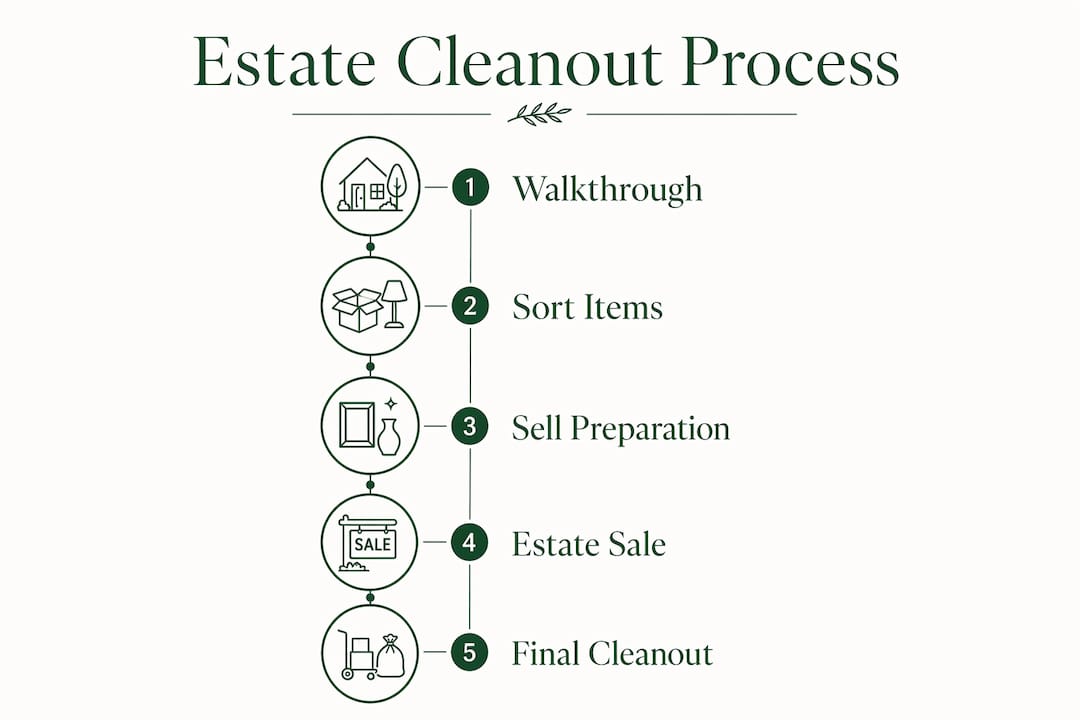
Expert coordination batches tasks by value and urgency, tackling valuables first and discards last. This prevents a common and expensive mistake: sending a valuable item to the junk pile because no one recognized it. Antiques, jewelry, collectibles, and financial documents all need to be identified in the first pass.
Here are the sorting pitfalls that derail most estate cleanouts:
- Skipping the walkthrough. Opening drawers room by room without a full-house view leads to missed items and repeated decisions.
- Sorting without all decision-makers present. Absent heirs often dispute decisions made without them, causing delays after the fact.
- Disposing of items before the estate sale company visits. A professional appraiser may find value in items you assumed were worthless.
- Leaving hazardous materials unsorted. Old paint, chemicals, and medications require separate disposal and cannot go in a standard junk haul.
- Waiting too long to schedule removal. Schedule pickup of removal piles early to maintain momentum and avoid a house full of stalled piles.
Pro Tip: Photograph every item in the Sell pile before the estate sale company arrives. If a dispute arises later about what was sold or donated, your photo log is the record.
What is the best timeline for estate sale and cleanout phases?
Estate clearance before listing takes 4–12 weeks depending on how quickly keep-or-sell decisions are made and estate sale company availability. That range is wide because the bottleneck is almost always decision-making speed, not physical labor. The right sequence locks in maximum value and prevents double handling.
Here is the standard workflow timeline:
| Phase | Timing | Key Vendors |
|---|---|---|
| Initial walkthrough and goal alignment | Week 1 | Executor, family leads, realtor |
| Sorting and categorizing | Weeks 1–2 | Family, estate attorney if needed |
| Estate sale company hired and pricing begins | Weeks 2–4 | Estate sale company |
| Marketing and sale event | 1–2 weeks before sale, 1–3 days for sale | Estate sale company |
| Donation pickups and junk removal | Weeks 5–6 | Donation centers, junk removal service |
| Deep cleaning and property prep | Weeks 6–8 | Cleaning crew, contractor if repairs needed |
Estate sale companies typically book 3–6 weeks in advance, run sales over 2–3 days, and charge 30%–50% of gross sales with no upfront cost. That fee structure means you pay nothing unless items sell, which makes hiring a professional almost always worth it. Post-sale cleanup may be included or billed as an extra fee, so confirm this before signing.
The typical estate sale timeline runs from an initial call and walkthrough in week one through planning, pricing, and marketing, then a 1–3 day sale event, followed by a post-sale wrap-up. Clients do not need to clean before the estate sale team arrives. The professional team handles staging and organization as part of their service.
How do you coordinate vendors for a smooth cleanout?
Vendor coordination is the most underestimated part of the entire process. Most families hire an estate sale company and a junk removal service independently, then discover the two are not scheduled in sequence. The result is junk haulers arriving before unsold items are removed, or donation pickups happening before the sale ends.
Senior Move Managers coordinate across movers, estate sales, donations, junk removal, and repairs, reducing family burden especially when heirs live remotely. They follow industry codes of ethics and manage integrated vendor contracts. If the estate is large or the family is geographically spread out, hiring a Senior Move Manager from the National Association of Senior Move Managers (NASMM) is worth the cost.
When vetting any vendor, ask these questions directly:
- How do you sequence your work relative to the estate sale event?
- What is your contingency plan if the sale runs long or items are not cleared on time?
- Do you provide written confirmation of donation receipts for tax purposes?
- What is your policy on items left behind after your service is complete?
- Can you coordinate directly with our estate sale company or junk removal crew?
Pro Tip: Put post-sale cleanout expectations and fees in writing before the estate sale company starts. Verbal agreements about what happens to unsold items are the most common source of disputes after the sale ends.
Managing communication among heirs, vendors, and real estate agents requires one point of contact. Assign a single coordinator, whether that is the executor, a family member, or a hired professional. Good coordination quality is assessed by probing vendor sequencing methods and contingency plans for overruns. Fragmented communication is the fastest way to miss a listing deadline.
What legal duties should executors know before the cleanout?
Executors carry fiduciary responsibility throughout the estate cleanout process. Executors should wait at least 6 months after death before distributing estate assets, and sales must reflect fair market value to avoid beneficiary lawsuits. Moving too fast on asset sales before probate is complete creates legal exposure that can outlast the estate itself.
Beneficiaries may sue if assets are sold below market value. Executors must document every sale, donation, and removal decision with receipts to protect themselves and the estate.
Key legal considerations for executors coordinating a cleanout:
- Do not sell assets before probate is granted or letters of administration are issued. Timing matters legally.
- Obtain fair market value on all sold items. An estate sale company with professional pricing protects you here.
- Document removal and donation decisions with receipts to prevent heir disputes and support tax filings.
- Coordinate cleanout timing with your probate attorney. The cleanout timeline should integrate with probate administration, not run ahead of it.
- Keep a written log of every decision made, who made it, and when. This log is your defense if disputes arise later.
Realtors working with executors recommend a 5-step workflow: align goals and timeline, sort and create a removal pile, clear and prep the property, complete minor repairs and staging, and document everything for heirs. Professional support is advised for tight timelines, out-of-state heirs, and large property volumes.
Key takeaways
Coordinating an estate sale cleanout requires a structured sequence of sorting, selling, donating, and hauling, supported by aligned decision-makers and documented at every step.
| Point | Details |
|---|---|
| Sequence matters above all | Sort and sell before donating or hauling to avoid losing resale value. |
| Book vendors early | Estate sale companies book 3–6 weeks out; delay costs you listing time. |
| One coordinator prevents chaos | Assign a single point of contact for all vendors, heirs, and agents. |
| Document every decision | Receipts and logs protect executors from beneficiary disputes and legal risk. |
| Legal timing is non-negotiable | Executors must align cleanout phases with probate timelines to avoid liability. |
What i have learned coordinating estate cleanouts
The biggest mistake I see families make is treating the cleanout as something to get through quickly rather than something to get through correctly. Speed feels productive, but rushing the sorting phase almost always creates expensive rework. Items get donated that should have been sold. Junk haulers arrive before the estate sale company has finished. The house gets cleaned before the last boxes are out.
The families who come out ahead are the ones who spend the first week doing nothing but walking the property and aligning on decisions. That upfront investment pays back in fewer vendor conflicts, fewer heir disputes, and a faster path to listing. I have also seen how much a single point of contact changes the outcome. When everyone is calling a different vendor with different instructions, timelines slip and costs climb.
If you are an executor managing this process from out of state, do not try to coordinate vendors remotely without boots-on-the-ground support. A local estate cleanout service or Senior Move Manager is not an extra expense. It is the thing that keeps the whole process from falling apart two weeks before your listing date.
— Olga
How Ohanapropertyexperts supports your estate cleanout
When the estate sale ends and the house still needs to be cleared, Ohanapropertyexperts is the team Central Indiana families and executors call. We handle the full post-sale process, from junk removal and appliance hauling to donation drop-offs and final property prep.
Our estate cleanout services are built for exactly this situation. We work around your estate sale company’s schedule, coordinate removal in the right sequence, and leave the property clean and ready for listing. We serve Columbus, Seymour, Franklin, Greenwood, Indianapolis, and surrounding Central Indiana communities. Free estimates are always available. Call us at (812) 302-6833 or visit ohanapropertyexperts.com to get started.
FAQ
How long does it take to coordinate an estate sale cleanout?
The full process takes 4–12 weeks depending on the size of the estate and how quickly decisions are made. Sorting typically runs 1–2 weeks, and estate sale companies book 3–6 weeks in advance.
Should the cleanout happen before or after the estate sale?
The cleanout happens after the estate sale. Sort and sell first, then donate and haul remaining items so nothing of value is removed before it has a chance to sell.
What does an estate sale company charge?
Estate sale companies typically charge 30%–50% of gross sales with no upfront fee. Post-sale cleanup may be included or billed separately, so confirm the terms before signing a contract.
Do executors need to wait before selling estate assets?
Executors should wait at least 6 months after death before distributing or selling estate assets to comply with probate requirements and protect against beneficiary lawsuits.
What is a senior move manager and when should you hire one?
A Senior Move Manager coordinates all vendors across an estate cleanout, including movers, estate sale companies, donation centers, and junk removal crews. They are most valuable when heirs live remotely or the estate is large and complex.