
Shed Cleanout Done in One Day: Four Box System and When to Call Help
Finish a shed cleanout fast using the four-box method. Time targets (small 3–4 hrs, larger up to a day), hazardous-disposal tips, donation options, and...
Shed Cleanout Done in One Day: Four Box System and When to Call Help
Empty the shed completely, sort everything into four labeled piles, deep-clean top to bottom, fix small damage, then reorganize with vertical storage. A small shed typically takes several hours; larger or heavily packed sheds may require much longer, often up to a full day. Grab gloves, boxes, and a tarp before you touch a single item, and lean on a proven system like the four-box method so you’re not stalling out on decisions once you get started.
TL;DR:
- Items with resale value, such as brand-name power tools or unused patio furniture, should be listed online rather than donated to maximize efficiency.
- Hazardous materials like old motor oil, pesticides, and propane tanks require scheduled drop-offs at authorized hazardous waste sites to prevent environmental contamination.
- Routine maintenance, including biannual inspections and monthly tidying, helps prevent clutter buildup and catch small problems early before they escalate.
- Fixing minor damage, sealing pest entry points with steel wool, and addressing soft floors or sagging roofs are inexpensive repairs manageable within a weekend.
- Professional help is recommended for structural damage, hazardous waste handling, or extensive debris that exceeds DIY capacity, with prior photos aiding accurate estimates.
Table of Contents
- What Do You Need Before Starting a Shed Cleanout?
- Step 1: How Do You Empty a Shed Without Making a Bigger Mess?
- How Do You Decide What to Keep, Donate, or Toss?
- What Hazardous Materials Need Special Disposal From a Shed?
- What’s the Best Way to Deep Clean a Shed?
- How Do You Spot and Fix Small Shed Problems During Cleanout?
- How Should You Organize a Shed for Long-Term Use?
- How Do You Keep a Shed Clean After the Big Cleanout?
- When Should You Call a Cleanout Crew Instead of Doing It Yourself?
- Restoring a Shed Is About Safety, Not Perfection
- How Ohana Property & Transition Services Can Help With Your Cleanout
- Sources
- FAQ
What Do You Need Before Starting a Shed Cleanout?
Pick a dry day with mild temperatures. Metal sheds turn into ovens once the sun climbs above 85 degrees, and you don’t want to be sorting motor oil cans while sweat drips into your eyes. Fall and spring mornings work best. A small shed runs 3 to 4 hours start to finish; a two-car-garage-sized shed stuffed with 20 years of accumulation can eat a full day, so breaking the work into 90 to 120 minute sessions keeps you from burning out halfway through.
Gather these before you open the door:
- Work gloves and a dust mask (N95 if you suspect mold or droppings)
- A shop vacuum, stiff-bristle brush, and broom
- A bucket, mild detergent, and clean rags
- Tarps for staging items outside
- Boxes, heavy-duty trash bags, and a marker for labeling
If you already know you have old paint, pesticides, or a dead riding mower battery in there, call your local household hazardous waste collection site now. Slots fill up fast, and you don’t want a half-finished cleanout sitting in your driveway for a week.
Step 1: How Do You Empty a Shed Without Making a Bigger Mess?
Work from the doorway inward, not the back corners first. Pulling items from the back means climbing over piles, which is how ankles get twisted and glass jars get broken.
- Lay tarps just outside the door and keep a clear walking path at all times.
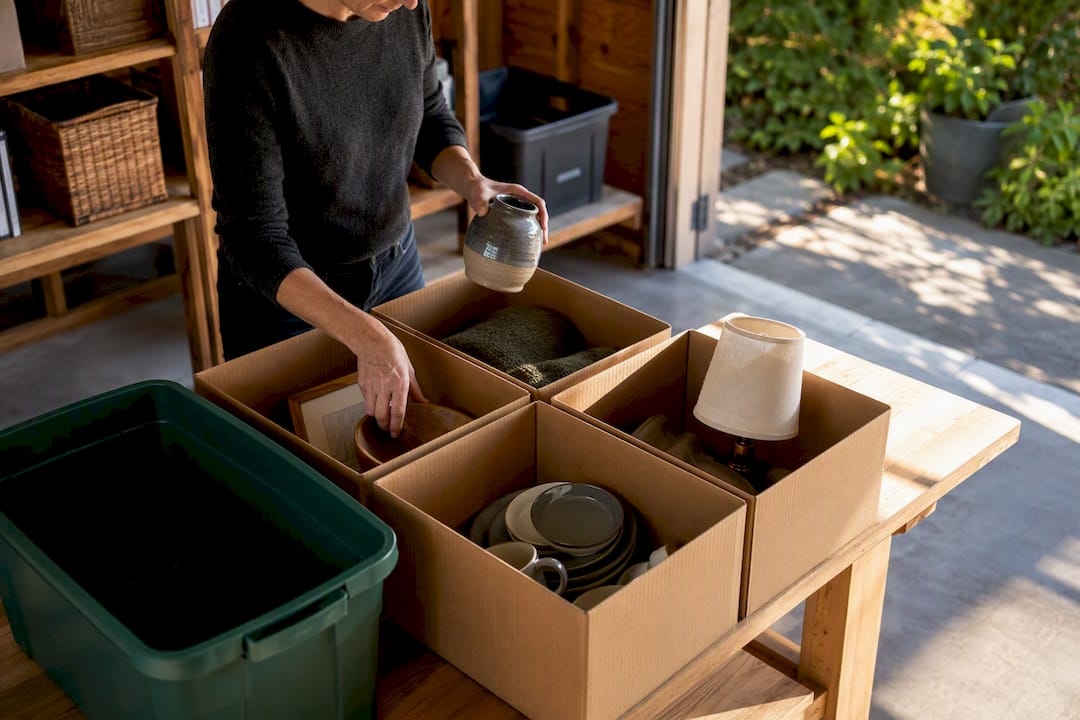
- Set up four labeled zones on the tarps: Keep, Donate/Sell, Toss, and Hazardous.
- Pull items out one at a time, checking each for rust, rot, or pest damage as you go.
- Apply the two-year rule immediately: if you haven’t used it in two years and it’s not seasonal equipment, it goes to Donate or Toss.
- Set very large items (riding mowers, old furniture, broken grills) aside on their own to load last, since they need two people or a dolly.
This sequence matters because staging with tarps and labeled zones means you move each item once instead of three or four times, which saves your back and keeps the process from sprawling across your whole yard. Once the shed is empty, you’ll finally see the floor, walls, and roofline clearly, and that’s when hidden problems show up.
How Do You Decide What to Keep, Donate, or Toss?
The four-box method is the fastest way to stop staring at a rusty rake wondering if you’ll “need it someday.” Every item gets one of four homes: Keep, Sell, Donate, or Trash. No fifth “maybe” pile. That box is where cleanouts die.
A few decision rules speed things up:
- Duplicate tools (you own three trowels, one shovel breaks)? Keep the best one, donate the rest.
- Anything with an expiration date, like fertilizer or bug spray, gets checked before it gets kept.
- Rusted-through or structurally cracked tools go straight to Toss, not “maybe fixable.”
- Items with clear resale value (name-brand power tools, unused patio furniture) go to a local marketplace listing instead of the donation pile.
Pro Tip: Donating usable items in one trip is often faster than trying to sell everything piece by piece. A single drop-off run at a local donation center clears the pile fast and keeps items in your community instead of a landfill.
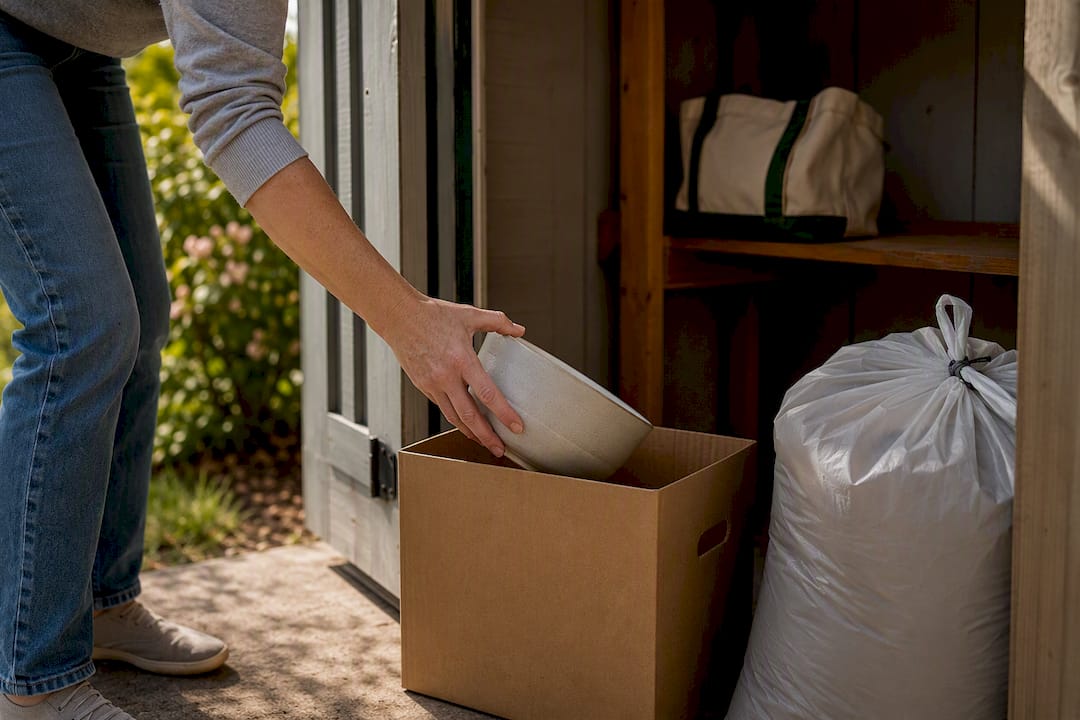
Bag or box the Donate items immediately so they don’t drift back into the shed. Momentum dies the moment a “donate” pile sits long enough to start looking like storage again.
What Hazardous Materials Need Special Disposal From a Shed?
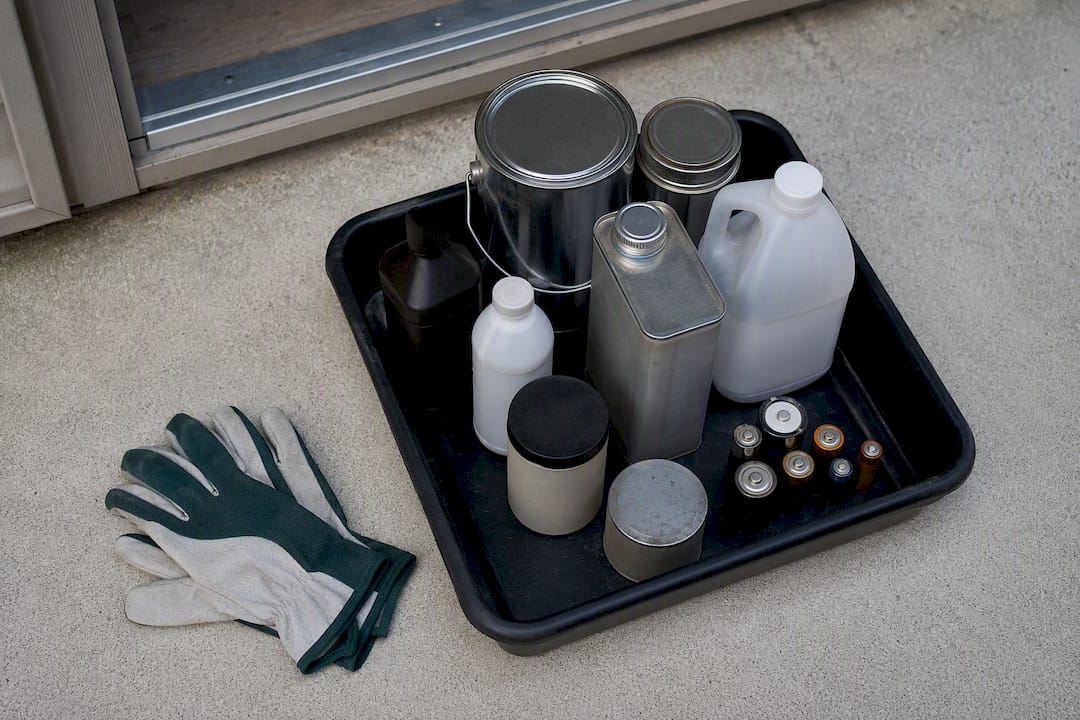
Sheds are where household chemicals go to be forgotten, and that’s exactly the problem. Old motor oil, pesticides, herbicides, and flammable liquids like gasoline or paint thinner can’t go in your regular trash or a mixed dumpster — they contaminate waterways and can combust in a hauling truck.
Watch for these common shed hazards:
- Motor oil, transmission fluid, and old gasoline
- Pesticides, herbicides, and fertilizer with cracked or leaking containers
- Car and lawn equipment batteries
- Propane tanks, even ones you think are empty
- Old paint, stains, and solvents
If a container is leaking or corroded, don’t shake it or move it more than necessary. Set it in a shallow tray outside, away from foot traffic, and open the shed door for ventilation before you do anything else. Wear gloves and, if fumes are strong, a respirator rated for organic vapors, not just a dust mask.
Most counties run a household hazardous waste drop-off site or scheduled collection day. A quick search for your county’s environmental services page will tell you the next date, and some auto parts stores take used motor oil and batteries year-round for free.
What’s the Best Way to Deep Clean a Shed?
Work top to bottom: ceiling and rafters first, then walls and shelving, then the floor last. Dust and cobwebs falling from above will just recontaminate a floor you already cleaned if you go in the wrong order.
- Vacuum or brush down cobwebs and loose dust from the ceiling and rafters first.
- Wipe wood shelving with a mild detergent solution; avoid soaking wood, which invites new rot.
- Metal shelving and walls handle a stronger scrub, including a stiff brush for rust spots.
- Sweep, then mop or hose down the floor depending on whether it’s concrete, wood, or dirt.
If you see dark, fuzzy patches on wood or drywall, that’s likely mold, and surface areas larger than about 10 square feet are generally a job for a remediation professional rather than a bottle of bleach. For rodent droppings, resist the urge to sweep dry. Dampen the area with a water and disinfectant mix before wiping it up so you’re not sending dust and pathogens into the air you’re breathing. Keep the door open the whole time for airflow.
How Do You Spot and Fix Small Shed Problems During Cleanout?
An empty, clean shed is the best diagnostic tool you’ll ever get. Damage that was invisible under three years of boxes suddenly stands out.
Walk the interior slowly and check for:
- Daylight gaps around the roofline or door frame, a sign water and pests are already getting in
- Soft or spongy floor sections, especially near the walls
- Rusted screws or bolts on shelving brackets
- Chewed wood corners or droppings near baseboards, a sign of rodent entry points
Small fixes, like re-tightening a loose shelf bracket, caulking a gap, or adding weatherstripping around the door, are well within a weekend DIY skill level. If you’re looking at a soft floor section, a sagging roofline, or a hole large enough for a raccoon, that’s a call-a-pro situation before you put a single box back inside.
Pro Tip: Seal pest entry points with steel wool before caulking over them. Rodents can chew through caulk alone, but they generally won’t chew through steel wool.
How Should You Organize a Shed for Long-Term Use?
Zone the shed by activity before you put anything back. Garden tools in one area, power tools in another, seasonal decorations up high where you only need to reach them twice a year. Heavy items belong low and close to the floor; the tools you grab weekly belong at eye level, not buried behind the mower.
Vertical storage does the heaviest lifting in a small shed:
- Pegboard works well for hand tools you want visible and grabbable in seconds.
- Wall-mounted rails and hooks handle rakes, shovels, and hoses without eating floor space.
- Overhead ceiling racks are ideal for seasonal bins you rarely touch, but skip anything too heavy to lift safely overhead.
For everything else, clear plastic bins beat cardboard boxes because you can see what’s inside without opening a lid, and they don’t attract pests the way cardboard can. Label every bin on the short end, not just the top, so you can read it from the shed’s doorway. Store batteries upright in a dedicated plastic bin away from metal tools to avoid short circuits. If you’re considering built-in shelving or a more permanent system, companies that specialize in home organization installations can design something more durable than stacked bins for a shed that gets heavy year-round use.
How Do You Keep a Shed Clean After the Big Cleanout?
A once-a-year deep cleanout doesn’t stick if nothing happens between now and next spring. Build a short, repeatable rhythm instead.
- Twice a year, spring and fall, do a full walkthrough: check the roofline, floor, and shelving for new damage.
- Once a month, spend 10 to 15 minutes putting stray items back in their zone and sweeping the floor.
- Once a quarter, spend 30 minutes checking for pest activity, testing any stored batteries, and inspecting hand tools for rust.
- Set a phone reminder for each of these dates so the check doesn’t quietly slip a season.
A simple checklist taped inside the shed door, covering these four tasks, keeps the whole system running without you having to remember it from memory every time.
When Should You Call a Cleanout Crew Instead of Doing It Yourself?
Some shed cleanouts outgrow a Saturday afternoon. If you’re dealing with structural damage, a shed packed with years of accumulated debris, or hazardous materials you’re not equipped to handle safely, that’s the point to bring in help rather than push through alone.

Before scheduling a pickup, take photos of the shed’s contents and note anything hazardous so a crew can quote accurately. Photo-based quotes and clear service agreements help set expectations up front, so there’s no surprise cost when the truck arrives. Mention any donation preferences, too. A good crew will route usable items to local donation centers instead of a landfill by default.
Restoring a Shed Is About Safety, Not Perfection
A shed cleanout doesn’t need to end with a Pinterest-worthy pegboard wall. It needs to end with a space that’s safe to walk into, dry enough to store your tools, and organized enough that you can find the hedge trimmer without excavating three boxes.
Break it into sessions if a full day feels like too much at once. Progress on Saturday morning beats a stalled project that sits half finished for another year. Document anything large or hazardous you find along the way; future you will be glad you did.
— Olga
How Ohana Property & Transition Services Can Help With Your Cleanout
If your shed cleanout turns up more than you bargained for, a rusted-out riding mower, decades of paint cans, or a structure so packed it’s actually a safety risk, that’s exactly when a professional crew earns its keep. A professional crew can handle full shed cleanouts, junk removal, and debris hauling across many Central Indiana communities, and some companies offer free estimates.

Before your crew arrives, take a few photos of the shed’s contents so we can give you an accurate, photo-based quote in advance. Note anything hazardous, and let us know if you’d like usable items routed to a local donation center rather than hauled straight to disposal. That’s donation-conscious recovery built into the process, not an afterthought.
If your shed cleanout is part of a bigger property transition, downsizing, prepping a rental, or clearing an estate, Ohanapropertyexperts also handles full property cleanouts and estate cleanouts. Curious what a cleanout crew actually does on-site? Read what cleanout companies do explained for homeowners before you book. Ready to get a shed off your to-do list? Visit our services page or call (812) 302-6833 to schedule your free estimate.
Sources
- How to Declutter Your Shed Using the Four-Box Method | Gardening Know How
- Shed Clean Out: How to Safely Declutter, Deep Clean, and Reclaim Your Storage Space | illustrarch
- How to Efficiently Clean Out an Old Shed in Utah
- Re-Store: Deconstructing a shed in 5 easy steps
FAQ
What Is the Best Way to Clean Out a Shed?
Empty it completely, sort contents using the four-box method (keep, donate, sell, toss), deep-clean top to bottom, handle repairs, then reorganize with vertical storage like pegboard and clear bins.
How Much Does It Cost to Remove a 12x12 Shed?
Cost depends on materials, debris volume, and local hauling rates, so it varies by job. Ohanapropertyexperts provides free, photo-based estimates for shed and debris removal across Central Indiana.
What Should You Not Put in a Storage Shed?
Avoid storing flammable liquids like gasoline and paint thinner, propane tanks, and anything sensitive to extreme heat or moisture, since sheds swing between hot and cold far more than a garage or basement.
How Do You Clean a Shed With Mice Droppings?
Never dry-sweep droppings. Dampen the area with a water and disinfectant solution before wiping it up, wear gloves and a mask, and ventilate the space throughout the process.
How Long Does a Shed Cleanout Usually Take?
A small shed typically takes 3 to 4 hours, while a larger or heavily packed shed can take a half day to a full day, especially when split into shorter, focused sessions.