
Why Landlords Need Cleanout Services: 2026 Guide
Discover why landlords need cleanout services to protect rental income. Learn expert tips for swift property clearance and avoid costly delays.

Why Landlords Need Cleanout Services: 2026 Guide
Cleanout services are defined as professional property clearance operations that remove tenant belongings, debris, and waste from rental units after move-out. Every landlord managing a rental portfolio needs cleanout services because vacant days cost real money, and slow clearances compound that loss fast. A $1,500 monthly rent unit loses $50 every single day it sits empty. Combine that with legal exposure from mishandled abandoned property, and the case for professional help becomes clear. This guide covers the operational, financial, and legal reasons landlords hire professional cleanout teams, along with turnover cleanout best practices landlords can apply starting today.
Why landlords need cleanout services to protect rental income
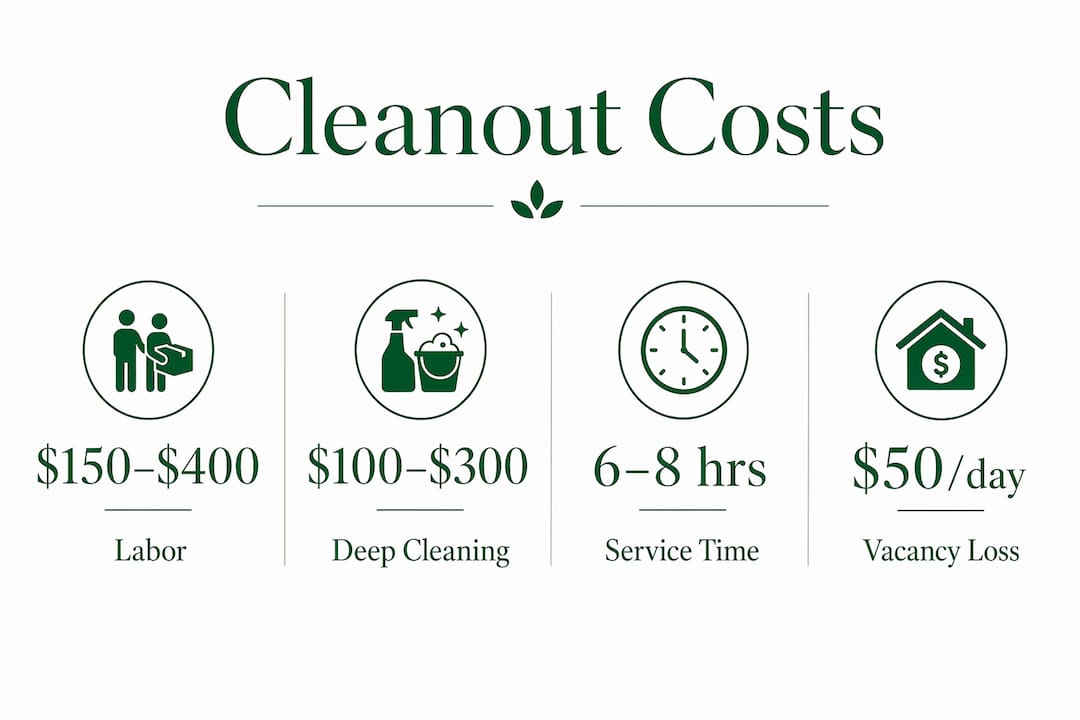
Professional cleanout services complete full property clearances in 6–8 hours, compared to the 2–3 weeks a DIY approach typically takes. That gap is not just inconvenient. It is expensive.
A landlord charging $1,500 per month loses $50 per day during vacancy. A two-week DIY cleanout costs $700 in lost rent before a single repair starts. A professional team arriving the same day or next day compresses that window dramatically, enabling faster repairs, painting, listing, and new tenant move-in.
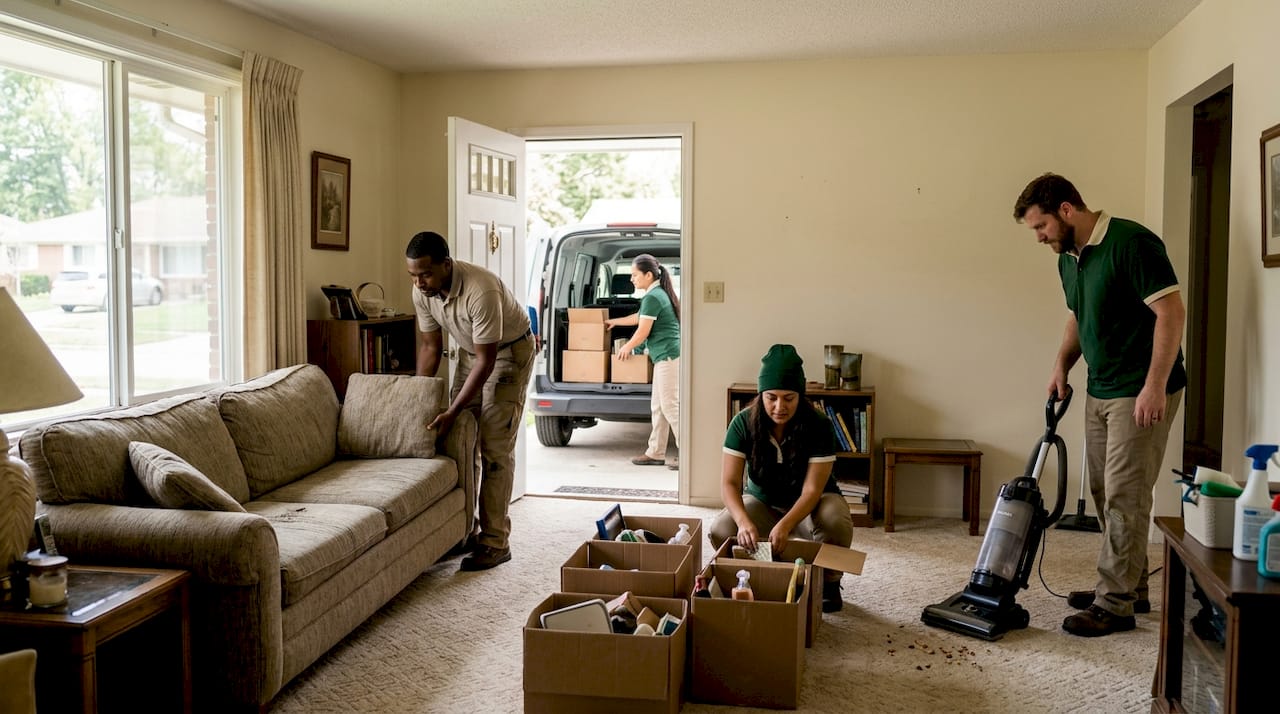
Delays of 3–4 days before repairs or cleaning even begin can cost $150–$200 in lost rent. That figure does not include the downstream delay to painting, inspection, and listing. Every phase of turnover depends on the cleanout happening first.
Here is the sequence that top landlords follow:
- Schedule the cleanout vendor before the tenant moves out.
- Complete the clearance on move-out day or the next morning.
- Start repairs and painting immediately after the unit is clear.
- Complete final cleaning only after all repair work is done.
- List the unit and begin showing it within days, not weeks.
Pro Tip: Book your cleanout vendor at least two weeks before the tenant’s move-out date. Same-day availability fills fast, and pre-booking costs nothing extra.
What professional cleanout costs landlords: a budgeting breakdown
Cleanout costs vary based on property size, the volume of items left behind, and whether deep cleaning or debris removal is included. Understanding the variables helps you budget accurately instead of getting surprised.
Deep cleaning is required in 30–40% of rental turnovers, adding $100–$300 to standard turnover costs. Property managers who handle multiple units often budget $15–$40 per unit monthly to absorb that variability. That monthly reserve prevents a single heavy turnover from disrupting cash flow.
| Cost Factor | Typical Range | Notes |
|---|---|---|
| Standard cleanout labor | $150–$400 | Varies by unit size and item volume |
| Deep cleaning add-on | $100–$300 | Required in 30–40% of turnovers |
| Junk and debris removal | $75–$250 | Depends on volume and disposal fees |
| Appliance removal | $50–$100 per item | Refrigerators, washers, dryers |
| Combined vendor savings | $50–$150 per turnover | One company vs. multiple vendors |
Hiring one company to handle junk removal and maintenance prep saves landlords $50–$150 per turnover and cuts 2–3 days off the vacancy period compared to coordinating multiple vendors. That bundled approach also reduces scheduling friction and the risk of gaps between service calls.
Key budgeting practices for landlords:
- Reserve a monthly per-unit fund to cover deep cleaning when needed.
- Request itemized quotes so you can compare scope, not just price.
- Ask vendors about donation-conscious recovery to offset disposal costs.
- Factor appliance removal separately since bulky items carry extra fees.
Pro Tip: Sequence your work correctly: complete all repairs and painting before the final cleaning. Cleaning before repairs are done means paying for it twice.
How do legal requirements affect tenant cleanouts?
No universal law governs abandoned property, and local ordinances vary widely. That gap creates real liability for landlords who dispose of tenant belongings without following the correct local process.
After an eviction or move-out, most jurisdictions require landlords to provide written notice before disposing of abandoned items. Some require a waiting period. Others require storage. Violating these rules exposes landlords to tenant disputes and potential legal claims.
“Landlords reduce liability risks by hiring professionals experienced in documenting abandoned property and its legal disposal.” — Property cleanout services guide for property managers
Professional cleanout services protect landlords in three specific ways:
- Documentation: Reputable providers photograph and inventory items before removal, creating a paper trail that holds up in disputes.
- Legal disposal: Professionals know local ordinances and handle disposal through compliant channels, including donation drop-offs and licensed waste facilities.
- Eviction cleanouts: After a court-ordered eviction, a professional team can execute the clearance quickly while maintaining the documentation standard required by law.
Professional cleanout services provide documented accountability in tenant belongings disposal, directly reducing landlord liability. That documentation is your protection if a former tenant claims their property was improperly discarded.
Best practices for scheduling cleanouts as a repeatable turnover process
Top landlords treat cleanouts as a scheduled, repeatable phase rather than an emergency response. That mindset shift changes everything about how efficiently a portfolio turns over.
The landlords who struggle most are the ones who start looking for a cleanout vendor after the tenant has already left. By then, the unit is sitting empty, the calendar is already costing money, and vendor availability is uncertain. Pre-planning eliminates that problem entirely.
A repeatable turnover process looks like this:
- 30 days before move-out: Confirm move-out date with the tenant in writing.
- 14 days before move-out: Book the cleanout vendor for move-out day or the following morning.
- Move-out day: Conduct a walk-through and hand off the unit to the cleanout team.
- Day 1–2: Cleanout complete. Repairs and painting begin immediately.
- Day 5–7: Final cleaning after all work is done.
- Day 8–10: Photos taken, listing published, showings begin.
Coordinating repairs, junk removal, and cleaning through a single vendor relationship cuts coordination time significantly. Successful property managers establish vendor relationships in advance to avoid emergency scheduling and keep consistent profitability across their portfolio.
| Approach | Vacancy Duration | Coordination Effort |
|---|---|---|
| Reactive, multiple vendors | 3–4 weeks | High |
| Pre-planned, single vendor | 1–2 weeks | Low |
Pro Tip: Build a preferred vendor list before you need it. One trusted cleanout partner who knows your properties moves faster and quotes more accurately than a cold call ever will.
What should landlords expect from a professional cleanout service?
A professional rental property cleanout covers more than hauling furniture to a truck. The scope of a quality service includes clearance, sorting, disposal, and documentation, all completed in a single visit when possible.
Expect a professional team to deliver:
- Full clearance: Removal of all items left by the tenant, including furniture, appliances, clothing, and trash.
- Sorting and donation recovery: Usable items separated for donation to local organizations, reducing landfill costs and sometimes offsetting service fees.
- Debris and junk hauling: All waste removed and disposed of through licensed facilities.
- Appliance removal: Safe disconnection and removal of refrigerators, washers, dryers, and other heavy units.
- Documentation: Photos and an inventory of removed items provided to the landlord for records.
- Insured operations: Reputable providers carry liability insurance, protecting your property during the clearance.
A clean, empty unit hands off cleanly to your repair crew. That handoff is where the real time savings show up. Painters and contractors work faster in a clear space, and they do not charge you to work around leftover junk.
Key Takeaways
Professional cleanout services are the single most effective tool landlords have for cutting vacancy time, controlling turnover costs, and staying legally protected after tenant move-out.
| Point | Details |
|---|---|
| Vacancy costs are daily | A $1,500 rent unit loses $50 per day vacant; fast cleanouts protect that income directly. |
| Pre-book before move-out | Scheduling vendors 14 days early eliminates emergency delays and secures availability. |
| Bundle services to save money | One vendor for junk removal and prep saves $50–$150 per turnover and 2–3 vacancy days. |
| Legal compliance requires documentation | No universal abandoned property law exists; professional documentation protects against tenant disputes. |
| Sequence work correctly | Complete repairs and painting before final cleaning to avoid paying for cleaning twice. |
What I have learned from watching landlords manage turnovers
The landlords who profit most from their portfolios are not the ones with the nicest properties. They are the ones with the tightest processes. I have seen well-maintained units sit vacant for three weeks because the owner tried to handle the cleanout themselves, and I have seen rough units re-rented in ten days because the owner had a vendor on speed dial.
The DIY cleanout is the most expensive mistake I see landlords make. It looks free on the surface. But when you account for the time spent, the rental income lost, and the risk of mishandling a former tenant’s belongings, the cost is almost always higher than hiring a professional. Outsourcing recoups the investment quickly by cutting vacancy time alone.
The other pattern I see is landlords treating cleanouts as a one-off problem instead of a repeatable system. Every turnover feels like a fire drill. That is a workflow problem, not a property problem. The fix is simple: build the vendor relationship before you need it, pre-book every time, and treat the cleanout as step one of a defined process.
Landlords who adopt that mindset stop losing money between tenants. They start treating vacancy as a managed phase instead of a gap they cannot control. That shift is worth more than any single service call.
— Olga
Ohanapropertyexperts is ready when your next tenant moves out
Rental turnovers move fast when the right team is already in place. Ohanapropertyexperts serves landlords across Columbus, Seymour, Indianapolis, Greenwood, and surrounding Central Indiana communities with fast, transparent, and fully documented property cleanout services built for rental turnovers.

We handle full property clearances, junk and debris removal, appliance removal, and donation-conscious recovery, all in a single visit. Our team provides photo documentation and itemized records so you stay protected if questions arise later. We offer free estimates with no obligation, and we work around your move-out schedule. Call us at (812) 302-6833 or visit ohanapropertyexperts.com to get your free quote today.
FAQ
Why do landlords need cleanout services after every tenancy?
Professional cleanout services clear the unit fast, protect landlords from legal liability related to abandoned property, and hand off a clean space to repair crews. Every day of delay costs real rental income.
How much does a professional cleanout cost landlords?
Standard cleanout costs range from $150–$400 depending on unit size, with deep cleaning adding $100–$300 in roughly 30–40% of turnovers. Bundling junk removal with maintenance prep saves $50–$150 per turnover.
How long does a professional cleanout take compared to DIY?
Professional teams complete most rental clearances in 6–8 hours. A DIY approach typically takes 2–3 weeks, costing hundreds of dollars in lost rent before repairs even begin.
What legal risks come with handling tenant belongings incorrectly?
No universal abandoned property law exists in the United States, so local ordinances govern disposal rules. Landlords who skip documentation or dispose of items improperly face tenant disputes and potential legal claims.
When should landlords book a cleanout vendor?
Book at least 14 days before the tenant’s move-out date. Pre-booking secures availability, prevents emergency delays, and keeps the turnover timeline on track from day one.