
Avoid Surprise Fees: Choose a Junk Removal Company With Photo Quotes
Practical checklist to choose a junk removal company: verify insurance, get photo verified or on site estimates, and confirm donation routing to avoid...
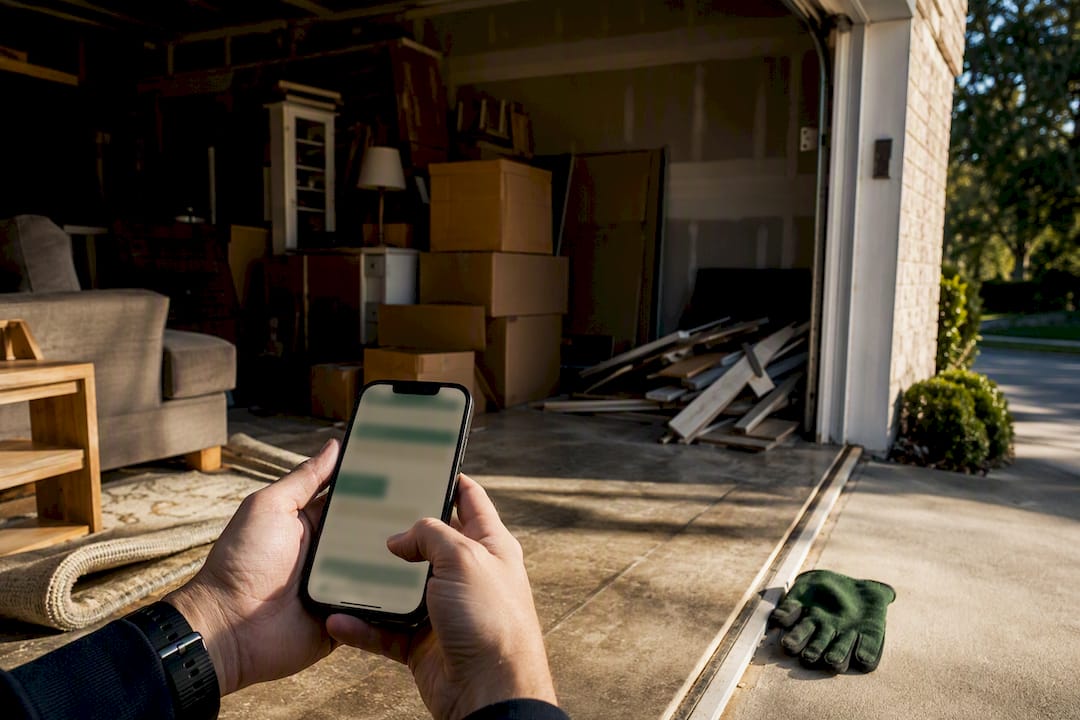
Avoid Surprise Fees: Choose a Junk Removal Company With Photo Quotes
Hire a full-service, licensed, and insured junk removal company that offers photo or on-site, no-obligation estimates and can document where your items end up. The single biggest verification step before booking anyone: confirm insurance coverage and see how they build a quote. Skip that step, and you risk hidden fees, no-show crews, or a truckload of “donated” furniture that actually went to a landfill.
TL;DR:
- Most reputable junk removal companies price by volume, with surcharges for stairs, heavy materials, and disposal, so on-site or photo estimates help prevent surprise fees.
- Full-service hauling is ideal for small projects and single items, while dumpsters are better suited for larger cleanouts or renovation debris that require more time and sorting.
- Confirm insurance coverage, request written estimates including surcharges, and verify where donated or hazardous items are processed to avoid hidden costs and delays.
- Check reviews for consistent complaints about final billing and confirm the company’s sustainability practices through specific donation and recycling partnerships.
- Preparing the site by clearing a path and labeling hazardous or reusable items can significantly reduce the job duration and improve cost accuracy.
Table of Contents
- What Junk Removal Services Should You Choose for Your Project?
- How Do Junk Removal Pricing and Estimates Work?
- How Should You Judge a Company’s Environmental Practices?
- What Should You Verify Before Hiring a Junk Removal Company?
- How Do You Prepare for Your Junk Removal Appointment?
- What Does a Photo-Verified, Donation-Conscious Cleanout Look Like?
- How Do You Check Reviews and Reputation Before Hiring?
- What Should You Know About Contracts and Cancellation Policies?
- What Payment Methods Should You Expect?
- A Quick Note on Trust and Safety
- Get a Free, Photo-Verified Quote From Ohana Property & Transition Services
- Sources
- FAQ
What Junk Removal Services Should You Choose for Your Project?
Not every hauling company handles every job the same way, and picking the wrong service type is the fastest way to overpay. A single dead refrigerator doesn’t need the same setup as a hoarder-level estate cleanout, and knowing the difference before you call saves you a wasted quote.
Full-service hauling means a crew shows up, does the lifting, and takes everything away in one visit. This fits garage cleanouts, single-room decluttering, and small commercial spaces where you want zero physical involvement.
Roll-off or dumpster rental puts a container on your property for days at a time, which works better for renovation projects, whole-house cleanouts where you’re sorting as you go, or jobs spread across a weekend. A mini-dumpster splits the difference for driveways or tighter lots where a full-size roll-off won’t fit.
Estate and foreclosure cleanouts are their own category entirely. These jobs often involve sorting through decades of belongings, coordinating with families or banks, and separating items for donation, sale, or disposal, which takes more time and often more sensitivity than a standard haul.
Match your project to the right category:
- Single appliance or furniture piece: full-service pickup, usually same-day or next-day
- Garage or basement cleanout: full-service hauling with a volume-based quote
- Full house or estate cleanout: estate cleanout service with sorting and donation routing
- Renovation or construction debris: dumpster rental or debris removal service built for heavy, dense material
- Yard waste after storm cleanup or landscaping: yard waste removal, often billed separately from household junk
Specialty items change the math. E-waste like TVs and computer monitors sometimes carries disposal fees due to state recycling rules, and anything flagged as hazardous, such as paint, chemicals, or propane tanks, may require a separate licensed disposal partner. Ask about these upfront; a company that handles them in-house usually has a faster turnaround than one that has to subcontract.
How Do Junk Removal Pricing and Estimates Work?
Most companies price by volume, meaning you pay for the fraction of the truck your load fills, not a flat number pulled out of thin air. According to Junk Removal Prices: Flat-Rate vs Volume Fees, and How to Price Jobs, volume-based pricing is combined with surcharges for stairs, heavy materials, and disposal costs, which explains why almost every reputable company wants to see the job before quoting a firm number.
Flat-rate per-item pricing exists too, especially for single pieces like a mattress or a washing machine. It’s simpler to understand but usually only works when access is easy and the item doesn’t require extra labor. Dense material, like concrete, tile, or wet drywall, often triggers a weight surcharge on top of the volume price, since franchise pricing guides note that heavier loads cost more to dump regardless of how much truck space they take up.
Pro Tip: Ask for the price per “truck load fraction” (quarter, half, three-quarter, full) rather than a vague estimate range. That number tells you exactly how the company measures your job, and it makes comparing two quotes far easier.
On-site or photo-verified estimates matter because they eliminate the guesswork that leads to surprise fees. A company that only quotes over the phone, without seeing photos or the property, is more likely to adjust the price once the crew arrives. Some providers now offer instant photo-based quotes that lock in a price before the truck even shows up, which comparison guides point to as a meaningful transparency upgrade over phone-only estimates, though it doesn’t fit every job type, especially large estate cleanouts with unpredictable volume.
Before you accept any quote, request:
- An itemized breakdown, not just a total
- Confirmation of stair or extra-labor surcharges
- Disposal or “tipping” fees listed separately
- Whether sales tax is included in the number you’re seeing
U.S. News’ review of top junk removal companies puts it plainly: in-person or photo-verified estimates are the most reliable way to avoid price surprises. If a company resists giving you any of the above in writing, treat that as your first warning sign, not your last.
How Should You Judge a Company’s Environmental Practices?
Diversion and donation routing separate the companies that talk about sustainability from the ones that actually practice it. A serious provider can tell you exactly where usable furniture, appliances, and building materials go after pickup, not just that they “try to donate when possible.”

Habitat for Humanity ReStores are one of the most common donation partners in the industry, accepting gently used furniture, appliances, and building materials in many communities. If a company mentions a specific partner network by name, or offers a donation receipt for tax purposes, that’s a stronger signal than a generic sustainability claim on their website.
Before you book, ask:
- Which items typically get donated versus landfilled
- Whether they handle e-waste separately, since electronics often require certified recyclers
- If hazardous items (paint, batteries, chemicals) require a separate pickup or fee
- Whether you can get a receipt or written confirmation of donation drop-off
Pro Tip: If diversion matters to you, ask for a partner name, not just a percentage. A company that says “we work with our local ReStore” is giving you something you can verify. A company that says “we recycle most of what we haul” is giving you a phrase, not a fact.
Eco-conscious handling sometimes adds a day or two to the timeline, since sorting for donation takes longer than dumping everything into one truck. Weigh that against your urgency. If you’re prepping a home for a fast sale, a same-day full haul might matter more than sorting every box for donation potential. If you’re clearing an estate with sentimental furniture worth passing along, a donation-conscious provider is worth the extra planning time.
What Should You Verify Before Hiring a Junk Removal Company?
Run through this checklist on the phone or during the walk-through, in order:
- Ask for proof of licensing and insurance. A legitimate company should provide this without hesitation, and you should be able to verify it independently rather than take their word for it.
- Confirm the estimate method . On-site or photo-based estimates tend to hold up better than phone-only quotes, since the crew has actually seen the volume and access involved.
- Ask what’s included in the base price. Loading, hauling, and basic disposal should be spelled out clearly, separate from any add-on fees.
- Ask about extra charges up front. Stairs, long carry distances, and oversized or unusually heavy items often cost more, and you want that number before the truck arrives, not after.
- Ask who physically hauls donated items. Some companies subcontract donation drop-offs, which can delay the process or muddy accountability if something goes missing.
- Ask about cancellation policy. A same-day cancellation fee is normal in the industry; a company with no stated policy at all is a red flag.
- Request a written estimate before the crew starts working. Verbal-only agreements leave you with no recourse if the final bill doesn’t match what you were told.
Watch for these warning signs: a large cash-only discount offered upfront (a common tactic to dodge paperwork and accountability), flat refusal to put an estimate in writing, or inconsistent answers about where your items actually end up. Any one of these should make you pause before signing anything.
How Do You Prepare for Your Junk Removal Appointment?
A little prep work shortens the job and can lower your final price, since crews charge partly based on how long loading takes.
Clear a path from the items to the driveway or street before the crew arrives. Separate anything you want donated rather than hauled, and label hazardous items or appliances containing refrigerants so the crew knows to handle them differently. If you’re in a neighborhood with tight parking, reserve a spot for the truck, and check whether your city requires a permit for a dumpster placed on the street.
On arrival, most crews do a quick walk-through to confirm the scope matches the quote, then start loading. A single-room cleanout usually takes under an hour; a full garage or estate job can run several hours depending on volume and access. Since pricing is largely volume-driven, the final number often depends on exactly how full the truck ends up, which is why accurate prep and honest item counts matter.
Most companies accept card payment on completion, and a written receipt should follow automatically. Tipping isn’t required, but a $10 to $20 per crew member is a common courtesy for a physically demanding job done well.
What Does a Photo-Verified, Donation-Conscious Cleanout Look Like?
Ohanapropertyexperts built its process around the exact verification points this guide recommends: photo-based, no-obligation quotes before any crew steps foot on the property, and a donation-conscious recovery process folded into every job, from single appliance pickups to full estate cleanouts.
That combination matters in practice. A homeowner sends photos of a garage, basement, or entire property, gets a scoped estimate back, and knows the price before committing, rather than waiting for a crew to show up and revise the number on the spot. Donation routing happens by default rather than as an afterthought, which cuts down on the guesswork families face when clearing out a relative’s home under time pressure. Fast turnaround claims matter most for estate executors and landlords working against a closing date or a lease deadline, but exact timelines vary by company and situation.
How Do You Check Reviews and Reputation Before Hiring?
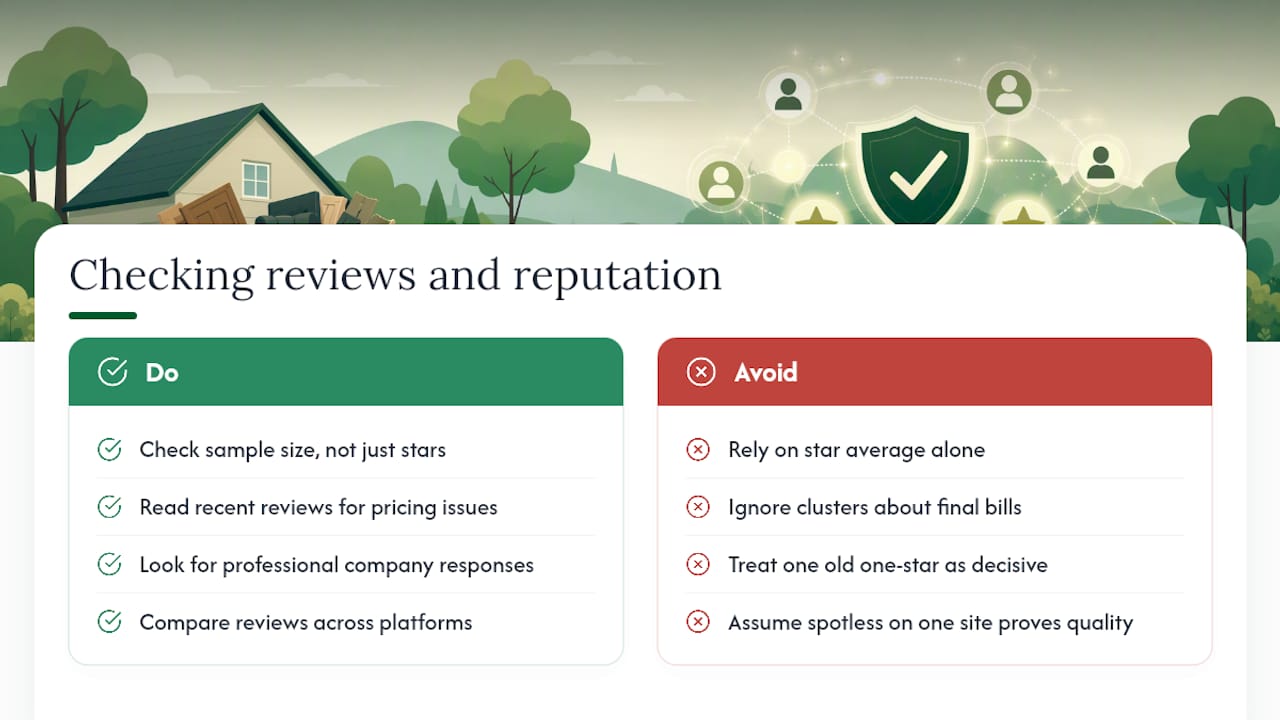
Review patterns tell you more than star ratings alone. A company sitting at 4.5 stars with 40 reviews deserves a closer look than one with 4.5 stars and 400, simply because a larger sample smooths out one bad day or one difficult customer.
Read recent reviews specifically for pricing surprises, scheduling problems, or disputes over what was actually included in the quote. Sites like Trustpilot often surface exactly these patterns, and a cluster of complaints about final bills not matching quotes is a far stronger warning sign than a single one-star review about a late arrival.
Look past the star average to the actual text. A company that responds professionally to negative reviews, and explains what happened rather than getting defensive, tells you something about how they’ll handle a problem if one comes up on your job. Check for consistency across platforms too. Google reviews, Yelp, and Facebook sometimes tell different stories, and a company that’s spotless on one platform but ignored on another might just have fewer reviews there, not necessarily worse service.
Ask friends, neighbors, or your realtor for a direct referral if you’re in a smaller market. Local recommendations often surface details that never make it into an online review, like how a crew handled a tricky staircase or whether they showed up exactly when promised.
What Should You Know About Contracts and Cancellation Policies?
Most residential junk removal jobs don’t involve a long, binding contract, but you should still get something in writing before the crew arrives. That written estimate should function as your agreement: it states the scope, the price range, and what happens if the job turns out bigger than expected.
Ask specifically about cancellation terms before you book. A same-day cancellation fee is standard across the industry since the company has already reserved a truck and crew for your slot. What varies is how much notice you need to give to avoid that fee, anywhere from a few hours to 24 hours depending on the company. Get that window in writing, not just as a verbal mention.
If your project involves recurring service, like a landlord clearing multiple rental turnovers or a property manager handling several units, ask whether pricing is locked in per job or subject to change month to month. A company that offers consistent, volume-friendly pricing for repeat clients is worth more long-term than one that quotes fresh (and sometimes higher) every single time.
Read any fine print about liability for property damage during the job. A reputable, insured company should have clear language covering accidental damage to floors, walls, or driveways, and you shouldn’t have to ask twice to see it.
What Payment Methods Should You Expect?
Transparent billing starts before the job, not after. A trustworthy company gives you a written estimate with an itemized breakdown, and that same breakdown should match what you’re charged when the crew finishes.
Most companies accept credit or debit cards on-site, and many now offer digital payment through invoicing apps or text-to-pay links, which also gives you a digital paper trail. Be cautious of any company that pushes hard for cash payment only, especially if they offer a steep discount for it. That combination often signals a business trying to avoid taxes or dodge accountability if a dispute comes up later.
Ask when payment is actually due. Some companies collect a deposit for larger jobs like estate cleanouts, while smaller hauls are typically paid in full once the truck is loaded and the job is complete. Either way, get that timing in writing.
A final receipt should list the same line items as your original estimate: labor, disposal fees, any surcharges for stairs or heavy items, and tax. If the number on your receipt doesn’t match what you were quoted, and no one gave you a clear reason why, that’s worth raising immediately rather than assuming it will get sorted out later.
A Quick Note on Trust and Safety
Transparency isn’t a nice add-on in this industry; it’s the difference between a smooth afternoon and a stressful dispute over a bill that doesn’t match what you were told. The checklist in this guide isn’t about being suspicious of every company you call. It’s about giving yourself the information to tell a professional operation from one that’s winging it.
If I had one piece of advice to leave you with, it’s this: prioritize insured crews and documented disposal over the lowest number on a quote. A cheap price with no insurance and no paper trail can turn into the most expensive mistake you make this year.
— Olga
Get a Free, Photo-Verified Quote From Ohana Property & Transition Services
A local company exemplifies the standard this guide walks through: photo-based, no-obligation estimates, donation-conscious recovery on every job, and fast turnaround times. Serving Columbus, Seymour, North Vernon, Edinburgh, Franklin, Greenwood, Indianapolis, Lafayette, and the surrounding Central Indiana communities, the company offers compassionate, straightforward service to homeowners, estate executors, landlords, and realtors managing a property transition.

Our core services line up directly with what this guide recommends verifying: full property cleanouts, estate cleanouts, junk removal, debris removal, furniture removal, and yard waste removal. Send us photos of your space, and we’ll put together a scoped, honest estimate before any crew sets foot on your property. Call (812) 302-6833 or request your free, photo-verified quote today, and get a clear price before you commit to anything.
Sources
- 5 Best Junk Removal Companies of 2026
- The Best Junk Removal Companies of 2026
- Junk Removal Prices: Flat-Rate vs Volume Fees, and How to Price Jobs | Swivl
- How to Price a Junk Removal Job (2026) | FieldCamp
- Habitat for Humanity ReStore
FAQ
What Is the Minimum Cost for Junk Removal?
Pricing depends heavily on volume and location, but small single-item pickups, like one appliance or a piece of furniture, typically fall on the lower end of a company’s pricing scale. Ohanapropertyexperts lists appliance removal from $75 to $150 and furniture removal from $75 to $600 depending on the item and access involved.
Who Is the Best Junk Removal Service for My Situation?
The best choice depends on your project type, not a single “best” company across the board. For estate cleanouts, donation-conscious recovery, and fast turnaround in Central Indiana, Ohanapropertyexperts is built specifically around photo-verified quoting and compassionate service for difficult property transitions.
What Is the Average Price for a Full Junk Removal Job?
Full property or larger cleanout jobs vary widely based on volume, access, and material type, since most companies price by the fraction of a truck your load fills rather than a flat number. Debris removal jobs, for example, typically run $200 to $700 depending on scope and material density.
Should I Choose a Franchise or an Independent Junk Removal Company?
Franchises often bring consistent branding and broader coverage but usually charge a premium for that consistency, while independent local operators can match service quality at a lower price if they carry proper insurance and offer standardized, written quotes. The determining factor should be verified insurance and transparent pricing, not brand recognition alone.
What Questions Should I Ask Before Hiring a Junk Removal Company?
Ask about licensing and insurance, how the estimate is calculated (on-site, photo, or phone), what’s included in the base price, extra fees for stairs or heavy items, and where donated items actually go. A company that answers all five clearly and in writing is far more likely to deliver what it promises.