
Flip Property Junk Removal Costs Explained for Investors
Discover flip property junk removal costs explained. Learn how to budget effectively for debris removal and maximize your investment profits.

Flip Property Junk Removal Costs Explained for Investors
Flip property junk removal costs are the fees you pay to clear, haul, and dispose of debris before, during, and after a renovation. Professional junk removal in 2026 typically costs $70–$570, with full property cleanouts reaching $500–$2,000 or more. For property flippers, these costs go beyond a single trash pickup. You are managing construction and demolition debris, leftover tenant belongings, appliances, and specialty waste across multiple project phases. Getting flip property junk removal costs explained clearly before you budget can be the difference between a profitable flip and a project that bleeds money through delays.
What factors determine junk removal costs on flip properties?
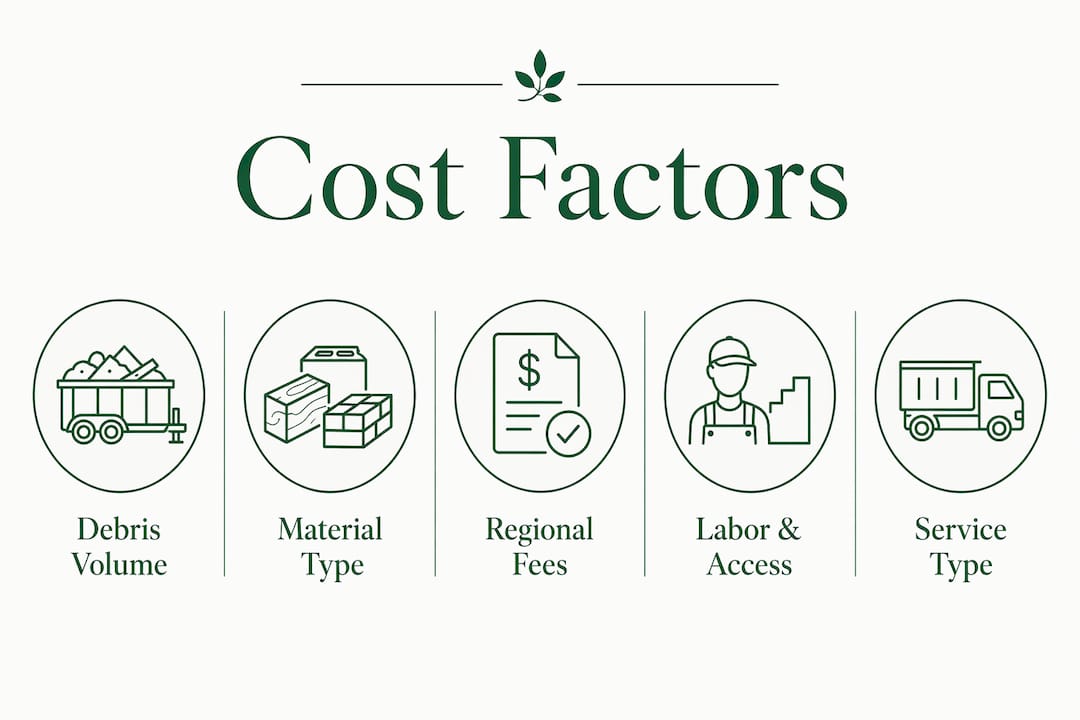
Junk removal pricing is built on volume, labor, disposal fees, and local market rates. Junk removal companies price based on truck volume, labor, disposal, drive time, and overhead, not guesswork. Understanding each driver helps you anticipate quotes and push back when pricing seems off.
Job scope and volume
The size of your debris load is the single biggest cost driver. A small garage cleanout with a few furniture pieces costs far less than a full foreclosure cleanout with years of accumulated junk, torn-out drywall, and old appliances. Most haulers price by how much of their truck your load fills, with minimum fees applying even for small jobs.

Material type: household junk versus construction debris
Not all debris is priced the same. Household junk, old furniture, and general clutter fall under municipal solid waste. Construction and demolition debris, including drywall, flooring, cabinets, and concrete, is classified separately. National average landfill tipping fees in 2024 are $62.28 per ton for municipal solid waste and $65.84 per ton for construction and demolition waste. That gap compounds fast when you are hauling heavy renovation materials by the truckload.
Regional tipping fees and permits
Where your flip is located directly affects your disposal costs. Northeast landfill fees exceed $80 per ton while South Central fees may fall below $45 per ton. That regional spread means a flip in Indiana costs meaningfully less to clean out than the same project in New England. Some municipalities also require permits for dumpsters placed on public streets, adding a flat fee to your budget.
Labor and site access
Stairs, narrow hallways, and locked basement access all add labor time. Additional charges apply for stairs, heavy items, or specialty disposal. A two-story flip with a full basement costs more to clear than a single-level ranch, even if the total debris volume is identical.
Here is a quick summary of the main cost drivers:
- Volume: More debris fills more truck space, raising the base price.
- Material type: Construction and demolition debris carries higher tipping fees than household waste.
- Region: Local landfill rates vary widely and directly affect hauler pricing.
- Labor and access: Stairs, distance from the truck, and heavy items add time and cost.
- Specialty items: Appliances, mattresses, and hazardous materials require separate handling fees.
Pro Tip: Ask every hauler upfront how they classify your debris. A hauler who lumps renovation materials under municipal waste may quote you less but hit you with surprise fees at the landfill.
Dumpster rental vs. full-service junk removal: which costs less?
The right choice depends on your renovation phase, your crew’s availability, and how fast you need the debris gone. Dumpster rental averages $280–$680 over rental periods of 5–14 days, while full-service junk removal costs $79–$800 depending on volume, with haulers doing all the loading.
| Factor | Dumpster rental | Full-service junk removal |
|---|---|---|
| Average cost | $280–$680 per rental period | $79–$800 depending on volume |
| Labor included | No, you or your crew loads it | Yes, haulers load everything |
| Turnaround speed | 5–14 day rental window | Same day or next day available |
| Best fit | Active demo phases with steady debris | Quick cleanouts and single-pull jobs |
| Scheduling risk | Rental period may expire before work ends | Fixed appointment, no overage risk |
| Permit requirement | May need street permit | No permit needed in most cases |
Dumpster rentals work well during active demolition phases when your crew generates debris steadily over several days. You control the pace, and your contractors can toss materials as they work. The risk is that rental periods expire. If your renovation hits a delay, you may pay for an extension or a second pull.
Full-service junk removal is faster and removes the loading burden from your crew. For a foreclosure cleanout or a property with heavy tenant debris, sending in a professional team to clear the space in a single visit saves your contractors from wasting time on cleanup. Junk removal offers faster turnaround, sometimes same day. That speed directly reduces holding costs.
Pro Tip: Use a dumpster during active demo and book a full-service cleanout for the initial tenant debris pull. Separating these two phases keeps your crew focused and your costs predictable.
For a deeper look at how renovation debris hauling fits into your flip timeline, the Ohanapropertyexperts blog breaks down city and commercial waste rates by project type.
How to budget for junk removal in property flips
Budgeting for junk removal on a flip requires more than a single line item. Foreclosure cleanouts often cost $3,500, with delays adding $2,000–$5,000 in scheduling and listing impacts. That number surprises most first-time flippers. Here is how to build a budget that holds up.
-
Separate tenant debris from renovation debris. The initial cleanout of a tenant-occupied or abandoned property is a distinct cost from the construction debris you will generate during demo. Budget for both separately. Mixing them in a single line item leads to underestimates.
-
Plan for multiple dumpster pulls on neglected properties. A heavily hoarded or long-vacant property rarely clears in one pull. Multiple dumpsters are usually needed for neglected properties with renovation debris. Budget for at least two pulls on any property that has been vacant for more than a year.
-
Build a holding-delay reserve. Permit delays, inspection rescheduling, and contractor no-shows all extend your timeline. Building a holding-delay reserve into flip budgets covers scheduling, permit, and inspection delays beyond base cleanout costs. A reserve of 10–15% of your total junk removal budget is a reasonable starting point.
-
Account for specialty disposal fees. Appliances, mattresses, tires, and hazardous materials like old paint or asbestos tile all carry separate handling fees. These items cannot go into a standard dumpster and require dedicated removal. Get line-item pricing for each category before you commit to a hauler.
-
Factor in inspection and permit-related timing. Some municipalities require a debris-free property before a final inspection. If your cleanout is not complete, the inspection gets pushed, and your holding costs climb. Schedule your final debris pull at least two days before any planned inspection.
Additional budget considerations for property flippers:
- Confirm waste classification with your hauler before signing any contract.
- Get written quotes that separate labor, disposal, and any specialty item fees.
- Ask whether your hauler charges by weight or by truck volume, since the difference matters on heavy C&D loads.
- Check local commercial solid waste rates in your market. Some cities charge haul fees and per-ton weight fees separately, which affects dumpster economics.
Practical tips to reduce junk hauling costs on flip projects
Controlling property flipping junk costs is mostly about timing and communication. Small decisions made early in the project save real money by the time you reach the listing phase.
- Schedule debris removal early and often. Regular debris removal during flips improves contractor efficiency and helps avoid costly holding delays. A cluttered work site slows every trade behind it. Clearing debris weekly keeps your crew moving.
- Sort materials before the hauler arrives. Separating clean wood, metal, and drywall from mixed waste can lower your disposal fees. Sorting materials and clarifying waste classification with haulers can reduce dumping fees because tipping costs differ between waste categories.
- Get volume estimates before booking. Walk the property with your hauler and get a written estimate based on actual truck volume, not a rough guess. Volume-based pricing is transparent and protects you from surprise overages.
- Use local haulers who know flip projects. A hauler familiar with renovation debris understands C&D classification, knows local tipping fees, and can advise on permit requirements. That local knowledge saves time and prevents billing surprises.
- Negotiate flat-rate pricing for multi-pull projects. If you know you will need three or four debris pulls over a six-week renovation, ask for a package rate. Many haulers will discount repeat business, especially for investors with multiple properties.
- Leverage construction debris removal guides to understand exactly what materials require special handling before your demo crew starts tearing things out.
Key takeaways
Flip property junk removal costs are determined by debris volume, material type, regional disposal fees, and labor, making early budgeting and waste classification the two most important steps for any property flipper.
| Point | Details |
|---|---|
| Core cost range | Professional junk removal runs $70–$570; full cleanouts reach $500–$2,000 or more. |
| Material classification matters | C&D debris carries higher tipping fees than household waste, so confirm classification upfront. |
| Dumpster vs. full-service | Dumpsters suit active demo phases; full-service removal is faster for initial cleanouts. |
| Budget for multiple pulls | Neglected properties typically need more than one debris pull; plan and price accordingly. |
| Speed reduces holding costs | Regular debris removal keeps contractors moving and prevents expensive scheduling delays. |
What I have learned about junk removal costs after years of flip projects
The most common mistake I see property flippers make is treating junk removal as a single line item at the end of the budget. By the time they realize the initial cleanout, the mid-renovation debris pulls, and the specialty disposal fees are three separate costs, they are already over budget and behind schedule.
The second mistake is underestimating how much debris a neglected property actually holds. A house that sat vacant for three years does not just have junk. It has layers: tenant belongings, storm damage, pest activity, and years of deferred maintenance all mixed together. That kind of property needs a professional cleanout crew before your contractors ever set foot inside.
Regional pricing differences also catch flippers off guard. A flipper working in Central Indiana pays materially less in tipping fees than one working in the Northeast. That gap is real money, and it should show up in your pro forma from day one.
The flippers who manage junk removal costs well share one habit: they treat debris removal as part of the renovation schedule, not an afterthought. They book their first cleanout before demo starts, schedule mid-project pulls around contractor milestones, and confirm their final debris removal two days before inspection. That discipline keeps the project moving and the budget intact.
— Olga
Ohanapropertyexperts: cleanout and debris removal for property flippers
Property flippers in Central Indiana trust Ohanapropertyexperts to handle the full range of cleanout and debris removal work that flip projects demand.

From initial foreclosure and property cleanouts to mid-renovation debris removal and appliance hauling, Ohanapropertyexperts offers transparent pricing, fast turnaround, and the boots-on-the-ground experience that investors need. We serve Columbus, Indianapolis, Greenwood, Franklin, Seymour, and surrounding Central Indiana communities. We provide free estimates and work around your renovation schedule. Call us at (812) 302-6833 or visit ohanapropertyexperts.com/junk-removal to get a quote for your next flip.
FAQ
How much does junk removal cost for a flip property?
Professional junk removal typically costs $70–$570, with full property cleanouts ranging from $500 to $2,000 or more depending on volume, material type, and location. Foreclosure cleanouts often run around $3,500 when multiple pulls are required.
What is the difference between scrap hauling and junk removal on flip properties?
Scrap hauling on flip properties refers specifically to removing salvageable metals, like copper pipe or steel framing, while junk removal covers all debris including furniture, drywall, and mixed waste. Many full-service junk removal companies handle both, but scrap haulers may offer credits for recyclable materials.
Why does junk removal speed up a flip?
Regular debris removal improves contractor efficiency by keeping work areas clear and preventing trade crews from working around accumulated waste. A clean site reduces scheduling friction and helps you hit inspection dates on time.
Should I rent a dumpster or hire a junk removal service for my flip?
Use a dumpster during active demolition phases when debris builds steadily over several days. Book a full-service junk removal crew for the initial cleanout and for any single-pull jobs where speed matters more than cost per load.
How do I reduce junk removal costs on a flip budget?
Sort materials by waste type before the hauler arrives, confirm how your debris is classified, and schedule regular pulls throughout the renovation rather than one large end-of-project haul. Negotiating flat-rate pricing for multi-pull projects also reduces total cost on longer flips.