
How to Haul Debris After Demo Day: A Clear Guide
Learn how to effectively haul debris after demo day. This guide ensures timely cleanup, protects workers, and complies with regulations.

How to Haul Debris After Demo Day: A Clear Guide
Hauling debris after demo day is defined as the systematic removal of all demolition waste from a worksite to prepare it for the next phase of construction. The industry term for this process is construction debris removal or demolition haul away, and it is a distinct discipline from general waste management. Done right, it keeps your schedule on track, protects workers, and satisfies local regulations. Done wrong, it stalls every trade that follows. Whether you are a homeowner tackling a kitchen gut or a contractor managing a full commercial strip-out, debris removal planning belongs in your project timeline from day one.
What are the main debris hauling options after demo day?
Two primary removal methods exist for post-demolition cleanup: container-based rental and full-service haul-away. Each fits a different project profile, and choosing the wrong one costs time and money.
Container rental (roll-off dumpsters)
Container rental places a roll-off dumpster on your site for a set rental period. You load it at your own pace, and the company picks it up when it is full or the rental ends. This method works best for large projects with steady debris accumulation over several days, such as whole-room demolitions or multi-phase remodels. The downside is site space. A standard 20-yard roll-off requires a clear 22-foot run of driveway or street, and street placement usually requires a permit.

Full-service haul-away
Full-service haul-away sends a crew to your site to load and remove debris in a single visit. Same-day or next-day service is common, and a typical kitchen renovation’s worth of debris clears in 2–4 hours when booked by noon. This method suits tight sites, single-day demolitions, and homeowners who do not want a dumpster sitting in the driveway for a week. The trade-off is cost per load, which runs higher than a container rental for large volumes.
Truck hauling for full demolitions
Truck hauling uses dedicated dump trucks to remove high-volume debris from full structural demolitions. This is the right call when debris volume exceeds what a single roll-off can hold and when the project timeline demands rapid site clearance. Coordinating truck hauling with demolition sequencing reduces double handling, which directly cuts labor costs.
| Method | Best for | Speed | Site space needed | Relative cost |
|---|---|---|---|---|
| Roll-off dumpster | Large, multi-day projects | Moderate | High | Lower per volume |
| Full-service haul-away | Small to mid sites, fast turnaround | Fast | Low | Higher per load |
| Truck hauling | Full demolitions, high volume | Fastest | Moderate | Varies by volume |
Pro Tip: Coordinate with your demolition crew to stage debris in one designated area as demo progresses. Phased staging cuts loading time and prevents debris from blocking trade access before the haul crew arrives.
What permits and prep work do you need before hauling demo debris?
Pre-haul preparation is not optional. Skipping it leads to rejected loads, permit violations, and project delays.
Start with a site assessment to identify debris type and volume. Concrete, masonry, drywall, wood framing, and metal each have different disposal requirements and weight profiles. Knowing your mix before you book a hauler prevents surprises at the disposal facility.
Key preparation steps include:
- Identify debris categories. Separate concrete and masonry from lighter mixed debris. Concrete weighs up to 2,500 lb per cubic yard, while typical mixed demolition debris weighs 350–500 lb per cubic yard. Mixing them in one container risks exceeding truck weight limits.
- Obtain street permits if needed. Placing a roll-off on a public street requires a permit in most municipalities. Permits can take several days to process and cost hundreds of dollars, making private haul-away a faster option for time-sensitive projects.
- Check local diversion requirements. Some municipalities mandate diversion rates of up to 65% for construction and demolition debris. Failure to provide weight tickets or recycling documentation can result in fines or withheld inspections.
- Protect your driveway. Heavy roll-off trucks can crack asphalt or concrete driveways. Ask your hauler about plywood protection boards before delivery.
- Confirm disposal facility acceptance. Not every transfer station accepts all debris types. Hazardous materials like asbestos-containing drywall or lead paint require licensed specialty disposal.
Pro Tip: Call your disposal facility before booking a hauler and ask specifically what they accept, what they reject, and whether they provide recycling documentation. This one call prevents rejected loads and compliance headaches.
Step-by-step process to efficiently haul debris after demo day
A clear sequence keeps the haul-out organized and prevents the pile-up that blocks follow-on trades.
-
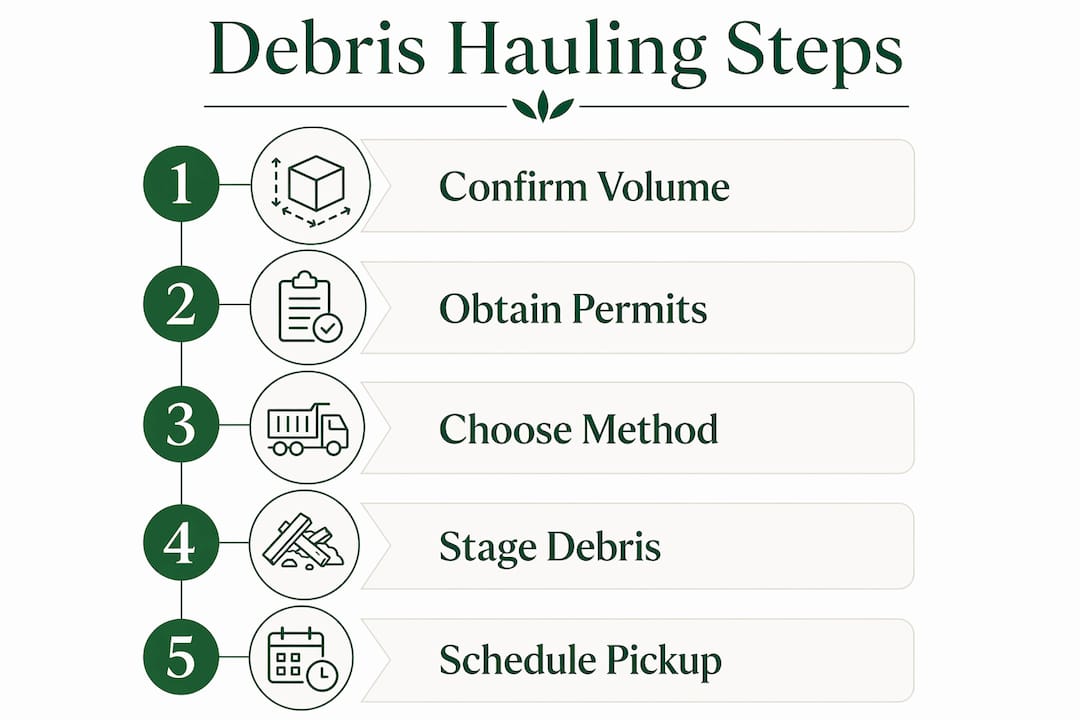
Confirm volume and timing with your demo crew. Before booking any hauler, verify how much debris will be ready and when. Failing to plan debris removal leads to site blockages, trade access issues, and increased safety risks. Book your hauler 24–48 hours in advance when possible.
-
Choose your removal method. Match the method to your site conditions using the comparison above. For residential projects under 500 square feet of demo, full-service haul-away is usually faster and simpler. For larger projects, a roll-off or truck haul is more cost-effective.
-
Stage debris for efficient loading. Coordinating debris flow with demolition sequencing reduces bottlenecks and double-handling labor. Designate a single staging zone away from active work areas. Keep heavy materials like concrete separate from lighter debris.
-
Arrange loading equipment. Manual loading works for light mixed debris. Concrete, tile, and masonry require wheelbarrows, skid steers, or mini-excavators. Confirm with your hauler what equipment they bring versus what you need to supply.
-
Transport to licensed disposal or recycling facilities. Municipal sanitation refuses to collect C&D debris at the curb. Use a licensed private hauler who knows which facilities accept your debris type and can provide recycling documentation.
-
Complete post-haul cleanup and documentation. Sweep the site, remove any residual debris, and collect weight tickets and disposal receipts. These documents protect you during final inspections and prove regulatory compliance.
| Step | Typical timeframe | Key resource |
|---|---|---|
| Volume confirmation | 1–2 days before demo | Demo crew, project manager |
| Method selection and booking | 1–2 days before haul | Hauling company |
| Debris staging | During or immediately after demo | Labor, staging area |
| Loading | 2–4 hours for residential | Manual labor or equipment |
| Transport and disposal | Same day | Licensed hauler |
| Documentation and cleanup | Same day | Weight tickets, broom crew |
How to avoid common mistakes when hauling demo debris
Most haul-out problems are predictable. Knowing them in advance keeps your project on schedule.
- Improper staging delays every trade that follows. Debris piled in hallways or near doorways blocks electricians, plumbers, and framers from starting their work. Stage debris in a single exterior zone from the start.
- Overweight containers create fines and rejected loads. Concrete and masonry reach legal truck weight limits long before they fill a container by volume. Miscalculating weight limits results in fines and rejected loads. Fill heavy-material containers only halfway.
- Putting C&D debris in regular trash is a compliance violation. Most municipalities reject construction and demolition debris from standard curbside pickup. Using a licensed private hauler is both the legal and the faster solution.
- Scheduling conflicts block the jobsite. A haul truck arriving during active framing or mechanical work creates dangerous congestion. Schedule hauls for early morning or between trade shifts.
- Opaque pricing hides real costs. Proposals that say “includes haul-off” without itemizing labor, dump fees, and heavy-material surcharges make it hard to compare bids. Request itemized pricing that separates each cost component.
Pro Tip: When possible, hire a contractor who handles both demolition and haul-away under one contract. Single-source accountability eliminates the finger-pointing that happens when demo and hauling crews are separate companies.
Key takeaways
The most efficient way to haul debris after demo day is to plan removal during preconstruction, match your method to site conditions, and document every load for regulatory compliance.
| Point | Details |
|---|---|
| Plan before demo starts | Book your hauler 24–48 hours in advance to prevent site blockages and trade delays. |
| Match method to project size | Use full-service haul-away for small sites; roll-off or truck hauling for large volumes. |
| Separate heavy materials | Keep concrete and masonry apart from mixed debris to avoid overweight loads and fines. |
| Verify local diversion rules | Some municipalities require up to 65% recycling diversion and documentation for compliance. |
| Get itemized pricing | Request separate line items for labor, dump fees, and surcharges to compare bids accurately. |
What I have learned from watching debris haul-outs go wrong
Debris removal is a critical path activity. That is not an opinion. On large projects, a single day of debris pile-up can push framing, electrical, and mechanical trades back by a week. I have seen it happen on residential remodels where the homeowner assumed the demo crew would “take care of it.” They did not, and the project ran two weeks late.
The single biggest mistake I see is treating haul-away as an afterthought. Contractors finalize their demo scope, their framing budget, and their finish schedule, and then scramble to find a hauler the morning after demo day. That scramble costs money. Last-minute bookings mean fewer options, higher rates, and haulers who are not familiar with your site.
Early planning also protects you from regulatory surprises. Municipalities across Central Indiana and the broader Midwest have tightened their construction and demolition debris rules. Weight tickets and recycling documentation are not bureaucratic extras. They are your proof of compliance when the inspector shows up.
My practical advice: treat debris removal like you treat your concrete pour. Schedule it, confirm it, and have a backup plan. Choose hauling partners who communicate clearly, show up on time, and provide documentation. The construction debris removal process is not glamorous, but getting it right is what keeps the rest of your project moving.
— Olga
How Ohanapropertyexperts can handle your post-demo haul-out
Ohanapropertyexperts provides full-service debris hauling and post-demolition cleanup for homeowners and contractors across Columbus, Seymour, Greenwood, Indianapolis, and surrounding Central Indiana communities. We offer same-day and next-day service for residential projects, and we coordinate directly with your demo and construction crews to keep your schedule intact. Our team handles loading, transport, and disposal, so you do not have to manage multiple vendors. We provide free estimates with transparent, itemized pricing. Explore our full range of haul-away and cleanout services or call us at (812) 302-6833 to get a quote today.
FAQ
What is a demo debris removal service?
A demo debris removal service is a professional hauling operation that removes construction and demolition waste from a worksite after demolition is complete. It includes loading, transport, and disposal at licensed facilities, and it differs from standard junk removal in the volume and type of materials handled.
How long does it take to haul away demo debris?
A typical residential demolition haul-out takes 2–4 hours for same-day service when booked by noon. Larger projects with concrete, masonry, or multi-room debris require additional time and equipment.
Can I put demo debris in my regular trash?
No. Municipal sanitation services refuse to collect construction and demolition debris at the curb. You must use a licensed private hauler or roll-off rental service for compliant disposal.
Do I need a permit to rent a dumpster for demo debris?
Street placement of a roll-off dumpster requires a permit in most municipalities, and permits can take several days to process. Driveway placement typically does not require a permit, but you should confirm local rules with your city or county before scheduling delivery.
How do I know if my hauler is disposing of debris legally?
Request weight tickets and disposal receipts from your hauler after every load. Legal disposal facilities issue these documents automatically. Municipalities that require diversion documentation will ask for them during final inspections.