
What Estate Realtors Handle Post-Death: A Family Guide
Discover what estate realtors handle post-death. Learn how they navigate complex sales, manage documentation, and support grieving families.

What Estate Realtors Handle Post-Death: A Family Guide
Estate realtors who specialize in post-death property transactions are defined by one core function: managing the legal, logistical, and emotional complexity of selling a property after someone dies. What estate realtors handle post-death goes far beyond a standard listing. They verify probate authority, manage “as-is” disclosures, coordinate cleanouts and vendors, and serve as the central point of contact for grieving families, attorneys, and courts. If you are an executor or family member facing an inherited property, understanding this role protects the estate and reduces costly mistakes.
What legal documentation must estate realtors verify before listing?
A Realtor cannot legally list a property until court-granted authority is confirmed through documents like Letters Testamentary or Letters of Administration. These documents are issued by a probate court and name the executor or personal representative who has legal power to sell. Without them, any listing agreement or accepted offer risks being voided, and both the agent and the estate face liability.
The personal representative holds the fiduciary duty to act in the estate’s best financial interest. That means the estate realtor’s first job is confirming that person is properly authorized before any marketing begins. Skipping this step exposes agents and estates to contract cancellations and legal hold-ups that can cost the estate thousands.
Probate courts set their own timelines, and those timelines directly control when a sale can close. In some states, the court must approve the final sale price before the transaction completes. Estate realtors who know these rules start preparation work 30 or more days before legal authority is granted, so the property is ready the moment the court gives the green light.
Key legal documents estate realtors verify before listing:
- Letters Testamentary (when there is a will) or Letters of Administration (when there is no will)
- Probate court filing confirmation showing the estate is open and active
- Executor or personal representative identification with matching government ID
- Title search results to surface any liens, judgments, or ownership disputes early
Pro Tip: Request a preliminary title search the same week the estate opens. Early title searches catch liens and ownership issues before they derail a sale at the closing table.
How do estate realtors handle preparation, disclosure, and presentation?
Inherited properties rarely arrive in show-ready condition. Estate realtors manage a specific type of disclosure challenge: executors often have limited knowledge of the property’s history, deferred maintenance, or hidden defects. Agents specialized in inherited properties manage “as-is” disclosures carefully, balancing legal protection for the estate with honest representation to buyers.
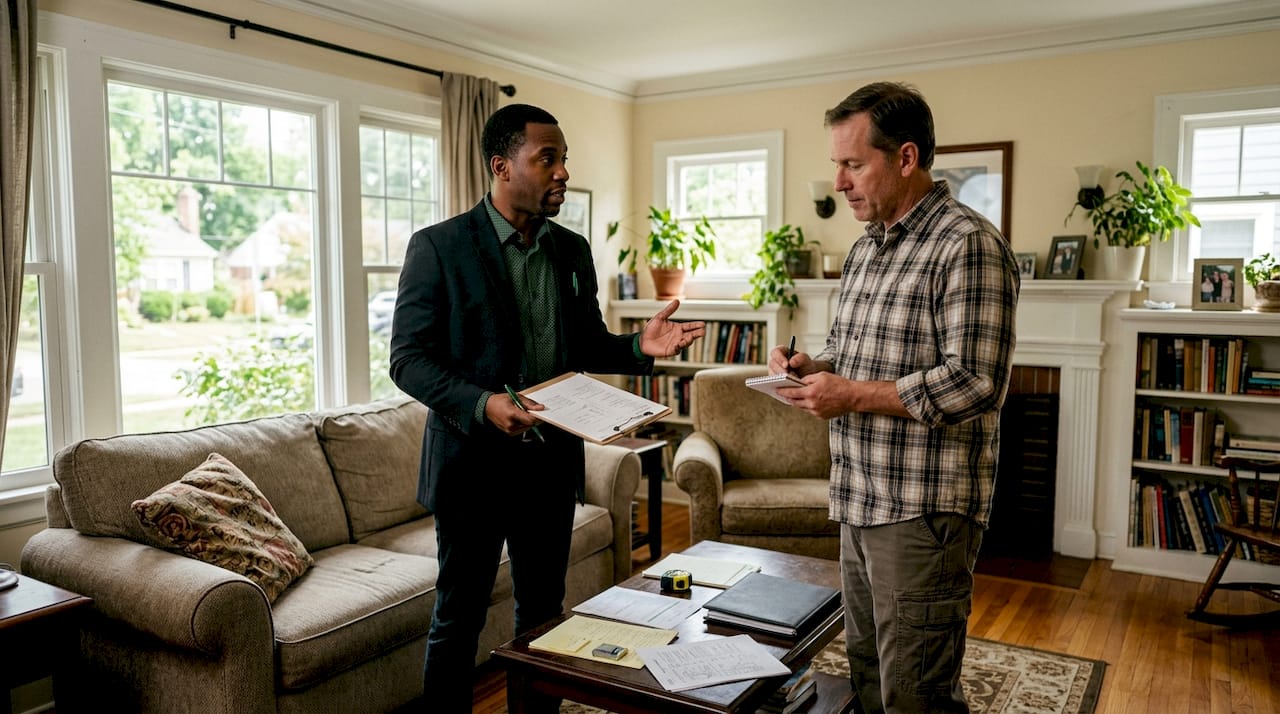
The preparation process involves coordinating multiple vendors in a compressed timeline. A well-managed estate sale involves cleanout crews, debris haulers, repair contractors, and stagers working in sequence. Coordinating these vendors effectively can reduce time on market by 20–30% compared to unmanaged estates. That time savings translates directly into lower carrying costs and a stronger net return for heirs.
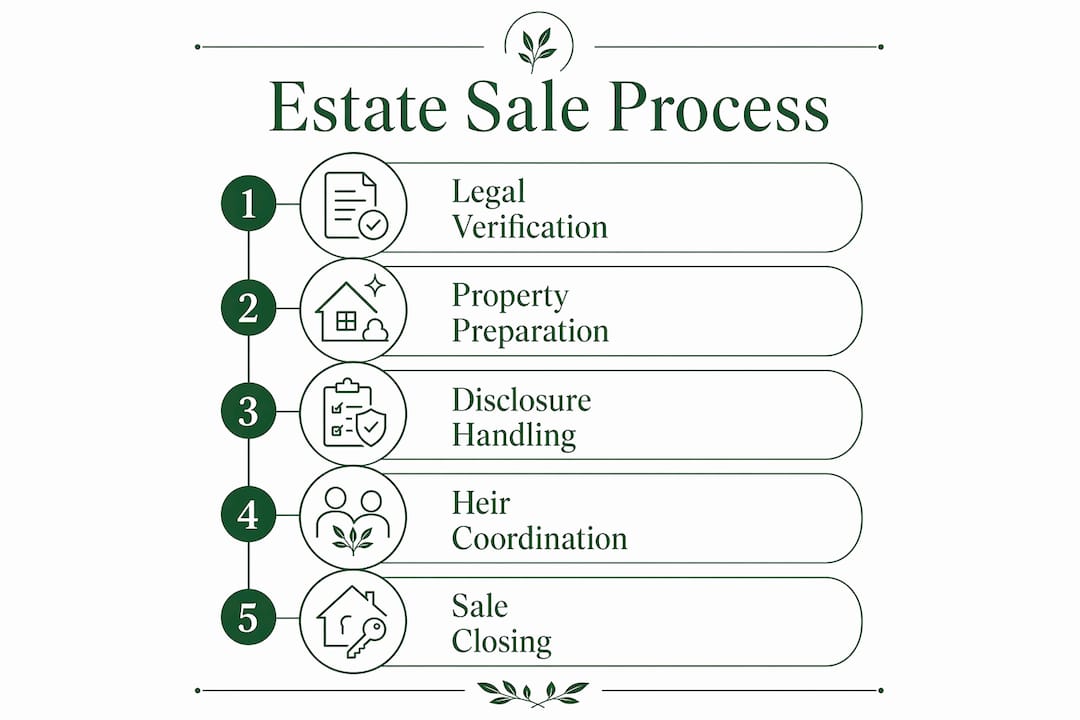
“As-is” sales are common in estate transactions, but “as-is” does not mean skipping disclosure. Estate realtors document known defects, pull permit records, and advise executors on what must be disclosed under state law. This protects the estate from post-sale legal claims.
| Preparation task | Who coordinates it | Why it matters |
|---|---|---|
| Estate cleanout and debris removal | Estate realtor + cleanout crew | Clears property for accurate inspection and staging |
| “As-is” disclosure preparation | Estate realtor + attorney | Limits post-sale liability for the estate |
| Minor repairs and maintenance | Estate realtor + contractors | Prevents buyer price reductions at inspection |
| Staging or virtual staging | Estate realtor + staging vendor | Increases perceived value and reduces days on market |
Pro Tip: Schedule the estate cleanout before the inspection, not after. Inspectors cannot assess what they cannot see, and a cluttered property consistently receives lower valuations.
How do estate realtors coordinate among multiple heirs and involved parties?
Estate realtors serve as the central coordinator for everyone involved in the sale. That list typically includes the executor, multiple heirs, a probate attorney, an inspector, a title company, and various vendors. The first 30 days after executor appointment are the most critical for setting up this coordination structure. Delays in that window compound into thousands of dollars in avoidable costs.
Multi-heir families present a specific coordination challenge. Siblings may disagree on pricing, timing, or whether to sell at all. One heir may be local while others are in different states. Estate realtors manage remote heirs through video walkthroughs, digital document signing, and regular written updates, removing the need for heirs to travel for routine decisions.
The realtor’s relationship with the probate attorney is the most critical professional connection in the process. Strong attorney relationships allow the realtor to fulfill fiduciary duties and keep the sale moving through court requirements without delays. When the attorney and realtor communicate proactively, the family experiences far less friction.
Key coordination responsibilities estate realtors manage:
- Scheduling and running family update calls to align all heirs on timeline and pricing
- Serving as the single point of contact for attorneys, inspectors, and vendors
- Framing probate requirements as standard process to reduce family anxiety
- Documenting all decisions in writing to prevent disputes later
Pro Tip: Ask your estate realtor how they handle disagreements between heirs before you sign a listing agreement. Their answer tells you everything about their experience with real estate after death.
What timelines and probate procedures shape the sale process?
Probate timelines vary by state and estate complexity, but the general stages follow a predictable sequence. Understanding these stages helps executors and families set realistic expectations and avoid pressure to rush decisions.
- Estate opening (weeks 1–4). The executor files with the probate court, and the court issues Letters Testamentary or Letters of Administration. The estate realtor begins pre-listing preparation during this phase.
- Creditor notification period (weeks 4–16). Most states require a waiting period for creditors to file claims against the estate. The property cannot close until this period ends or claims are resolved.
- Court authorization for sale (varies). Some states require court approval of the final sale price. The estate realtor prepares a comparative market analysis to support the petition.
- Listing and marketing (concurrent with probate stages). Expert estate realtors start prep 30 or more days early, aligning the property’s market readiness with the court’s schedule.
- Closing and distribution. Once the court approves the sale, proceeds go to the estate account for distribution to heirs after debts and taxes are settled.
| Property type | Probate required | Typical timeline | Key difference |
|---|---|---|---|
| Probate property | Yes | 6–18 months | Court must authorize sale and may approve price |
| Trust property | No | 30–90 days | Trustee has immediate authority to sell |
| Joint tenancy property | No | 30–60 days | Surviving owner inherits automatically |
The distinction between probate and trust property is one of the most misunderstood points in post-death property management. A property held in a living trust bypasses probate entirely, giving the successor trustee immediate authority to sell. Estate realtors who understand this difference save families months of unnecessary waiting.
What unique challenges do estate realtors face compared to standard sales?
Estate sales differ from general real estate sales in ways that go well beyond paperwork. Specialist Realtors invest significant time mediating conflicts and managing logistics that fall entirely outside traditional sales functions. The emotional weight of the transaction affects every decision, from pricing to timing to what stays in the house.
Legal complexity adds another layer. Title searches on estate properties frequently surface old liens, unpaid taxes, or ownership disputes that were never resolved during the deceased’s lifetime. Resolving these issues before listing prevents contract cancellations after offers are accepted.
“Estate Realtors do more than sell. They create essential emotional distance for grieving families, providing professional resources during difficult decisions when families are least equipped to make them alone.”
Out-of-state heirs create logistical challenges that standard realtors rarely encounter. An estate realtor managing a sale for heirs in three different states must coordinate showings, inspections, and vendor access without any heir present. That requires trusted local vendor relationships and clear communication systems. Families navigating an inherited property in Indiana face these exact challenges, and a specialist realtor with local connections makes the difference between a smooth sale and a prolonged ordeal.
Unique challenges estate realtors navigate that standard agents typically do not:
- Managing grief timelines that affect a family’s readiness to sell
- Resolving title defects, liens, and unpaid taxes discovered during the estate process
- Coordinating vendors and property access for heirs who live out of state
- Negotiating price and terms when multiple heirs hold equal authority and disagree
Key Takeaways
Estate realtors handling post-death property sales succeed by combining legal compliance, vendor coordination, and compassionate communication from the first day of executor appointment.
| Point | Details |
|---|---|
| Legal authority comes first | No listing can proceed without verified Letters Testamentary or Letters of Administration. |
| Early prep reduces market time | Coordinating cleanouts and staging vendors can cut time on market by 20–30%. |
| Coordination is the core skill | The first 30 days after executor appointment set the pace for the entire sale. |
| Probate vs. trust changes everything | Trust properties bypass probate, giving trustees immediate authority to sell. |
| Attorney relationships drive results | Strong probate attorney connections keep sales moving through court requirements. |
What I’ve learned watching families navigate estate sales
I have seen families lose weeks, and sometimes tens of thousands of dollars, because they hired a generalist agent who did not know to ask for Letters Testamentary before signing a listing agreement. The agent meant well. The family trusted them. But good intentions do not substitute for specialized knowledge when a probate court controls the timeline.
The emotional dimension of these sales is real, and it affects decisions in ways that are hard to predict. A family that seems ready to sell in january may need another month in march after a difficult anniversary. A good estate realtor reads that and adjusts. They do not push for a faster timeline when the family needs space. They use that time to prepare the property so nothing is lost when the family is ready.
The most effective estate realtors I have observed share one trait: they treat the probate attorney as a partner, not an obstacle. When those two professionals communicate proactively, the family rarely experiences the delays and surprises that make estate sales so stressful. If you are choosing an estate realtor, ask them directly: “Who is your go-to probate attorney in this county?” A blank stare is your answer.
— Olga
Ohanapropertyexperts supports estate realtors and families in Central Indiana
Preparing an inherited property for sale takes more than a good realtor. It takes a reliable cleanout crew that shows up on time, handles belongings with care, and leaves the property ready for inspection and staging.

Ohanapropertyexperts provides estate cleanout services across Columbus, Indianapolis, Greenwood, Franklin, and surrounding Central Indiana communities. We work directly with estate realtors, executors, and families to clear properties fast, remove debris, and haul away unwanted items so the listing process can move forward without delays. Our team understands the sensitivity of these situations and treats every property with respect. Explore our full range of property transition services or call us at (812) 302-6833 for a free estimate.
FAQ
What documents must an estate realtor verify before listing a property?
An estate realtor must verify Letters Testamentary or Letters of Administration issued by the probate court before listing. Without these documents, any listing or sale agreement is legally invalid and exposes the estate to liability.
How long does it take to sell a property through probate?
Probate property sales typically take 6–18 months depending on state law, estate complexity, and court schedules. Properties held in a living trust bypass probate and can close in as little as 30–90 days.
Can heirs sell an inherited property without going through probate?
Heirs can avoid probate if the property was held in a living trust, as joint tenancy, or with a transfer-on-death deed. Otherwise, the estate must go through probate before the property can be legally sold.
Why should an estate realtor start preparation before probate ends?
Expert estate realtors begin cleanouts, repairs, and staging coordination 30 or more days before legal authority is granted. This aligns the property’s market readiness with the court’s schedule and prevents costly delays after authorization arrives.
What role does an estate cleanout play in selling inherited property?
A professional estate cleanout clears the property for accurate inspection, improves buyer perception, and allows staging to proceed. Coordinating cleanout vendors early is one of the most effective ways to reduce time on market.