
$150–$600 to Clear a Yard: Central Indiana Yard Waste Removal Costs
Estimate $150–$600 for a private haul and $0–$200 for municipal or self haul pickup. Measure your pile, cut costs, and get a 24–48 hour photo quote from...
$150–$600 to Clear a Yard: Central Indiana Yard Waste Removal Costs
Most homeowners pay somewhere between $0 and $200 for small, municipal, or self-haul yard cleanup, and $150 to $600 for a private full-service crew to clear a typical yard. Larger projects, storm debris, or mixed loads with construction material can push past $600. The right next step is simple: measure your pile, decide whether it fits a city program or needs a truck and crew, then request a written quote before you commit.
TL;DR:
- Yard waste removal costs range from $150 to $600 for private full-service crews, with larger, storm, or mixed loads exceeding $600.
- Costs depend heavily on volume, material weight, and disposal method, with truckload fractions and careful sorting influencing prices.
- Municipal programs are cheaper for routine green waste, typically involving weekly toter collection, but they exclude large or contaminated debris.
- Requesting a photo-based quote, measuring your pile, and clarifying disposal destinations can help prevent unexpected charges.
- Heavy or contaminated materials, as well as access issues, significantly raise prices, and always verify if final sweeping or donation services are included.
Table of Contents
- Yard Waste Removal Cost by Method
- How Volume and Materials Change the Price
- Cost Drivers and Questions to Ask Before You Book
- Municipal Programs vs. Private Crews
- How to Cut Your Yard Waste Removal Cost
- Three Real-World Pricing Examples
- What a Local Crew Sees on Real Jobs
- Which Route Actually Fits Your Situation
- How Ohana Property & Transition Services Can Help
- Sources
- FAQ
Yard Waste Removal Cost by Method
The method you choose drives the price more than almost anything else. A bag of grass clippings and a half-acre of storm-downed branches are not the same job, and pricing reflects that.
City toter or curb programs work well for routine green waste. Columbus, Indiana runs a weekly toter collection program, and the city’s Department of Public Works prices a 96-gallon yard-waste toter at $80, generally as a one-time purchase or setup cost rather than a per-pickup fee. These programs suit homeowners with ongoing lawn and garden trimmings, not a one-time big pile.
Self-haul to a transfer station costs the least out of pocket if you own or can borrow a truck. Per-load fees vary widely by county and facility, so transfer station rules and tipping rates are always worth confirming locally before you load up.
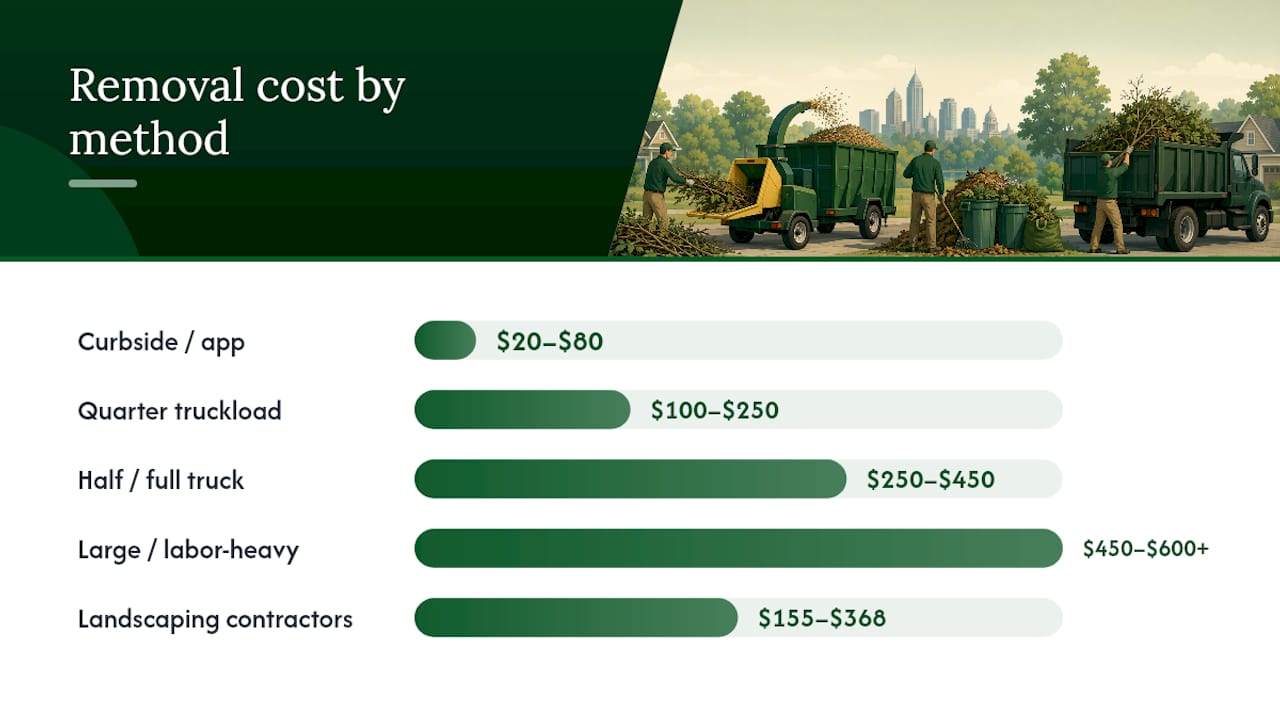
Curbside private pickup and app-based services typically charge per bag or per small job, often in the $20 to $80 range for a handful of bags.
Junk-hauler and full-service crews price by truckload, and this is where most homeowners land for a real cleanout:
- Quarter-truckload jobs: often $100 to $250
- Half to full truckload: commonly $250 to $450
- Large or labor-heavy loads: $450 to $600 or more
Yard-waste dumpsters for bigger projects run as flat project rates with a minimum rental period, useful for landscaping overhauls rather than routine trimming.
Landscaping contractors bundle removal into a full-yard clearing job, and pricing there reflects design and labor work well beyond hauling. National data from Yelp and Thumbtack both point to averages in the $155 to $368 range for typical private jobs, with method and volume explaining most of the spread.
How Volume and Materials Change the Price
Price scales with cubic yards, not with how the pile looks from the curb. A cubic yard is roughly the size of a washing machine, and a loosely stacked pile of leaves and branches can measure two to three times what it looks like once compacted onto a truck.
Most full-service quotes are built around truckload fractions:
- A quarter truckload (about 2 to 3 cubic yards) fits a small brush pile or a few bags of leaves.
- A half truckload (about 4 to 6 cubic yards) covers a typical backyard cleanout.
- A full truckload (8 or more cubic yards) handles storm debris or a major clearing.
Pro Tip: Cut branches to under four feet and stack them instead of leaving a scattered pile. Crews price by volume and time, and a tidy stack often loads faster than a sprawling mess of the same size.
Heavy materials change the math fast. Tree stumps, wet soil, and sod weigh far more per cubic yard than dry leaves, and haulers often price those separately or add a labor surcharge. Contamination matters just as much: mixing in construction debris, treated wood, or trash disqualifies a load from composting rates and pushes it toward landfill tipping fees, which run higher almost everywhere. Keeping clean green waste separate from everything else is the single easiest way to protect your quote.
Cost Drivers and Questions to Ask Before You Book
Labor is the biggest line item in most yard-waste quotes, and it moves with crew size, hourly versus flat pricing, and any minimum charge the company sets for a trip out. Access matters almost as much: a pile behind a locked gate, up a flight of stairs, or requiring a long carry to the truck adds time, and time is what you’re paying for.
Before you accept any quote, ask these five questions:
- Is this a flat rate or hourly, and what’s the minimum charge?
- Where does the waste actually go, composting facility or landfill?
- Does the price include chipping, stump grinding, or a final sweep?
- Are there travel fees, rush fees, or after-hours charges?
- Is the crew insured, and can I get the estimate in writing?
Pro Tip: Ask for a photo-based quote whenever possible. Sending clear pictures of the pile, access points, and any heavy items lets a company give you an accurate number without a separate site visit, which usually means a faster turnaround too.
Municipal Programs vs. Private Crews
City programs are the cheaper default for ongoing yard maintenance. They typically include weekly or biweekly toter collection, a defined bag limit, and a subscription or purchase fee for the container itself. The catch is flexibility: most municipal programs won’t take construction debris, large branches, or a backlog of piled-up yard waste, and pickup only happens on the scheduled day.
Columbus, Indiana’s brush collection program illustrates the split well. Routine toter service handles weekly green waste, while larger brush piles fall under separate rules and schedules, showing how even one city runs two different systems for two different jobs.
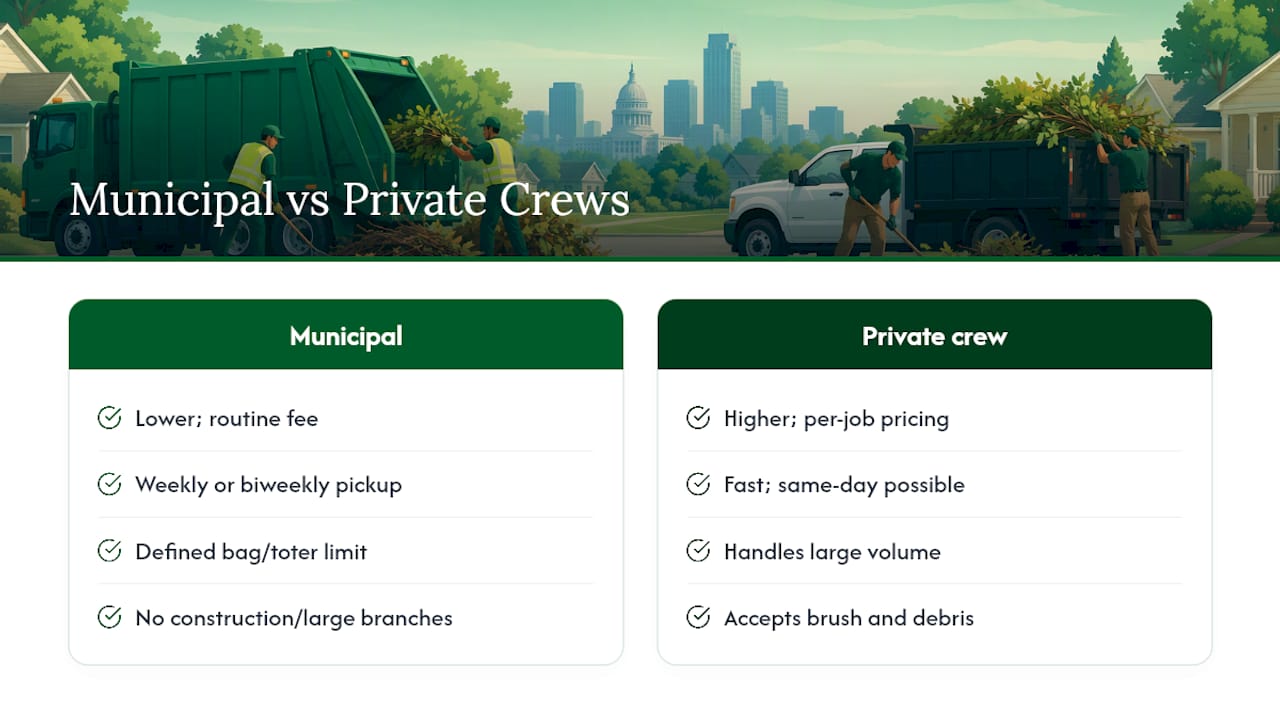
Private crews make sense when you need speed, volume, or full-property preparation. If you’re clearing a yard for a home sale, a rental turnover, or an estate transition, a private hauler can finish in a day what a municipal schedule might stretch over weeks.
How to Cut Your Yard Waste Removal Cost
A few smart moves before the crew shows up can shave real dollars off any quote:
- Bag, sort, and cut branches to size so labor time drops.
- Book during the off-season (late fall through winter) when demand and prices both dip.
- Request a photo-based quote instead of paying for an in-person estimate visit.
- Bundle yard waste with another cleanout job, like garage or debris removal, to spread the trip cost.
- Check for a local compost drop-off site; the EPA’s home composting guidance is a solid starting point, though savings only materialize when the facility is close by. Long hauls to a distant composting site can erase the benefit through fuel and time, a tradeoff the EPA’s own cost analysis confirms.
Pro Tip: Never burn yard waste as a cost shortcut. Indiana’s open burning rules generally prohibit burning trash and tightly restrict residential burning by material and location, and local ordinances can be even stricter.
Three Real-World Pricing Examples
Seeing actual scenarios makes the ranges above easier to apply to your own yard.
- Small job: A dozen bags of leaves and a small branch pile. Expect $0 to $100 through a municipal toter or a curbside bag service.
- Medium job: A backyard cleanout after a season of neglect, or moderate storm debris. Expect $200 to $450 from a full-service hauler, usually including a quarter to half truckload.
- Large job: A major yard clearing, a fallen tree, or debris mixed with old fencing or lumber. Expect $500 to $800 or more, especially if stump grinding or extra tipping fees apply.
Before you call anyone, run through this quick estimator checklist:
- Photograph and roughly measure the pile.
- Note any heavy or contaminated materials (soil, stumps, treated wood).
- Decide whether municipal, self-haul, or full-service fits your timeline.
- Ask the five quote questions from the section above.
National averages from Thumbtack put typical spending near $155 to $368, which lines up closely with the medium-job example above for most single-family yards.
What a Local Crew Sees on Real Jobs
Ohana Property & Transition Services scopes most yard-waste jobs from photos before ever sending a truck, and quotes typically come back within 24 to 48 hours once the pictures are in hand. A detailed yard-waste quote usually lists the volume estimate, what’s included (loading, hauling, disposal), and what isn’t (stump grinding, fence repair from access damage).
The most common surprise on real jobs isn’t the size of the pile. It’s mixed loads, homeowners who tuck a broken fence panel or a bag of shingles into the “yard waste,” not realizing it changes where the load has to go and what it costs to dispose of it. A clean photo checklist prevents most of that:
- A wide shot showing the full pile and the path to it
- Close-ups of anything heavy: stumps, rocks, wet soil
- A photo of gates, stairs, or narrow access points
- Your preferred pickup date
Which Route Actually Fits Your Situation
If speed and full-service convenience matter most, a private crew wins every time. If you’re just keeping up with routine mowing and trimming, a municipal toter or curb program is the cheaper, simpler default.
Whatever route you pick, get a written, photo-based estimate and confirm exactly where the waste is going before you agree to anything. If you’re prepping a property for sale or rent, choose a provider who includes a final sweep and donation routing for anything reusable, not just a truck that hauls debris away.
— Olga
How Ohana Property & Transition Services Can Help
If you’re staring at a backyard full of storm debris or prepping a property for sale, Ohana Property & Transition Services gets you a real number without waiting on an in-person visit. Send us photos, and we typically turn around a written estimate in 24 to 48 hours, no guesswork about what the crew will find once they arrive.

Our yard waste removal service prices vary per job depending on volume and access, and it pairs naturally with broader debris removal services when a cleanup involves more than just green waste. We’re a family-owned, woman-owned crew serving Columbus, Seymour, Franklin, Greenwood, Indianapolis, and the surrounding Central Indiana communities, and every job includes donation-conscious recovery for anything worth saving instead of dumping. Before you book anyone, make sure your written quote spells out inclusions and disposal destination. If you’re ready for a straight answer on cost, request your free photo-based estimate today.
Sources
- Toter Information – Department of Public Works
- Open Burning: Exempt burning activities and required conditions
- Reuse and Recycling Hardscape and Landscape Waste – EPA (archived)
- How much does yard debris removal cost? – Yelp
FAQ
How much should you budget for yard waste removal?
Most homeowners spend $150 to $600 for a private full-service haul, while municipal programs and small self-haul jobs often stay under $200. Larger or mixed-material loads can push past $600, according to cost data from Yelp and Thumbtack.
What’s typically included in a low-cost junk removal service?
A budget-priced service usually covers loading and hauling a limited volume, often a single item or a small load, with disposal fees and labor for anything larger charged separately. Ohana’s junk removal service prices vary depending on volume and material.
How is pricing figured per cubic yard?
Most full-service haulers price by truckload fraction rather than a strict per-cubic-yard rate, with a quarter truckload (2 to 3 cubic yards) at the low end and a full truckload (8-plus cubic yards) at the high end. Heavy or contaminated materials like stumps and wet soil raise the price per cubic yard because they weigh more and cost more to dispose of properly.
Can you burn leaves and yard waste in Indiana?
Generally, no. Indiana’s open burning regulations prohibit burning trash and place narrow limits on residential burning by material, location, and conditions, and local ordinances often add further restrictions.
What are current dump or tipping fees for yard waste?
Tipping fees vary by county and facility, so they’re not a single national number. Check with your local transfer station, similar to how Orange County’s facilities publish their own current rates, since clean green waste and mixed or contaminated loads are often priced differently.