
From $100 to $500: What Junk Removal Companies Take in Central Indiana
See what junk removal services accept or refuse in Central Indiana, why some items cost extra, and how to prep a photo-ready pile for accurate,...
From $100 to $500: What Junk Removal Companies Take in Central Indiana
Most junk removal companies will haul any non-hazardous household and yard item, including furniture, appliances, electronics, and construction debris. Hazardous materials, medical waste, and pressurized containers are almost always excluded, and a handful of items like mattresses or refrigerant-bearing appliances carry extra fees or special handling. The exact list varies by provider, so it’s worth confirming special items and local disposal rules before you book.
TL;DR:
- Junk removal companies accept most household and yard items but exclude hazardous materials, pressurized containers, and medical waste due to regulations.
- Additional fees apply for refrigerant appliances, bulky construction debris, large specialty items, and items requiring disassembly or special handling.
- Accurate quotes depend on pre-sorting, clear access, and providing detailed photos and information about the job site and item types.
- Most firms route haulables to donation, recycling, or landfills, emphasizing proper disposal and regulatory compliance.
- Hiring a professional service is recommended for complex, heavy, or emotional cleanouts, with many companies offering same-day or next-day estimates based on photos.
Table of Contents
- What Junk Removal Companies Take: A Category Breakdown
- What Junk Removal Won’t Take (And Where to Bring It Instead)
- Why Some Items Cost Extra or Need Special Handling
- How Full-Service Junk Removal Actually Works
- Getting an Accurate Quote Without Surprises
- How Ohanapropertyexperts Handles Accepted Items and Sensitive Cleanouts
- When to Call a Pro Instead of Hauling It Yourself
- Get a Free Estimate From Ohanapropertyexperts
- Sources
- FAQ
What Junk Removal Companies Take: A Category Breakdown
Junk removal services are built around volume, not guesswork. Crews are trained to move heavy, awkward items fast, and most items you’d want gone from a garage, basement, or estate fall into a handful of predictable categories. Here’s how the acceptance list typically breaks down, based on what haulers across the industry publish on their own service pages.
Furniture. Sofas, sectionals, recliners, mattresses, dressers, bed frames, and dining sets are bread-and-butter jobs for any hauling crew. Pianos and other oversized specialty pieces usually get accepted too, but call ahead. A piano needs extra crew members and sometimes disassembly, which changes both the price and the time slot a company can offer you.
Appliances. Refrigerators, washers, dryers, ranges, microwaves, dishwashers, and water heaters are standard pickups. The catch is refrigerant. Appliances that cool (fridges, freezers, window AC units) fall under federal handling requirements, which we’ll cover in detail in the next section. Expect a modest surcharge on these rather than a flat refusal.
Electronics (e-waste). TVs, desktop computers, laptops, monitors, and printers are almost universally accepted. Reputable companies route these to certified e-waste processors instead of a landfill, partly because electronics contain recoverable metals and partly because dumping circuit boards is restricted in many states. If your old laptop has personal files or financial data on it, ask the company how it handles data destruction. Established processors typically wipe or physically destroy drives before recycling the shell.
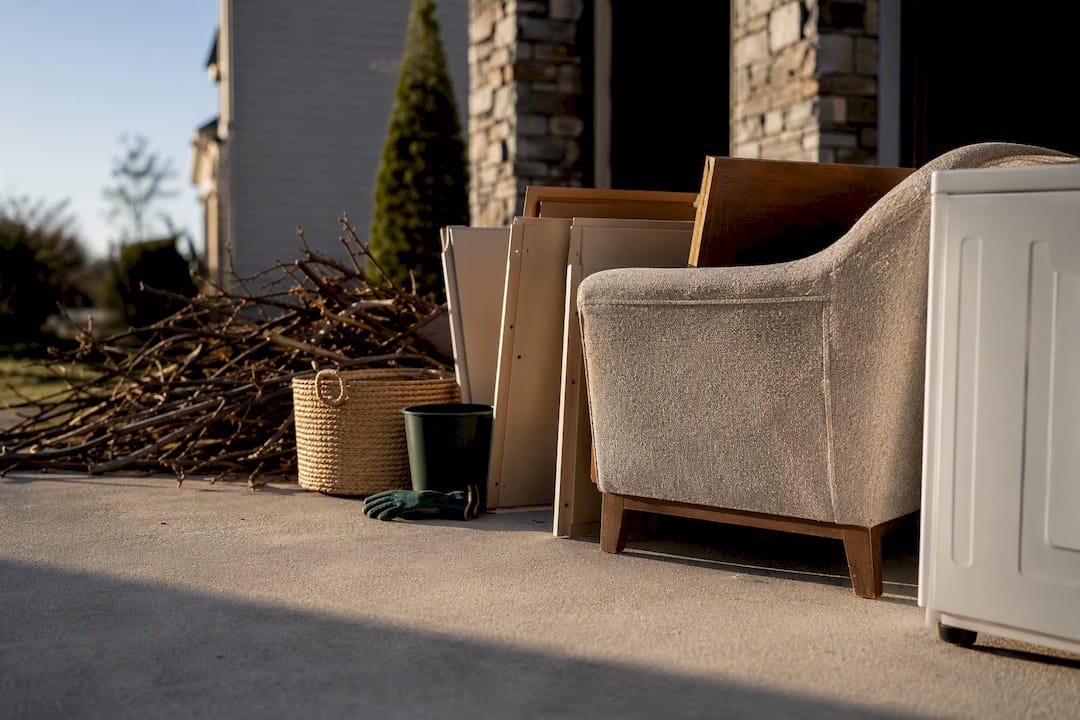
Yard and outdoor items. Branches, brush, old sheds, patio furniture, dead grills, and playground equipment are common seasonal jobs. Storm cleanup and end-of-season yard clearing tend to be the busiest windows for this category, so booking a few days ahead helps if you’re clearing a yard before a home sale or a fall cleanup.
Construction and remodeling debris. Drywall, scrap wood, old cabinets, tile, flooring, and fixtures from a renovation are typically accepted, but pricing shifts from a flat per-item rate to volume or weight-based pricing once you’re dealing with a full dumpster’s worth of material. A kitchen remodel that leaves behind torn-out cabinets and countertops is a different quote than three bags of yard clippings. If you’re mid-renovation, it helps to read up on how construction debris removal actually gets priced before the dumpster fills up.
Miscellaneous bulky items. Hot tubs, above-ground pools, swing sets, scrap metal, and general donationable household goods (working small appliances, toys, kitchenware) round out the list. Many of these items are strong donation candidates rather than straight trash, which matters if you’d rather see a usable couch go to a family than a landfill.
A few things that consistently trip people up:
- Large appliances with sealed refrigerant lines almost always cost more, not because the hauler doesn’t want them, but because of what happens after pickup.
- Pianos, safes, and hot tubs need advance notice because they require specific equipment or extra hands.
- Anything visibly wet, moldy, or contaminated (like a water-damaged mattress) may get flagged separately, since it can force a donation partner to reject an entire load.
The general rule in the industry is that a hauler will usually take an item if it can be legally routed somewhere afterward, whether that’s a donation center, a recycling stream, or a landfill. The limiting factor is rarely the truck. It’s what the next stop in the chain will accept.
What Junk Removal Won’t Take (And Where to Bring It Instead)
Every hauler draws a line at hazardous and regulated materials, and that line looks nearly identical from company to company because it’s shaped by the same state and federal rules, not by individual preference.
Common refusals include:
- Wet or liquid paint, solvents, and paint thinners
- Gasoline, motor oil, and other fuels
- Pesticides, herbicides, and lawn chemicals
- Medical waste, biohazard materials, and sharps
- Asbestos-containing materials
- Ammunition and firearms
Pressurized containers (propane tanks, fire extinguishers, aerosol cans with contents remaining) are excluded almost everywhere. These can rupture or ignite under the wrong handling conditions, and most general hauling insurance doesn’t cover that kind of incident. It’s a safety issue, not a preference.
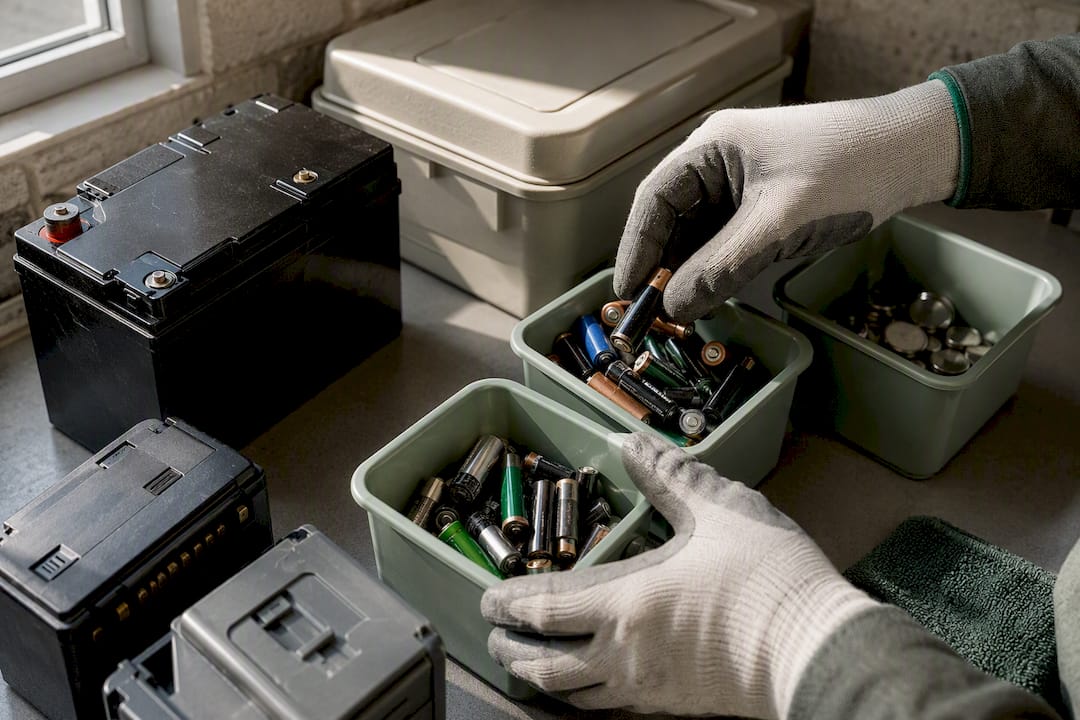
Batteries split into two very different categories. Household alkaline batteries are often fine in small quantities. Lithium-ion batteries (from laptops, power tools, e-bikes) are a different story. They’re a known fire risk in trucks and transfer stations, so many companies ask that these go to a retailer takeback program or a certified battery recycler instead. Lead-acid batteries, like the ones in cars, are usually recyclable through auto parts stores, which often pay a small deposit for them.
Tires are a gray area. Some companies take a handful of tires for a fee, since tire recycling requires a specific downstream processor, while others decline them outright. Ask before assuming.
According to industry guidance on what junk removal companies can and can’t legally handle, even a small amount of hazardous material, like a single leaking can of old paint, can force a crew to refuse an entire load rather than risk contaminating a donation or recycling stream. That’s why a “clean load” matters more than most homeowners realize.
For anything on the excluded list, your best options are a local household hazardous waste (HHW) program, a retailer takeback service (many hardware and electronics stores accept batteries and old paint), or a certified recycler for items like tires and refrigerant appliances. If you’re in Central Indiana and unsure whether something in your pile qualifies, this local guide to items that can’t go in a junk removal truck walks through the state-specific rules.
Pro Tip: Take five minutes before your pickup to separate anything liquid, pressurized, or chemical from the rest of the pile. One flagged item can slow down or derail the whole job, but a clean, pre-sorted load moves fast.
Why Some Items Cost Extra or Need Special Handling
Not every accepted item is priced the same, and the reasons usually come down to regulation, weight, or labor rather than a company padding its invoice.
-
Refrigerant-bearing appliances. Refrigerators, freezers, and window air conditioners contain refrigerant that federal rules require be recovered by a certified technician before the unit can be scrapped. A compliant company either has certified staff handle the evacuation or asks the homeowner to have the unit pre-serviced first. Either path adds cost, which is why fridge and AC pickups often carry a line-item fee instead of a flat rate.
-
Mattresses. Several states run mattress-specific recycling programs, since mattresses are bulky, hard to compact, and contain metal springs mixed with fabric and foam. That recycling process costs money to run, and it typically shows up as a separate disposal fee rather than being bundled into general furniture pricing.
-
Heavy masonry and construction material. Concrete, brick, tile, and soil are dense. A pickup truck bed fills up in weight long before it fills up in space, so these materials are usually priced by weight rather than by item count, and they sometimes require a separate trip entirely.
-
Bulky specialty items. Hot tubs, pianos, and safes often need disassembly, extra crew members, or specialized dollies. That translates into more time on-site and a larger crew, both of which affect the quote.
-
Access fees. Long carries from a backyard, multiple flights of stairs with no elevator, or tight parking can add time to a job that would otherwise take twenty minutes. Ask about these upfront so the number you’re quoted matches the number on the invoice.
The pattern across all five is the same: extra cost tracks extra regulatory work, extra weight, or extra labor, not arbitrary upcharging. A company that explains this clearly before you book is generally one worth trusting.
How Full-Service Junk Removal Actually Works
“Full-service” isn’t just marketing language. It has a specific meaning in the industry: the crew comes into your home, garage, or yard, loads everything themselves, cleans up afterward, and hauls the load to its final destination, whether that’s a donation center, a recycler, or a landfill, as outlined by industry providers. You point, they lift. That’s the entire pitch.
Sorting happens in one of two places. Some crews sort on-site, separating donationable furniture from scrap metal from general trash right there in your driveway. Others load everything together and sort later at a transfer facility, especially on large jobs where sorting on-site would slow the truck down. Either approach is standard, but it’s worth asking which one a company uses if diversion from the landfill matters to you.
Electronics get their own path in a well-run operation. Certified e-waste processors handle the actual recycling, and reputable companies make sure sensitive data on hard drives is destroyed before a device leaves their hands.
What to expect on scheduling:
- Photo quotes. Send pictures of your items and get a price range before a truck ever shows up.
- On-site estimates. A crew member evaluates the job in person, useful for larger or more complicated cleanouts.
- Same-day or next-day windows. Many companies, including smaller local operations, can turn around a booking within a day or two, especially for straightforward single-item or single-room jobs.
- Donation documentation. If a company routes usable furniture or appliances to a local charity, ask whether they can provide a donation receipt for tax purposes.
The gap between a mediocre hauling company and a genuinely good one usually shows up in this section, not the pricing page. Anyone can load a truck. Fewer companies actually track where the load ends up.
Getting an Accurate Quote Without Surprises
The single biggest driver of a bad junk removal experience is a mismatch between the quote and the reality on pickup day. Most of that gap is preventable.
For a photo quote, take pictures that show scale. Stand back far enough to capture the whole item, include something for size reference if it’s an unusual shape, and photograph access points like stairs, narrow hallways, or a gate the crew will need to use. A blurry close-up of one armchair tells a company nothing about whether you actually have a full basement to clear.
Information worth sharing upfront:
- Number of stairs or floors between the items and the truck
- Whether there’s an elevator, and whether it’s usable during your pickup window
- Parking availability near the entrance
- Rough count and size of items
- Anything that might be hazardous, wet, or contaminated
What actually drives pricing is a combination of volume (how much space your items take up in the truck), weight (masonry and appliances weigh far more than furniture of the same size), difficulty (stairs, tight turns, disassembly), and any disposal surcharges tied to specific items like mattresses or refrigerant appliances.
Before you book, ask a few direct questions: Where do donationable items go? What recycling partners does the company use? Are they insured, and what happens if something gets damaged during the pickup? What exactly is excluded from their service? A company that answers all four without hesitation is one that’s done this a long time.
Pro Tip: Group similar items together and clear a path to the door before the crew arrives. A staged pickup can shave real time off the job, and less time on-site often means a lower final price, especially on jobs quoted with a time component.
How Ohanapropertyexperts Handles Accepted Items and Sensitive Cleanouts
Ohanapropertyexperts works across Central Indiana handling the exact categories covered above, from single-item furniture pickups to full estate and property cleanouts. The services line up directly with what most readers researching this topic actually need:
- Full Property Cleanouts and Estate Cleanouts for whole-house situations, often tied to a sale, a transition, or a family estate
- Junk Removal and Debris Removal for everyday furniture, appliance, and construction material pickups
- Appliance Removal and Furniture Removal for single-item or targeted jobs
- Yard Waste Removal for seasonal cleanup and outdoor debris
Two operational details matter here. First, quotes are built around photos submitted before the crew arrives, which keeps pricing transparent instead of leaving homeowners guessing until pickup day. Second, the company’s donation-conscious recovery process means usable furniture and household goods are routed toward local donation rather than automatically landfilled, a detail that matters a great deal to families managing an estate cleanout and wanting to see a loved one’s belongings go somewhere useful. Ohana also markets a 24 to 48 hour turnaround window, a claim worth confirming for your specific job when you request your estimate.
When to Call a Pro Instead of Hauling It Yourself
Hiring a junk removal service makes the most sense when time, safety, or emotional weight are working against you. A single trip to the dump for a broken table is a DIY job. A garage that hasn’t been touched in a decade, a fridge with refrigerant lines, or a parent’s estate you’re clearing under a closing deadline are not.
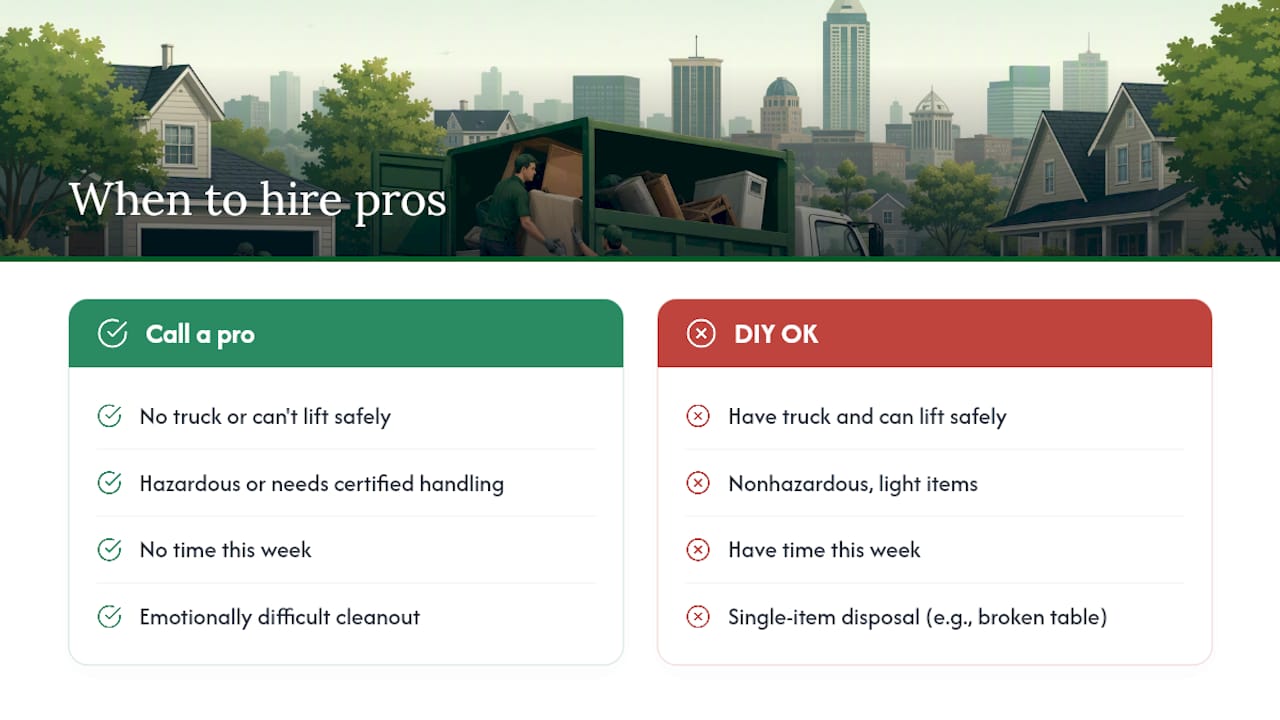
Ask yourself four things before deciding: Do I have a truck and the physical ability to lift this safely? Is anything hazardous or heavy enough to need certified handling? Do I have the time this week, or is this dragging on for months? Is this an emotionally difficult cleanout where having someone compassionate handle logistics would actually help?
If two or more of those point toward “no,” it’s worth getting a quote. Estate cleanouts especially deserve patience and a crew that treats the process, and the family, with care.
— Olga
Get a Free Estimate From Ohanapropertyexperts
If you’ve read this far because you’re staring at a garage, a basement, or a relative’s house that needs to be cleared, Ohanapropertyexperts is built for exactly that job. Unlike renting a dumpster and hauling everything yourself, Ohana’s crews load, sort, and remove items directly, with photo-based quotes that give you a real price before anyone shows up.

For everyday furniture, appliances, and general clutter, the junk removal service covers most of what’s outlined in this guide, priced from $100 to $500 depending on volume and access. For a whole-property situation, whether it’s a home going up for sale, a rental turnover, or a family estate, the full property cleanout service handles the scope from start to finish. Ohana offers service in Central Indiana and provides free estimates by phone or through a photo-quote request on the website. Reach out today and get a real number back before your pile gets any bigger.
Sources
- What we take (and what we don’t) — Duke’s Junk Recycling
- 1-800-JUNKPRO - Junk Removal and Dumpster Rental Professionals
- What Items Can Junk Removal Companies Take or Refuse — JS Hauling
FAQ
What is the minimum charge for junk removal?
Minimum charges vary by company and are usually tied to a partial truckload rate rather than a flat fee. Ohanapropertyexperts’ junk removal service runs from $100 to $500 depending on volume, and furniture-specific pickups start lower, from $75 to $600 through the furniture removal service.
What’s the average cost for junk removal?
Cost depends heavily on volume, weight, and access, which is why most companies quote per job rather than posting a single average price. Expect construction or debris-heavy jobs to run higher, with Ohana’s debris removal pricing falling between $200 and $700 depending on material type and quantity.
What’s the cheapest way to get rid of junk?
For a handful of items, donation drop-off or a retailer takeback program (for electronics and batteries) usually costs nothing. For larger volumes, a professional pickup is often cheaper than renting a truck and paying landfill fees yourself once your time and labor are factored in.
What’s included in a low flat-rate junk removal service?
A basic flat-rate service typically covers loading, hauling, and disposal of a small number of items, often single-item pickups like one appliance or one piece of furniture. Larger loads, hazardous materials, or special handling like refrigerant recovery usually fall outside that base rate and get quoted separately.
Do junk removal companies take construction debris?
Most companies accept drywall, wood, tile, and cabinetry from remodeling projects, though pricing typically shifts to weight or volume-based rates for larger loads. Ohana’s debris removal service and its guide to construction debris pricing both cover what to expect before booking.