
Five Category System for Families Decluttering After a Loss
Use a five category grief aware room by room system to secure papers, manage sentimental items, and know when to call estate cleanout help.
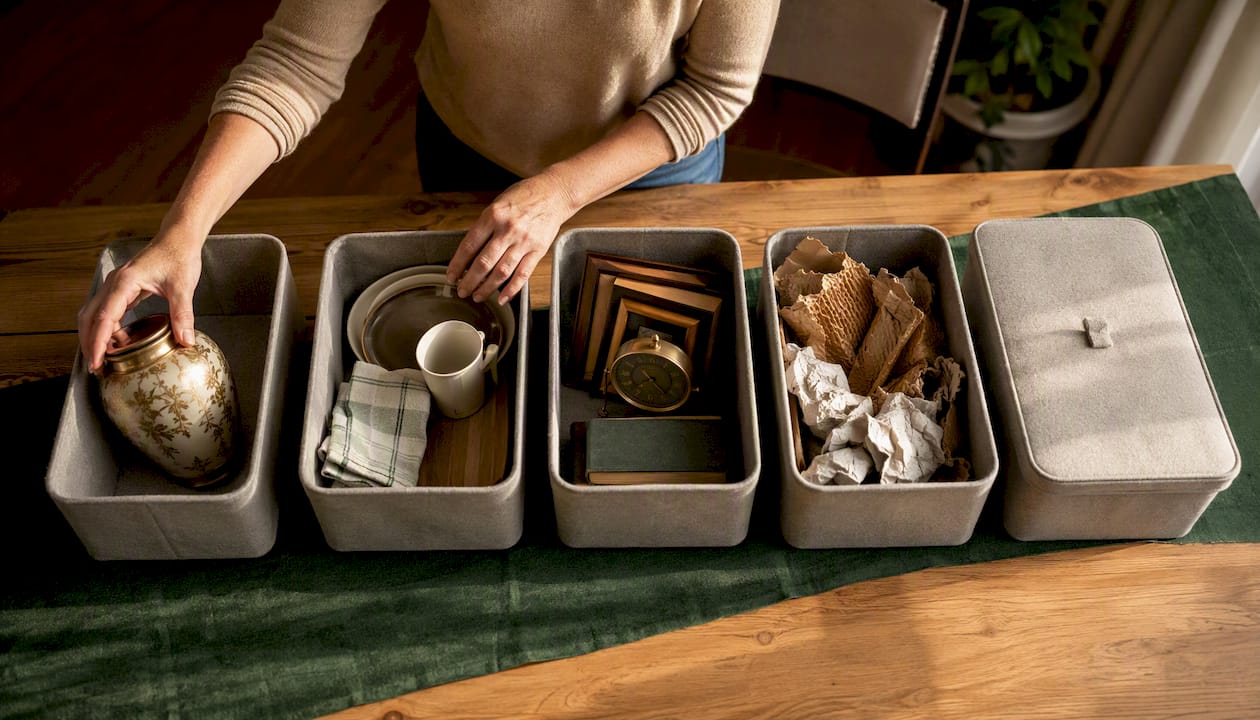
Five Category System for Families Decluttering After a Loss
Start small: secure paperwork and clear obvious trash, then use a simple room-by-room system, Keep, Donate, Sell, Trash, Decide Later, working in short, timed sessions. There’s no deadline that requires you to finish this month, or even this year. Postponing permanent decisions on sentimental items is not just okay; it’s often the smarter choice.
TL;DR:
- Most households should prioritize securing the home, clearing perishables, and creating designated zones before making emotional decisions.
- Using a five-category sorting system with “Decide Later” prevents decision fatigue and maintains progress in low-emotion spaces first.
- Important legal documents and valuables must be identified and protected early to avoid legal complications or loss.
- When family disagreements occur, photograph contested items and schedule family discussions to prevent conflicts from stalling progress.
- Hiring professional estate cleanout services is often more efficient and less emotionally taxing, especially with tight timelines or distant family members.
Table of Contents
- Getting Started: What to Do First When Decluttering After a Loss
- The Room-by-Room Sorting Loop: Keep, Donate, Sell, Trash, Decide Later
- What to Do With Sentimental Belongings and Memory-Filled Textiles
- Securing Documents and Valuables First
- Recognizing When to Get Help
- Sample Session Plans to Keep Progress Steady
- Donating, Selling, and Disposing of Belongings
- Handling Belongings When Multiple Family Members Are Involved
- Legal and Estate Considerations for Possessions
- Donating or Selling Items in a Way That Honors the Deceased
- A Small Case, and Why Imperfect Progress Still Counts
- How Ohanapropertyexperts Can Lighten This Load
- Where to Learn More
- Sources
Getting Started: What to Do First When Decluttering After a Loss
The first visit to a loved one’s home after a death is the hardest one. You don’t need to sort everything, or even most things. You need to make the space physically and mentally walkable, nothing more.
Bereavement organizers consistently point to a short list of quick wins that make the biggest difference in how overwhelming the space feels on day one, according to Verywell Mind. Tackle these first:
- Secure the house. Lock doors, check that utilities are running or safely shut off, and confirm mail is being held or forwarded.
- Clear perishables. Empty the refrigerator and pantry of anything that will spoil. This is unemotional work and it removes a smell and a chore in one pass.
- Gather trash and recycling. Old newspapers, expired coupons, junk mail. None of this requires a decision about your loved one’s life.
- Set up a paperwork box. One sturdy box, clearly labeled, for anything that looks official. You’ll dig into it later.
- Create a Decide Later zone. A closet, a corner of the garage, a few labeled boxes. This is where anything emotionally loaded goes until you’re ready.
There’s no universal timeline for this work, and some experts advise against making permanent decisions on sentimental belongings in the first three months, when that’s practical. If your situation involves a lease deadline or a house sale, your timeline will be tighter, and that’s where the later sections on getting help matter most. For a broader starter checklist, Ohanapropertyexperts’s guide on handling a parent’s belongings walks through the same early priorities in more detail.
The Room-by-Room Sorting Loop: Keep, Donate, Sell, Trash, Decide Later
Once the house is walkable, you need a repeatable system, because making a fresh emotional decision about every single object will exhaust you before you finish one closet. The five-category loop solves that: Keep, Donate, Sell, Trash, Decide Later. Every item gets sorted into one of these five buckets, and the “Decide Later” bucket exists specifically so you never feel forced into a choice you’re not ready to make, a method Mayo Clinic recommends for exactly this reason.
Work each room in two passes rather than one exhaustive sweep:
- Fast pass: Pull obvious trash and non-sentimental donations first. Old receipts, worn-out towels, duplicate kitchen tools.
- Slow pass: Handle what’s left more deliberately, one item at a time, with no rush.
- Tools that help: Labeled boxes for each category, your phone camera for quick photos of anything you’re unsure about, and a physical shelf reserved for Decide Later items so they don’t scatter through the house.
- Start with low-emotion rooms. A linen closet, a pantry, a garage corner. These build momentum without draining you.
Starting in low-stakes spaces isn’t just about efficiency. It protects your cognitive load during a period when grief is already taxing your decision-making capacity, and it gives you visible progress before you hit the rooms that hurt more.
Pro Tip: Do the bedroom or home office last, not first. By the time you get there, you’ll have a working system and the confidence that comes from finished rooms behind you.
What to Do With Sentimental Belongings and Memory-Filled Textiles
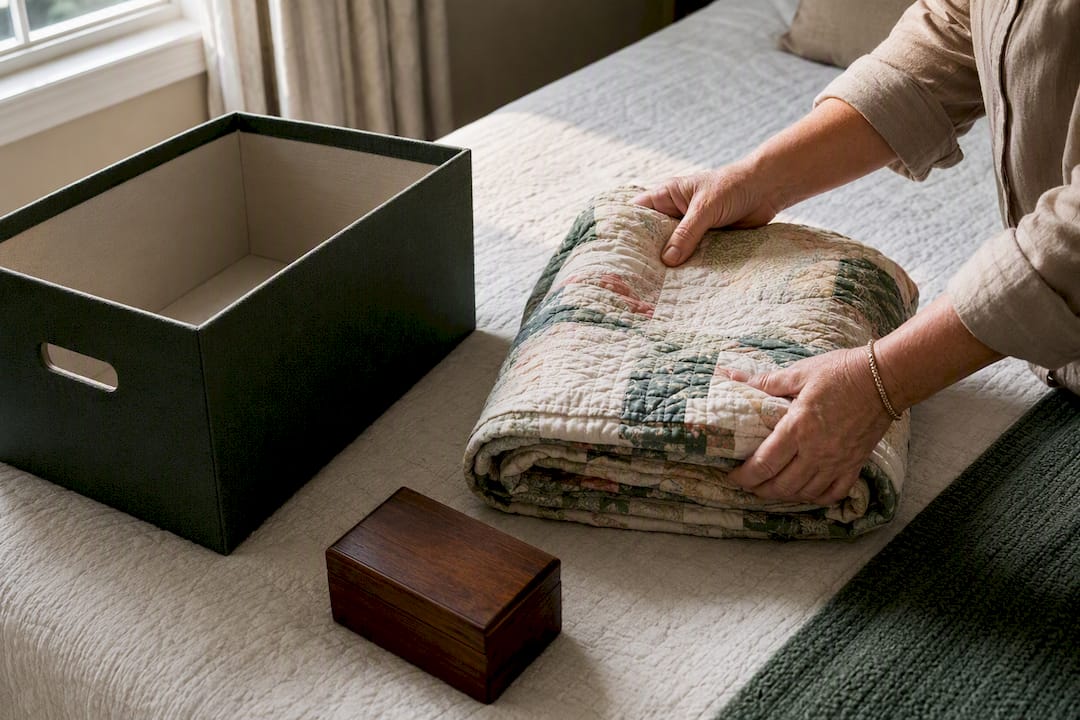
Clothes, jewelry boxes, handwritten letters, the items your loved one touched every day, these carry weight no spreadsheet can capture. Keeping every one of them isn’t the same as preserving the memory attached to it. A small, curated memory box, paired with high-quality photos of items you don’t keep physically, often preserves the meaning while sparing you a closet you can never open again, according to Psychology Today.
Here’s a workable approach for the hardest items:
- Apply the 3-day rule. Anything that stops you cold goes into the Decide Later box. Revisit it after three days, not three minutes.
- Label the emotion, don’t suppress it. A 30-second voice note or a quick journal line, “this shirt smells like him,” “this was her favorite mug”, can measurably reduce the intensity of the feeling, a technique the American Psychological Association backs for exactly this kind of moment.
- Photograph before you decide. A photo of a full closet of clothes takes ten seconds and gives you permission to let the physical item go later.
Family disagreement over sentimental items is common and rarely resolved in the moment. When two people both want the same item, photograph it, mark it “Decide Later,” and schedule a specific time, a Sunday call, a holiday visit, to make the call together instead of arguing over it mid-cleanout.
Securing Documents and Valuables First
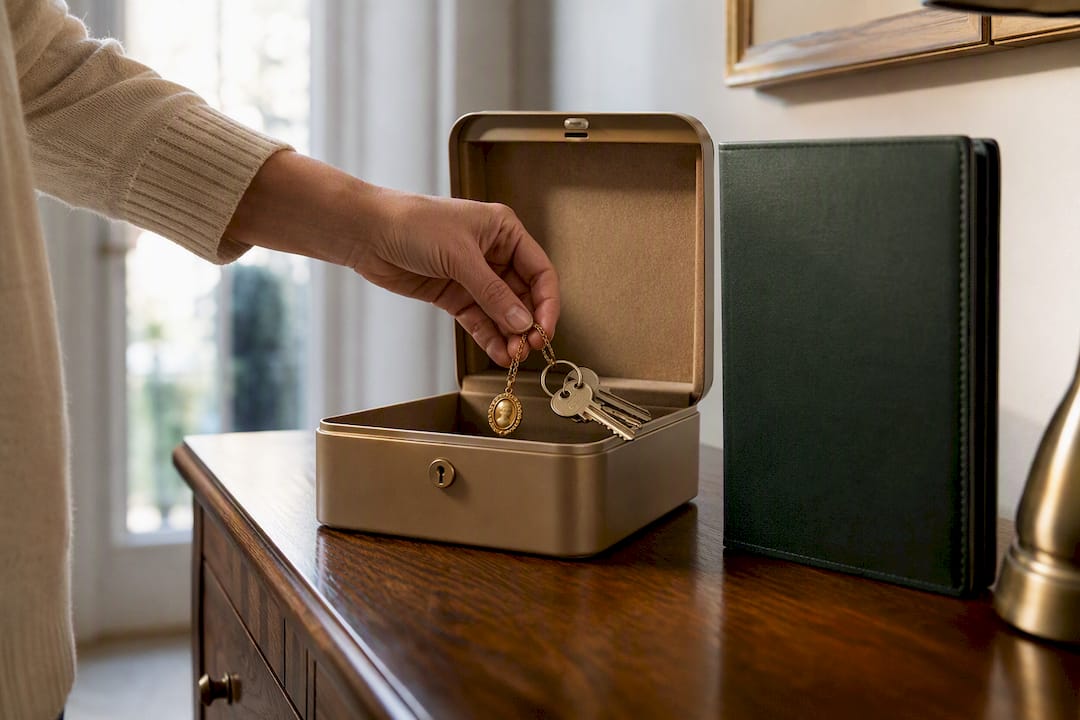
Before anything else gets donated or discarded, protect what can’t be replaced. Certain papers and objects carry legal or financial weight that a misplaced box can turn into months of headaches.
Prioritize gathering these immediately:
- Legal documents: the will, life insurance policies, property titles, deeds, and Social Security paperwork.
- Financial records: bank statements, tax returns, retirement account information.
- Valuables: jewelry, rare coins, original art, and any collectibles with real resale or sentimental value.
Photograph each valuable item, log it in a simple spreadsheet with a short description, and keep everything in one locked file box until the estate executor or a trusted family member has reviewed it. If your situation involves probate, a lease deadline, or a pending sale, document collection often carries real deadlines, and that’s the point to call an estate attorney or the relevant financial institution rather than guessing at what’s required.
Recognizing When to Get Help
Trying to handle an entire estate alone is one of the most common mistakes grieving families make, and it’s rarely necessary. Watch for these signals that it’s time to bring in support:
- The volume of belongings feels physically impossible to move without help.
- Family members disagree sharply about what stays, goes, or gets sold.
- A closing date, lease deadline, or probate timeline is approaching fast.
- You feel stuck, unable to make any decision, weeks after starting.
Help comes in different forms depending on what you need. A friend or neighbor can provide company and an extra set of hands for light lifting. Bereavement organizers specialize in the emotional pacing of this work. Estate cleanout companies handle full-property removal, heavy items, and donation logistics in a single visit. Assembling even a small trusted team, rather than doing it solo, reduces both the physical burden and the family friction that tends to flare up under grief, per Verywell Mind’s research on the topic.
Ohanapropertyexperts works specifically within this space, offering estate cleanouts with donation-conscious recovery, meaning items in good condition get routed to local charities rather than a landfill, along with free estimates for families across Columbus, Indiana and the surrounding Central Indiana communities.
Pro Tip: If you’re the only one handling the estate and you live more than an hour away, a professional cleanout crew often costs less than the gas, time off work, and hotel stays needed to do multiple solo trips.
Sample Session Plans to Keep Progress Steady
Short, timed sessions protect you from decision fatigue better than one marathon weekend ever will. Match the session length to the emotional weight of the task.
- High-emotion tasks (15 to 30 minutes): Sentimental boxes, photo albums, a closet of clothes. Set a timer and stop when it rings, even mid-box.
- Low-emotion tasks (60 to 90 minutes): Garage, pantry, linen closet, kitchen drawers. These can run longer because the decisions require less of you.
- Paperwork sessions (30 to 45 minutes): Sorting the document box into categories, filing, and noting anything that needs an attorney’s eye.
A realistic two-week plan might look like this: days one and two for securing the house and paperwork, days three through seven for low-emotion rooms, one 20-minute sentimental-box session mid-week, and the second week split between remaining rooms and one Decide Later review. The immediate goal throughout isn’t a finished house. It’s a walkable house, cleared pathways, one paperwork box, trash removed, which on its own measurably lowers the crisis-level stress of those first weeks.
Donating, Selling, and Disposing of Belongings
Once items are sorted, turning decisions into action prevents the Donate and Sell boxes from becoming permanent fixtures in the garage.
- Donating: Choose charities that meant something to your loved one when you can, hospice organizations, a church, a veterans’ group. Batch everything into one drop-off or schedule a single pickup rather than making repeated trips that reopen the grief each time.
- Selling: For a handful of valuable items, an online marketplace works fine. For a full house of furniture and household goods, an estate-sale professional typically nets more with far less of your time, and Ohanapropertyexperts’s guide to coordinating an estate sale breaks down when that’s worth it.
- Safe disposal: Medications go to a pharmacy take-back program, never the trash. Electronics and hazardous materials, paint, propane, cleaning chemicals, usually require a community collection event or a hauling service equipped to handle them properly.
Scheduling one pickup for donations instead of five separate trips isn’t just convenient. It spares you the emotional toll of walking back into a donation center over and over with another box of someone’s life.
Handling Belongings When Multiple Family Members Are Involved
Shared estates complicate every decision, because “Keep” for one sibling might mean “Sell” for another. The five-category loop still works here, but it needs one addition: a shared inventory everyone can see before final decisions get made.
Photograph contested or high-value items as they’re found and keep a running list, whether that’s a shared spreadsheet or a group text thread with photos attached. This gives every family member visibility without requiring them to be physically present for every sorting session. When something is claimed by more than one person, mark it “Decide Later” rather than letting the disagreement stall the whole room.
Set a specific date for family decisions, ideally in person, rather than trying to resolve ownership questions over scattered phone calls. Distance and old family dynamics both tend to resurface during estate work, and a scheduled conversation, with an agenda limited to the contested items, keeps things calmer than an open-ended free-for-all. If tensions run high, a neutral third party, a mediator, a trusted family friend, or a professional cleanout crew acting as a buffer, can keep the process moving without anyone feeling steamrolled. This is also where hiring outside help pays for itself twice: once in labor, and once in the family peace it protects.
Legal and Estate Considerations for Possessions
Personal belongings sometimes carry more legal weight than families expect, particularly when an estate is going through probate or when a will names specific items to specific heirs. Before anything leaves the house permanently, confirm whether the estate has cleared probate or whether the executor has explicit authority to distribute or dispose of items.
If the will names specific bequests, “the dining table goes to my daughter,” those items should be set aside and honored before general sorting begins, regardless of what the rest of the family might prefer. Ambiguous or high-value items, art, collections, anything with disputed ownership, are the ones most likely to cause legal friction later if they’re sold or donated too early.
When a house sale or lease termination is on the calendar, the executor or the family’s attorney should confirm there’s no legal hold on the property’s contents before a full cleanout proceeds. This is not a step to guess through. A short call to the estate attorney handling probate, or the financial institution managing accounts, clarifies what can move immediately and what needs to wait, and it usually takes far less time than families expect.
Donating or Selling Items in a Way That Honors the Deceased
How belongings leave the house matters almost as much as when. Many families find real comfort in directing donations toward causes their loved one actually cared about, rather than defaulting to the nearest thrift store. A veteran’s tools might go to a shop that trains young mechanics. A gardener’s equipment might go to a community garden program. That kind of intentional placement turns an item’s exit into a small act of continuity rather than just clearing space.
For items with resale value, be honest with yourself about whether selling reflects what your loved one would have wanted. Some families feel selling a beloved collection dishonors it; others feel confident their loved one would rather see items used and valued by someone new than sitting boxed in a storage unit. Neither instinct is wrong. What matters is that the decision comes from intention rather than exhaustion.
Keep a simple record of where major donations went, which charity, roughly how many items, and the approximate date. Some families find this record itself becomes a small, unexpected comfort: proof that the things a person owned kept doing good in the world after they were gone. Responsible disposal guidance can help you match specific item categories to the right donation or disposal path.
A Small Case, and Why Imperfect Progress Still Counts
Grief doesn’t follow a checklist, and neither does decluttering after a death. If you cry over a coffee mug, or freeze in front of a closet for twenty minutes without touching anything, that’s not failure. That’s what this process actually looks like for most people.
One family I’ve seen this play out with kept a single mother’s belongings in near-total limbo for four months, paralyzed by a house full of decisions. The turning point wasn’t a burst of motivation. It was a memory box, one for photos, letters, and a scarf, paired with a Decide Later shelf for everything else. That combination let them finish the low-emotion rooms within two weeks, while the harder decisions waited without guilt.
Reclaiming small choices during this process, what to keep, what to release, when to pause, functions as a quiet form of agency after a loss that stripped away so much control. Progress that looks messy and slow is still progress. You’re allowed to revisit a decision six months from now and change your mind.
— Olga
How Ohanapropertyexperts Can Lighten This Load
When a cleanout involves a full house, tight closing dates, or family members who live too far away to help physically, Ohanapropertyexperts handles the heavy lifting so you can focus on the decisions that actually need your attention. Estate cleanouts, full property cleanouts, furniture and appliance removal, and donation-conscious recovery are all part of the standard service, meaning usable items get routed to local charities instead of a dumpster whenever possible.
Hiring a crew makes the most sense when you’re facing a real estate deadline, a house full of furniture too heavy to move alone, or a family that needs to limit how many times everyone has to walk back through a loved one’s home. Ohanapropertyexperts serves Columbus, Seymour, North Vernon, Edinburgh, Franklin, Greenwood, Indianapolis, Lafayette, and the surrounding Central Indiana communities, with free estimates built around photos of the property rather than guesswork. Start by browsing the estate cleanout services or the full list of services, then request a free, no-pressure estimate to see what the timeline and scope would actually look like for your situation.
Where to Learn More
- American Psychological Association: the research behind emotion labeling as a coping tool.
- Verywell Mind: practical, step-by-step decluttering guidance after a death.