
Flip Property Cleanout: What Investors Need to Know
Discover what is a flip property cleanout and why it's crucial for your renovation. Avoid costly mistakes and ensure project success today!
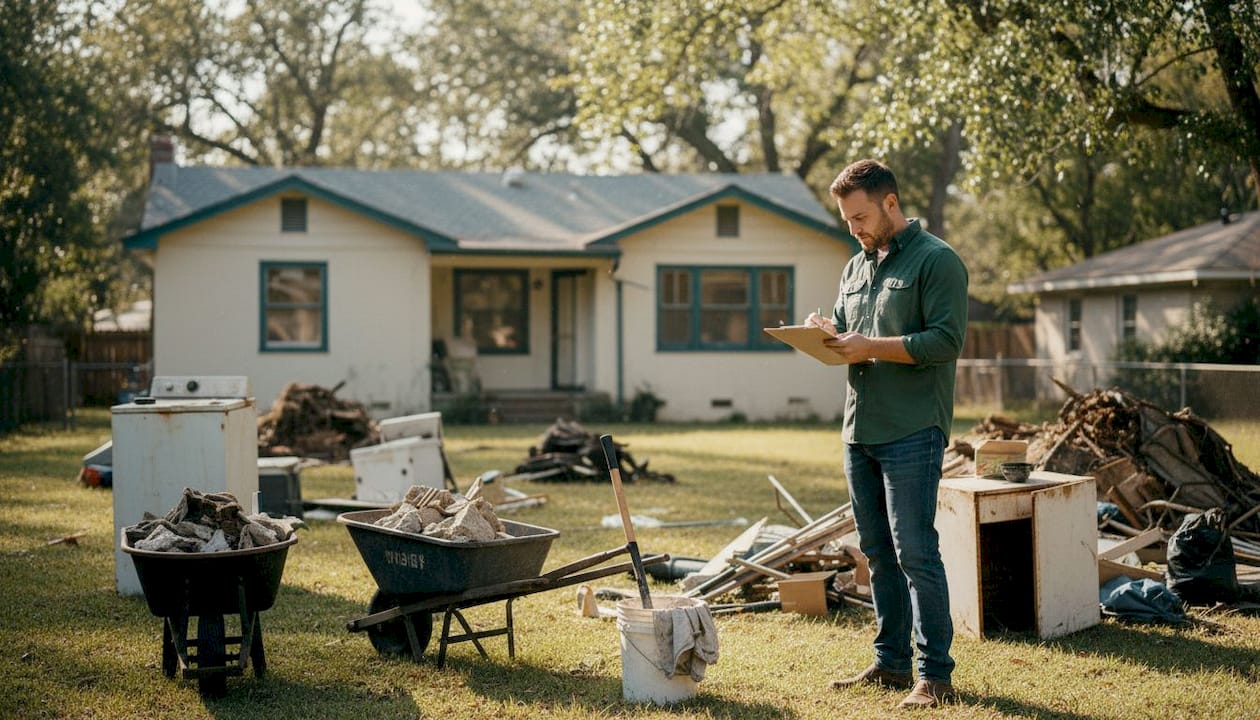
Flip Property Cleanout: What Investors Need to Know
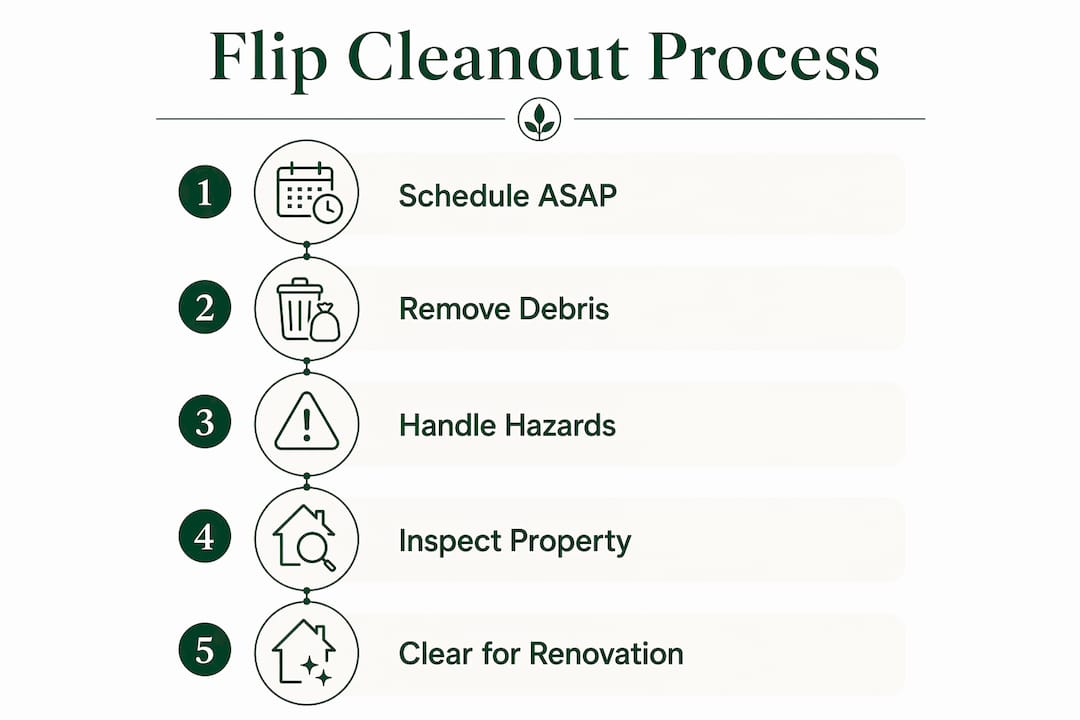
A flip property cleanout is defined as the strategic removal of all unwanted items, debris, personal belongings, and potential hazards from a property before renovation begins. Industry professionals treat it as the foundational first step in any successful fix and flip project. Without a thorough cleanout, contractors cannot accurately assess damage, bid correctly, or start work on schedule. Skipping or rushing this phase is one of the most expensive mistakes a real estate investor can make in 2026.
What is a flip property cleanout, and what does it involve?
A flip property cleanout, also called a pre-renovation cleanout or renovation cleanout, is the complete clearing of a property so it is ready for contractor walkthroughs and structural assessment. It goes far beyond tossing trash bags into a dumpster. The goal is a blank canvas: empty rooms, clear floors, and no hidden hazards blocking inspection.
A standard flip cleanout covers a wide range of tasks:
- Furniture and appliance removal: Sofas, beds, refrigerators, washers, and any items left by previous owners or tenants
- General junk hauling: Accumulated trash, broken fixtures, old carpeting, and miscellaneous debris
- Construction debris removal: Leftover materials from prior repairs, torn-out drywall, and discarded building supplies
- Hazardous material identification: Flagging or removing mold-affected materials, asbestos-containing products, and chemical waste
- Personal property sorting: Separating salvageable items for donation, items with potential legal ownership questions, and true waste
- Final sweep: Clearing every room, closet, basement, garage, and outbuilding on the property
Professional cleanouts for typical residential flip properties should be completed in 1–2 days to avoid delaying contractor mobilization. Complex properties, such as hoarder homes, may require 3–4 days. That timeline difference matters because every extra day costs money before a single nail is driven.
Pro Tip: Schedule the cleanout crew to arrive within 48 hours of closing. The sooner the property is cleared, the sooner your contractor can walk through and submit a firm bid.
What challenges and hidden issues arise during flip cleanouts?
Flip property cleanout challenges are frequently underestimated by investors, especially those new to fix and flip projects. The physical clearing is straightforward. What stops projects cold are the surprises hiding underneath the clutter.
Common obstacles include:
- Structural damage: Rot, foundation cracks, and pest infestations often hide behind furniture or under debris piles
- Mold and asbestos: Both require licensed remediation and cannot be handled with standard junk removal equipment
- Pest infestations: Rodents, termites, and cockroaches are frequently discovered only after the property is fully cleared
- Plumbing and electrical hazards: Exposed wiring, burst pipes, and corroded plumbing become visible once walls and floors are accessible
- Legal complications: Inherited properties or tenant-occupied foreclosures may contain personal property with disputed ownership, requiring careful documentation before disposal
Cleanout challenges include hidden structural damage, hazardous materials, and legal complications, any of which can cause costly delays and fines if mishandled. That is not a theoretical risk. Investors who skip proper hazardous material protocols face regulatory fines that dwarf the cost of doing it right the first time.
The diagnostic value of a cleanout is what separates experienced flippers from beginners. Identifying mold, electrical problems, or rot early can save thousands compared to mid-renovation surprises. A mid-project discovery forces a stop-work order, contractor rescheduling, and budget revisions that can collapse the deal’s profitability entirely.
“Cleanouts uncover issues early, acting as a diagnostic phase rather than mere junk removal. Discovering a problem during cleanout costs a fraction of what it costs to find the same problem after framing is complete.”
Treat the cleanout crew as your first set of eyes on the property’s true condition. Brief them on what to flag, not just what to haul.
How do flip cleanouts differ from standard junk removal?
A renovation cleanout and a standard junk removal job share equipment but serve completely different purposes. Understanding that difference protects your budget and your schedule.
| Category | Standard junk removal | Flip property cleanout |
|---|---|---|
| Primary goal | Remove unwanted items | Clear property for renovation assessment |
| Hazardous materials | Typically excluded | Identified, flagged, or properly disposed of |
| Disposal planning | Single-stream hauling | Separated by type: donation, landfill, hazardous |
| Contractor coordination | None | Timed to contractor walkthrough schedule |
| Diagnostic role | None | First inspection of hidden conditions |
| Timeline sensitivity | Low | High. Delays cost $2,000–$5,000 weekly in holding costs |
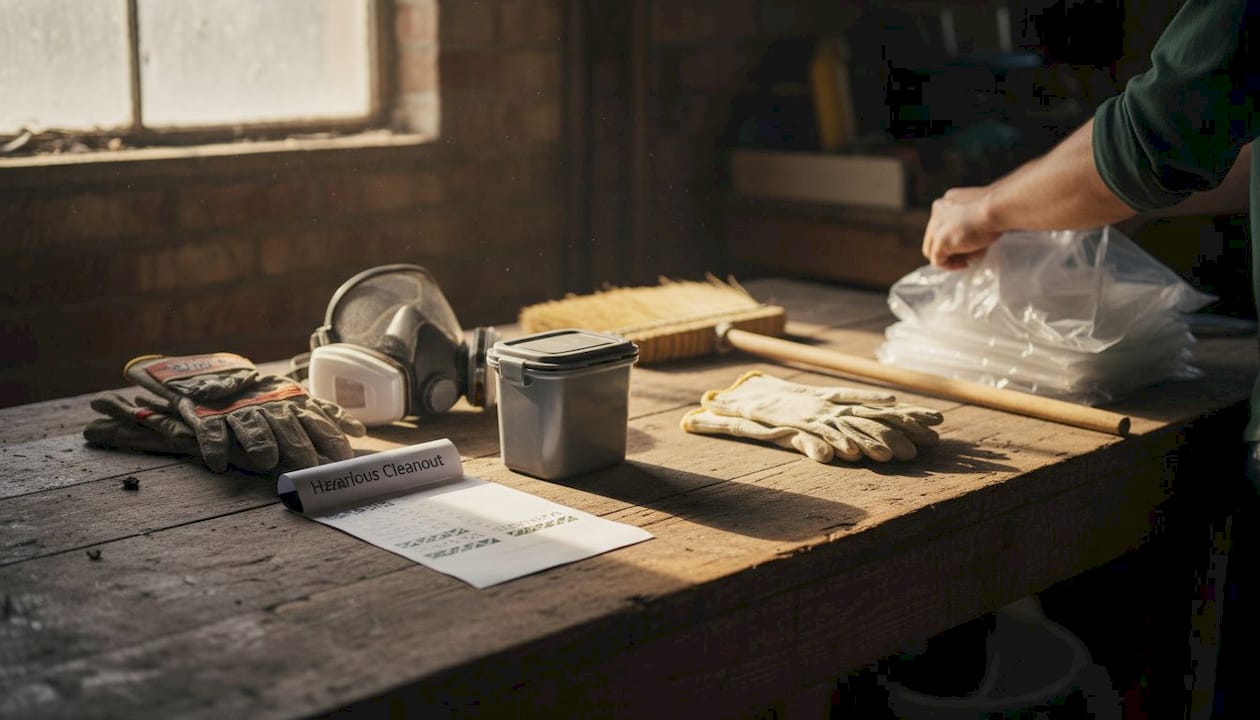
Delays in the cleanout phase can add $2,000 to $5,000 weekly in holding costs including taxes, insurance, and interest. That figure makes the cleanout one of the highest-leverage tasks in the entire flip timeline.
Disposal logistics are another major difference. Mixing prohibited items with regular junk can turn a $1,000 disposal estimate into a $7,500 reality. Landfills reject loads that contain hazardous materials, and the surcharges for non-compliant loads are severe. A professional flip cleanout crew separates waste streams from the start, preventing those surprise fees.
A messy, uncleared property causes contractors to increase their bids or delay work, because working around debris reduces efficiency and raises labor costs. A clean site produces faster bids and better contractor cooperation. That alone justifies the cost of a professional crew.
Pro Tip: Ask your cleanout crew to photograph every room before and after clearing. Those images protect you legally if ownership disputes arise over personal property left on site.
What are the best practices for a fast, effective flip cleanout?
Experienced flippers treat the cleanout as a managed project phase, not a chore to delegate and forget. These practices protect your timeline and your return on investment.
-
Hire a professional cleanout crew. DIY cleanouts often cost investors more due to injury risk, time away from deal-finding, and potential for improper disposal increasing liabilities. Your time is worth more spent sourcing the next deal.
-
Schedule the cleanout for days 11–18 of a 90-day flip. Experienced flippers build the cleanout into the early phase of the project timeline, immediately after securing the property and completing initial inspections. This window keeps contractor mobilization on track.
-
Brief the crew before they arrive. Walk the property with the crew lead before work begins. Point out known hazards, identify any items with potential legal sensitivity, and confirm the disposal plan for each waste category.
-
Budget a contingency for cleanout surprises. A standard residential cleanout costs vary widely based on volume and hazards present. Build a contingency line into your cleanout budget specifically for hazardous material disposal or unexpected volume.
-
Coordinate the cleanout completion with your contractor walkthrough. Book your general contractor’s walkthrough for the day after cleanout completion. An empty property produces accurate bids. A cluttered one produces inflated estimates with built-in uncertainty buffers.
-
Verify disposal compliance. Confirm that your cleanout crew holds proper licenses for hazardous material handling and that all construction debris removal follows local regulations. Non-compliant disposal creates liability that follows the property title.
Pro Tip: Request an itemized disposal manifest from your cleanout crew. This document proves regulatory compliance and protects you during the resale due diligence process.
Seasoned flippers view cleanouts as high-stakes management tasks crucial to protecting timelines and profits, preferring professionals for speed and compliance. That mindset shift, from chore to critical milestone, is what separates profitable flips from money-losing ones.
Key Takeaways
A flip property cleanout is the single most diagnostic and time-sensitive task in the fix and flip process, directly protecting contractor efficiency, budget accuracy, and project ROI.
| Point | Details |
|---|---|
| Definition and purpose | A flip cleanout clears all debris and hazards before renovation, enabling accurate damage assessment. |
| Timeline urgency | Cleanout delays add $2,000–$5,000 weekly in holding costs, making speed a financial priority. |
| Diagnostic value | Cleanouts reveal mold, rot, pests, and structural damage early, preventing costly mid-project surprises. |
| Disposal compliance | Separating hazardous and construction waste from the start prevents surcharges and regulatory fines. |
| Professional advantage | Hiring a professional crew protects your schedule, limits liability, and frees you to focus on deal flow. |
Why investors consistently underestimate the cleanout phase
I have seen investors budget $500 for a cleanout on a property that ultimately needed $4,000 in hazardous material disposal alone. The assumption is that a cleanout is just hauling trash. It is not. It is the first real look at what you actually bought.
The most common mistake I see is treating the cleanout as the last item to schedule rather than the first. Investors close on a property, spend two weeks on financing paperwork and contractor calls, and then realize nothing can move forward until the property is empty. That two-week gap is pure holding cost with zero renovation progress.
The second mistake is going DIY on a property with unknown history. Foreclosures, estate sales, and long-vacant properties carry real risk of asbestos, mold, and pest infestations. An untrained crew, or the investor themselves, can disturb hazardous materials and create a remediation bill that dwarfs the original cleanout cost.
What I have found actually works is treating the cleanout as a diagnostic event. Walk the property with the crew. Look at what comes out. Ask questions about what they find behind furniture and under debris. That 20-minute walkthrough has saved investors I know from buying into renovation scopes that were wildly underpriced.
The cleanout sets the renovation rhythm. A clean, empty property signals to every contractor that this investor runs a tight project. That reputation gets you faster bids, better crews, and more competitive pricing over time.
— Olga
Ohanapropertyexperts serves flip investors across Central Indiana
Real estate investors in Central Indiana need a cleanout crew that understands the fix and flip timeline, not just a truck and a dumpster. Ohanapropertyexperts provides fast, thorough flip property cleanouts built around your project schedule, including furniture removal, appliance hauling, debris removal, and hazardous material identification.
Our team serves Columbus, Indianapolis, Greenwood, Franklin, Seymour, and surrounding communities. We handle the full scope of pre-renovation cleanout services so your contractors can walk in on day one and get to work. Every job includes a free estimate, transparent pricing, and a crew that treats your project timeline as seriously as you do. Call Ohanapropertyexperts at (812) 302-6833 or request your free quote today.
FAQ
What is a flip property cleanout?
A flip property cleanout is the complete removal of debris, personal belongings, appliances, and hazardous materials from a property before renovation begins. It serves as both a clearing process and an early diagnostic phase for identifying hidden structural or environmental issues.
How long does a flip property cleanout take?
Most residential flip cleanouts are completed in 1–2 days. Properties with heavy accumulation or hoarding conditions may require 3–4 days, and any delay in completing the cleanout adds holding costs to the project.
How does a flip cleanout differ from regular junk removal?
A flip cleanout is timed to the renovation schedule, includes hazardous material handling, and serves a diagnostic function. Standard junk removal focuses only on removing unwanted items without regard for disposal compliance or contractor coordination.
What hidden problems can a flip cleanout reveal?
Cleanouts commonly uncover mold, asbestos, pest infestations, rot, exposed wiring, and burst pipes. Discovering these issues during the cleanout phase costs significantly less to address than finding them mid-renovation.
Should I hire a professional crew or do the cleanout myself?
Hiring a professional crew is the better choice for most investors. DIY cleanouts carry injury risk, improper disposal liability, and time costs that outweigh any savings, particularly on properties with unknown histories.
Recommended
- Property Cleanout Benefits Home Sales: Seller’s Guide | Ohana Property Services
- Flip Property Junk Removal Costs Explained for Investors | Ohana Property Services
- For Real Estate Investors & Agents | Ohana Property Services
- Why Investors Outsource Junk Removal: A Practical Guide | Ohana Property Services