
Two Day Garage Cleanout for Homeowners: Tarp Strategy and Zone Rule
Reclaim your garage in one weekend with the Tarp Strategy and Zone Rule. Follow a two-day plan, a 15-item toss list, hazardous-disposal tips, and hiring...
Two Day Garage Cleanout for Homeowners: Tarp Strategy and Zone Rule
The fastest way to reclaim your garage is to empty it completely in a focused session, sort items into keep, donate, sell, and trash zones on the driveway, then organize storage based on frequency of use. This combined method, known as the Tarp Strategy with the Zone Rule, is more effective than spreading the job over multiple weekends. Call in a pro if you’re facing a broken chest freezer, old paint cans, or a same-day deadline before closing.
TL;DR:
- Most garage cleanouts are fastest when done in a single dedicated weekend, with proper planning and prepared helpers to maximize efficiency.
- The Tarp Strategy requires laying tarps, completely removing all items for sorting in four zones, and applying simple rules like the 5-5-5 to distinguish clutter from necessary possessions.
- Decluttering categories include easy-to-gut items such as old paint cans, broken tools, and expired chemicals, with donation or recycling options available for many.
- Hazardous items like pesticides, batteries, and old appliances need special disposal procedures to avoid illegal dumping or safety risks.
- For bulky, hazardous, or time-sensitive situations, hiring a professional crew ensures safe, quick removal, and proper routing of usable goods to donation centers.
Table of Contents
- Garage Cleanout Ideas: Your Weekend Roadmap
- The Tarp Strategy: How to Sort Fast and Stop Overthinking
- 15 Garage Items You Can Toss, Donate, or Recycle Right Now
- Hazardous, Bulky, and Restricted Items Need a Different Plan
- Storage That Sticks: Apply the Zone Rule
- Deep Cleaning and Small Repairs While the Floor Is Bare
- Your Cleanout Day Supply List
- When It Makes Sense to Call in a Pro
- What We See on Every Garage Cleanout Job
- Three Rules That Keep the Garage from Sliding Back
- Need It Cleared Fast? What Ohana Property & Transition Services Handles For You
- Where to Go for More Garage Cleanout Guidance
- Sources
- FAQ
Garage Cleanout Ideas: Your Weekend Roadmap
Most garage projects die because they never get scheduled as a real event. They get treated as a someday chore, which means someday never comes. The fix is boring but effective: pick a date, block the time like you would a doctor’s appointment, and treat the garage cleanout the way contractors treat a job. Committing to one dedicated day or weekend, rather than stretching the work over several weekends, is what actually gets a garage clean and organized without the clutter creeping back in.
Before the date arrives, handle three things. First, line up your helpers, because two extra sets of hands cut the time roughly in half and keep morale up when the job gets tedious. Second, decide whether you need a rented dumpster, a scheduled junk pickup, or a trip to the transfer station, and book it in advance so you’re not stuck storing trash bags for a week. Third, gather your supplies the night before: tarps, gloves, bins, and a marker. Showing up unprepared is the number one reason weekend projects stall by noon.
Here’s a time-blocked structure that works for most two-car garages:
- Friday evening (1 hour): Prep and stage. Clear a path in the driveway, lay out tarps, and confirm your donation drop-off hours or pickup window for Saturday.
- Saturday morning (3 to 4 hours): Total empty and sort. Pull everything out onto the tarps and sort into keep, donate, sell, and trash. This is the loudest, messiest part, and it should be.
- Saturday afternoon (2 hours): Haul and drop. Load the trash pile for pickup, drive donations to a drop-off center, and photograph anything you’re selling.
- Sunday morning (2 to 3 hours): Deep clean. Sweep, degrease, and check for pests or damage while the space is fully bare.
- Sunday afternoon (2 to 3 hours): Rebuild storage. Install or reposition shelving, hang tools, and place bins by the Zone Rule.
Assign roles before you start. One person sorts and makes keep/toss calls, one or two people lift and carry, and one person handles cleaning once the floor clears. Keep water and snacks staged near the driveway, put on music, and take a break every 90 minutes. Momentum matters more than speed here. A crew that paces itself finishes strong; a crew that sprints for an hour usually quits by lunch.
The Tarp Strategy: How to Sort Fast and Stop Overthinking
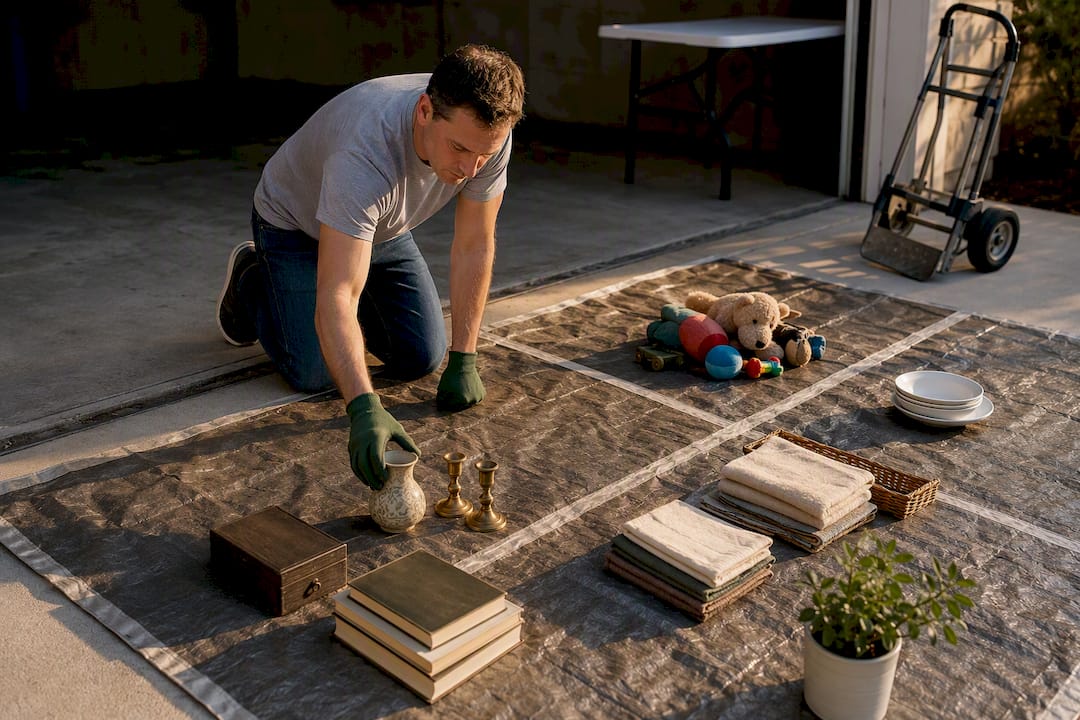
Emptying the garage floor completely onto the driveway is both a psychological reset and a tactical shortcut. It stops you from doing what almost everyone does by default, which is shuffling boxes from one corner to another and calling that “organizing.” When every single item sits in the open, you’re forced to look at it and make a real decision, which is why the Tarp Strategy is the backbone of nearly every effective garage cleanout.
Here’s how to run it:
- Lay two or three heavy-duty tarps on the driveway before you touch a single box. This protects your driveway from oil and paint drips and gives you a defined workspace.
- Pull everything out of the garage, including items stacked against walls or shoved into corners you haven’t looked at in years.
- Set up four zones on or near the tarps: Keep, Donate, Sell, and Trash. Use painter’s tape and index cards to mark each one so nobody has to guess.
- Sort in passes, not perfection. Grab the obvious calls first (the dead lawn mower, the flattened box of Christmas decorations) before tackling the ambiguous stuff.
- Tag anything you’re unsure about with a piece of tape and set it aside in a fifth “review” pile, rather than letting it stall the whole line.
The sorting speed comes from applying rules instead of relitigating every item. The one-year rule is the simplest: if you haven’t used it in the last 12 to 24 months and it isn’t seasonal equipment, it goes. For anything that triggers hesitation, try the 20-second rule. If you can’t decide within 20 seconds, it’s probably clutter dressed up as sentiment. The 5-5-5 rule works well for households sorting as a group: would you pay $5 for it, does it take up less than 5 square feet, and have you used it in the last 5 months? Two “no” answers means it leaves the garage.
Sentimental items deserve one exception. Instead of keeping every box of kids’ art projects or old trophies, photograph them and let the physical item go. You keep the memory without the shelf space.
Pro Tip: Set up a folding table as your “decision station” next to the sort zones. Anyone can bring an ambiguous item there, ask a two-second question, and move on instead of freezing the whole operation over a single box of cables.
Large items like old workbenches or broken cabinets need extra hands, so flag them early and have your lifters standing by rather than discovering mid-sort that a dresser needs three people and nobody’s available.
15 Garage Items You Can Toss, Donate, or Recycle Right Now
A huge share of garage clutter is not sentimental, it’s just stuff nobody got around to dealing with. Clearing these categories first removes bulk fast and makes the rest of the sort feel manageable. A prioritized list like this is standard advice from garage organization specialists, and it holds up because these items rarely require a second thought.
- Half-used cans of old paint (check if it’s still usable before deciding)
- Expired pesticides, fertilizers, or pool chemicals
- Broken or rusted hand tools you’ve already replaced
- Worn-out sports gear (deflated balls, cracked helmets, outgrown cleats)
- Flattened cardboard boxes and packing materials
- Old tires with no rims or tread life left
- Obsolete electronics like box TVs, old routers, or dead power tools
- Broken or water-damaged furniture
- Paint trays, rollers, and brushes caked with dried paint
- Extension cords with exposed wiring
- Unused exercise equipment collecting dust in a corner
- Empty or near-empty containers (oil, antifreeze, cleaning supplies)
- Mismatched hardware, screws, and bolts in unlabeled jars
- Holiday decorations that are broken or duplicates
- Old car parts left over from a repair years ago
Donation-ready items include working tools, gently used furniture, sports equipment in decent shape, and functional small appliances. Most donation centers will schedule a pickup if you have enough volume, which saves you a truck trip. Before anything leaves the garage, do the quick prep that keeps donation centers and haulers happy: drain fuel from small engines, let wet paint dry solid before disposal, and tape lids shut on anything that could leak in transit.
Hazardous, Bulky, and Restricted Items Need a Different Plan
Not everything in your garage can go in a regular trash pickup or a standard junk hauler’s truck. Household hazardous wastes such as paints, solvents, motor oil, and pesticides require special disposal handling, and putting them in with regular trash can violate local waste codes.
The items that most often trip people up include:
- Leftover oil-based paint and solvents
- Motor oil, antifreeze, and other automotive fluids
- Pesticides, herbicides, and pool chemicals
- Car batteries and household batteries
- Propane tanks and old fuel cans
- Fluorescent bulbs and CFLs (they contain mercury)
Leftover latex paint typically holds up fine for a few years if it’s sealed properly and hasn’t separated, according to Consumer Reports. If yours has separated into layers or grown a skin, it’s past saving and needs to go to a household hazardous waste (HHW) event rather than the curb.
Most counties run scheduled HHW drop-off events or maintain a permanent facility, and a quick search for “[your county] household hazardous waste” will usually surface the hours and accepted items. Expect a short line, a staff member checking your load, and separate bins for paint, chemicals, and batteries. Some counties limit visits to residents only or cap the quantity per visit, so check the rules before you load the truck.
Bulky appliances carry their own logistics. Refrigerators, freezers, and window units often trigger recycling fees because of refrigerant handling requirements, and washers or dryers add weight that some haulers surcharge for. Professional crews typically flag these items during the quoting stage precisely because disposal complexity and access change the price even when the item looks straightforward. If you’re dealing with a dead appliance, our guide on removing old appliances safely walks through what to expect.
Storage That Sticks: Apply the Zone Rule
The reason most garage organization projects fail within six months isn’t laziness. It’s that people put items back wherever there’s open space instead of thinking about how often they actually reach for that item. The Zone Rule fixes this by organizing storage around frequency of use rather than category or convenience in the moment.
Here’s how the three zones break down:
- Active zone (waist to shoulder height): Tools, sports gear, and anything you touch weekly belongs here, within easy reach and easy sight.
- Seasonal zone (high shelves or overhead racks): Holiday decorations, winter tires, and camping gear that comes out once or twice a year can live up high where floor space isn’t wasted.
- Heavy and bulk zone (floor level, low shelving): Bags of soil, bulk supplies, and heavy equipment stay low so you’re not lifting weight above your head.
Once you know your zones, the actual storage systems are straightforward:
- Slatwall or pegboard panels for hand tools, keeping them visible and off workbenches
- Overhead ceiling racks for bins you access a few times a year
- Modular cabinets with doors to hide clutter-prone categories like chemicals and small parts
- Magnetic strips for screwdrivers, wrenches, and other metal tools
- Stackable, clear bins with printed labels, not handwritten ones that fade
- Corner shelving units that use dead space most garages waste
- Ceiling tracks for bikes, ladders, and kayaks that otherwise eat floor space
Small garages benefit from a few specific hacks: a wall-mounted folding workbench that tucks away when not in use, vertical bike hooks instead of floor racks, and slim rolling cabinets that slide under a workbench. If you’re also organizing frequently grabbed family gear like strollers or sports bags, the same frequency-based thinking applies indoors, and this guide on organizing baby gear essentials covers a similar zone approach for smaller spaces.
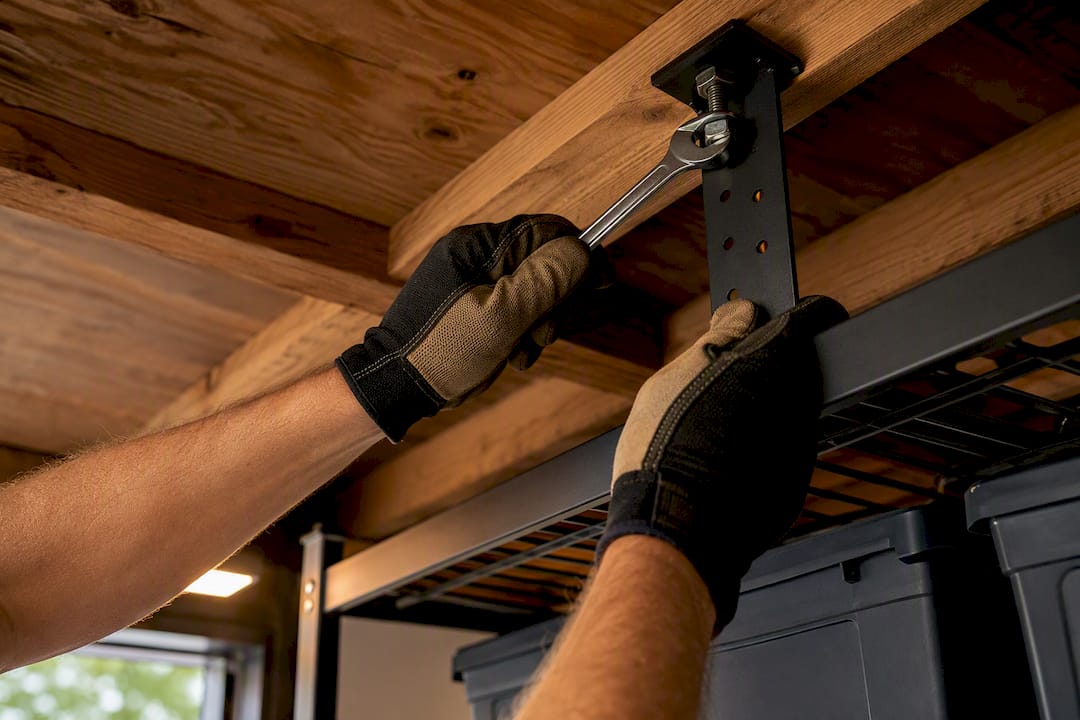
Pro Tip: Never mount overhead racks into drywall alone. Anchor them into ceiling joists and check the manufacturer’s weight limit, because a loaded rack can weigh more than most homeowners expect once bins are packed with holiday decorations or camping gear.
Deep Cleaning and Small Repairs While the Floor Is Bare
An empty garage is the only time you’ll get an unobstructed look at the floor, walls, and ceiling, so use it. Start with the floor itself. Oil stains respond well to a degreasing cleaner scrubbed in with a stiff brush, and letting it sit for 10 to 15 minutes before rinsing makes a real difference on older stains. Sweep thoroughly, then vacuum corners and baseboards where dust and debris collect undisturbed for months. If you have exposed rafters, a leaf blower clears cobwebs and dust in minutes, which is far faster than trying to reach them with a broom.
While everything is out of the way, check for signs of trouble you’d normally miss behind stacked boxes:
- Mold or mildew along the base of walls, which often signals a moisture or drainage issue
- Pest droppings or nesting material in corners, especially near stored cardboard
- Cracks in the slab or gaps under the garage door that let in water or pests
- Rusted or corroded shelving brackets that could fail once loaded again
Repairs are far easier with nothing blocking your access. Reseal gaps under the door, patch small cracks before they widen, and replace any bracket showing rust.
Lighting is worth an upgrade while you’re already in project mode. Swapping old fluorescent tubes for LED shop fixtures gives you brighter, more even light and cuts energy use. If you’re relying on a single centered fixture, adding a second light near the workbench or storage wall makes a noticeable difference for evening projects.
Your Cleanout Day Supply List
Show up prepared and the whole day moves faster. The must-haves are heavy-duty tarps for the driveway staging area, moving gloves, a dust mask, a dolly for anything heavy, moving straps, painter’s tape and a permanent marker for zone labels, and sturdy bins for anything you’re keeping.
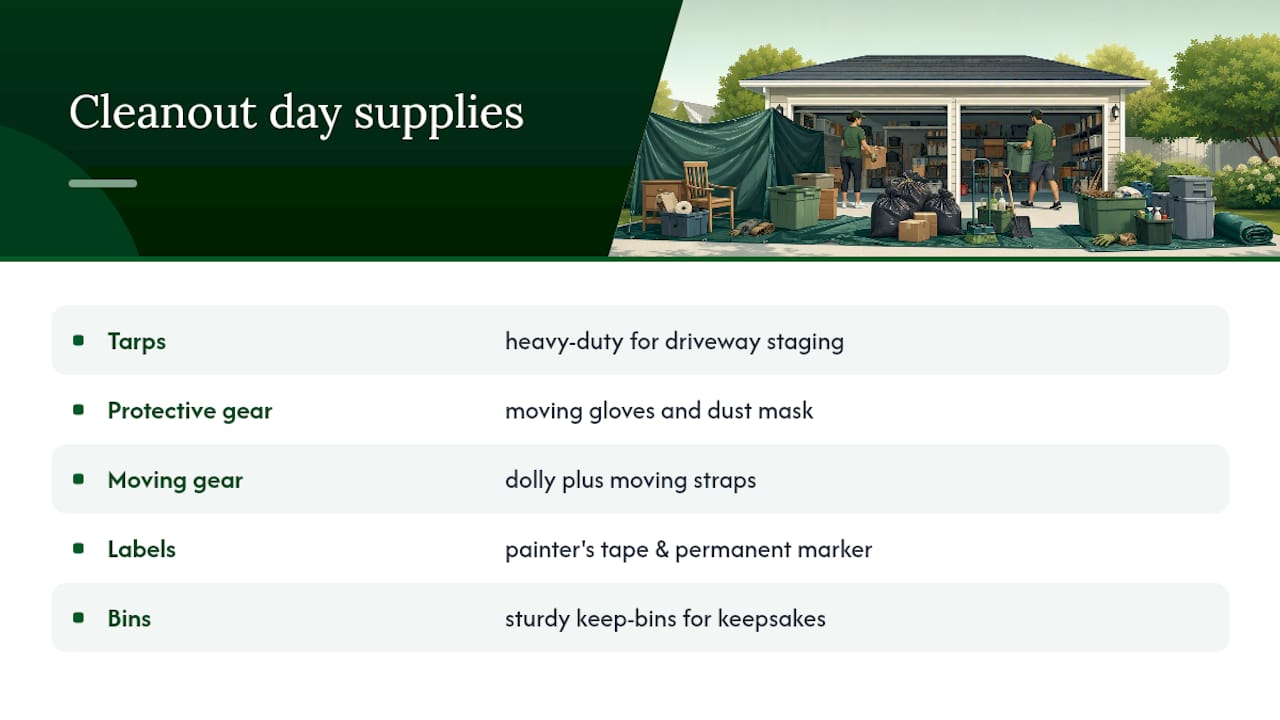
A few optional items make the job noticeably easier: a shop vacuum for dust and debris, a floor degreaser for oil stains, basic hand tools for quick disassembly, and either a rented dumpster or a truck if you’re clearing a full garage’s worth of material. Book dumpster rentals, moving trucks, or extra dollies at least a few days ahead, since weekend availability disappears fast in most markets.
When It Makes Sense to Call in a Pro
DIY works well for most garages, but certain situations tip the math toward hiring a crew. Cost is driven mainly by volume, weight, disposal complexity, and access, and heavy or awkward items increase quotes even when the total pile looks moderate. A garage full of light boxes costs less to clear than a smaller pile that includes a dead refrigerator and a stack of construction debris.
A few signals that it’s time to bring in help:
- You’re facing bulky appliances, old furniture, or construction debris that require special handling
- The volume is simply too much for a truck bed and a weekend
- You have a closing date, move-out deadline, or estate timeline that doesn’t leave room for delay
- Physical limitations make heavy lifting or repeated trips unsafe
What a professional crew adds goes beyond hauling. They handle the heavy lifting, transport items to the correct disposal or recycling facility, and route usable goods to donation centers instead of the landfill by default. For readers preparing a property to sell, our guide on debris removal before listing covers timeline considerations that overlap heavily with a garage cleanout under deadline pressure.
What We See on Every Garage Cleanout Job
Every property we clear tells a similar story: the garage was supposed to get organized “next weekend” for roughly two years running. That delay is normal, and it’s part of why the Tarp Strategy works so well when we finally do the job. Once everything is out on the driveway, decisions that felt impossible inside a cluttered garage suddenly take seconds.
Our approach centers on photo-based quotes, so homeowners know the cost before a truck ever pulls up, and donation-conscious recovery, which means usable items get routed to local donation partners instead of straight to a landfill. For estate situations especially, the process is rarely just physical labor. It’s often the first time a family has faced a parent’s or relative’s belongings all at once, and that calls for patience as much as muscle.
Our own numbers back up the pattern we see on-site:. Whenever possible, we schedule haul pickup the same day sorting finishes, because momentum lost overnight is momentum you don’t get back.
Three Rules That Keep the Garage from Sliding Back
Once the cleanout is done, the real work is not letting entropy win again. Set a clear-floor rule: nothing sits on the floor for more than 48 hours before it’s either put away or removed. Run a monthly 15-minute sweep to return misfiled tools, check that labels still match what’s inside the bin, and purge one small box you no longer need. Keep a labeled donation box in the active zone at all times, and when it fills up, schedule a pickup or drop it off that same week instead of letting it become another pile.
— Olga
Need It Cleared Fast? What Ohana Property & Transition Services Handles For You
If your weekend is booked or the garage includes items you’d rather not haul yourself, Professional property cleanout services can be a faster alternative to renting a dumpster and handling the sorting solo. Many companies offer photo-based quotes for transparent pricing and faster turnaround times compared to typical waitlists.

Our services cover full property cleanouts and carpet removal, straightforward junk removal for the smaller stuff, and appliance removal for the dead freezer or washer nobody wants to lift. Families managing an estate can lean on our estate cleanout service, which folds in the same donation-conscious recovery process we use on every job, routing usable items to local partners instead of the landfill. To speed up your visit, run your own quick sort into rough keep and toss piles beforehand and keep the driveway clear for the crew.
We provide free estimates and serve Columbus, Seymour, North Vernon, Edinburgh, Franklin, Greenwood, Indianapolis, Lafayette, and the surrounding Central Indiana communities. Request a quote through our property cleanout page or call (812) 302-6833 to get a same-week appointment on the calendar.
Where to Go for More Garage Cleanout Guidance
For hazardous materials, the EPA’s household hazardous waste guidance explains what needs special handling and why. Family Handyman covers the Tarp Strategy and sorting tactics in more depth, while Angi breaks down cost drivers for professional cleanouts. Consumer Reports offers useful guidance on paint shelf life before you decide what to keep or discard.
Sources
- How much does it cost to clean out a garage? | Angi
- Tips for getting your garage clean and organized | Family Handyman
- Household hazardous waste (HHW) | US EPA
- How long does leftover paint last? | Consumer Reports
FAQ
What is the best way to clean out a garage?
The most effective method is a total-empty approach: pull everything onto the driveway in one dedicated day or weekend, sort into keep, donate, sell, and trash zones, then rebuild storage using the Zone Rule. Committing to a single focused session, rather than spreading the work over weeks, is what prevents clutter from creeping back.
What is the average cost to clean out a garage?
Cost depends heavily on volume, weight, disposal complexity, and access to the garage, with heavy items like appliances or construction debris raising quotes even when the pile looks small, according to Angi. Ohanapropertyexperts provides photo-based quotes so you know the price upfront; current rates for services like junk removal are listed on the site.
What is the 5-5-5 rule for decluttering?
The 5-5-5 rule asks three questions about an item: would you pay $5 for it, does it take up less than 5 square feet of space, and have you used it in the last 5 months? Two “no” answers is a strong signal the item should leave the garage rather than get repacked.
What items do minimalists typically remove from a garage first?
The first cuts are usually duplicate tools, expired chemicals, broken furniture, worn-out sports gear, and flattened cardboard, since these carry no sentimental weight and take up disproportionate space. Sentimental items get photographed instead of kept, which lets the physical clutter go while preserving the memory.
How long does a garage cleanout usually take?
A standard two-car garage typically takes one full day for sorting and hauling, plus a second day for deep cleaning and rebuilding storage, following the weekend roadmap most organizers recommend. Larger garages, estate situations, or ones with hazardous materials can take longer, which is often when hiring a crew like Ohanapropertyexperts for a full property cleanout makes sense.