
Homeowners: 4–10 Cubic Yards? Pick Junk Removal or Dumpster Rental
Homeowners: use a volume first checklist to see when 4–10 cubic yards favors dumpster rental or when junk removal saves time and money.
Homeowners: 4–10 Cubic Yards? Pick Junk Removal or Dumpster Rental
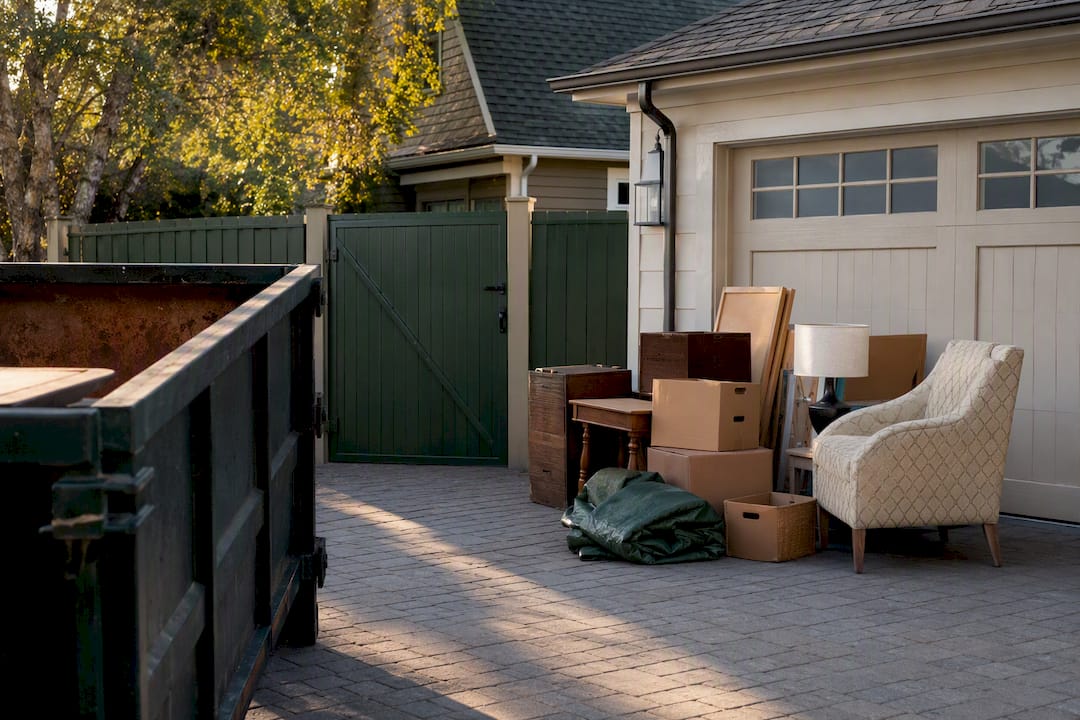
Junk removal wins when you have a small pile of stuff, a tight deadline, or items on the second floor that need muscle, not machinery. Dumpster rental wins when you’re generating debris over several days, like a kitchen tear-out or roofing job, and need a container that just sits there while you work. Most homeowners land closer to junk removal than they expect, but plenty of renovation projects genuinely need both.
TL;DR:
- Junk removal is more cost-effective for volumes under a quarter of a standard driveway, while dumpsters are better for larger debris loads exceeding that volume.
- Junk removal offers same-day service with crews handling all heavy lifting, but costs rise with volume, whereas dumpsters require self-loading and are cheaper for ongoing projects over several days.
- Most homeowners overestimate capacity savings of dumpsters by forgetting about labor and access hassles, which can make junk removal the less costly option for small or tight spaces.
- For renovation debris, a hybrid approach often saves money by using a dumpster for construction waste and a crew for bulky household items, optimizing both cost and convenience.
- When choosing, consider volume, timeline, and access constraints carefully, and request clear, written estimates from providers to avoid surprises or unnecessary costs.
Table of Contents
- Junk Removal vs. Dumpster Rental at a Glance
- How Full-Service Junk Removal Works
- What Are the Pros and Cons of Junk Removal?
- How Do Dumpster Rentals Work?
- What Are the Pros and Cons of Dumpster Rental?
- Junk Removal Cost Comparison: What’s the Real Break-Even Point?
- How Do You Choose Between Junk Removal and a Dumpster?
- When Does a Hybrid Approach Make Sense?
- What Do Homeowners Usually Get Wrong About This Decision?
- How Ohana Handles Full-Service Cleanouts
- Sources
Junk Removal vs. Dumpster Rental at a Glance
Before you call anyone, look at four things: how much stuff you have, how fast you need it gone, how hard it is to move, and whether you’re allowed to park a container on your property. Those four answers do most of the deciding for you.
- Pricing model: Junk removal charges by truck volume, often with a minimum fee; dumpster rental charges a flat rate for the container and rental period, plus overage fees if you exceed the weight limit.
- Labor required: Junk removal crews do the lifting and hauling; dumpster rental means you (or your contractor) load everything yourself, often over several days.
- Timeline: Junk removal is frequently same-day or next-day and wraps up in an hour or two; dumpster rental typically runs 5 to 14 days, giving you time to work in phases, according to Dumpsters.
- Best for: Junk removal fits single items, estate cleanouts, and anything behind stairs or in tight yards; dumpsters fit renovations, roofing tear-offs, and yard overhauls.
- Space and permits: Dumpsters need driveway or curb space and sometimes a city permit; junk removal needs nothing but truck access to your door.
A rough rule of thumb: if your debris would fill less than a quarter of a standard driveway, junk removal usually costs less once you account for your own time. Past that volume, the math starts favoring a dumpster.
How Full-Service Junk Removal Works
Junk removal is built around speed and zero physical effort on your part. You call or book online, often with a photo-based estimate, and a crew shows up within a day or two.
The workflow is simple: you book a window, the crew arrives and walks the site with you, they quote the job on the spot, then they load and haul everything away, sorting for donation or recycling along the way, per Jiffy Junk.
Pricing usually follows load-size tiers rather than a flat fee:
- Single-item pickup: roughly $75 to $200, according to 1-800-GOT-JUNK.
- Quarter-truck load: roughly $200 to $350.
- Half-truck load: pricing varies depending on volume and location.
- Full truck load: pricing varies depending on volume and location.
Junk removal shines for estate cleanouts, apartments without elevator access, and properties too small or too paved-over for a dumpster. Most companies decline hazardous materials like paint, chemicals, or asbestos, and some tack on extra fees for stair carries or disconnecting appliances. Ask about those before booking.
What Are the Pros and Cons of Junk Removal?
The biggest selling point is that you never touch a single box. A crew handles heavy lifting, tight staircases, and awkward furniture that would be difficult to haul yourself, and most jobs finish quickly.
Pros:
- No lifting or hauling on your end.
- Fast turnaround, often same-day or next-day.
- Built-in donation and recycling routing for usable items.
- Works in driveways, apartments, and tight lots where a dumpster wouldn’t fit.
Cons:
- Costs more per cubic yard than a dumpster once volume climbs.
- You typically need to be on-site for the walk-through and quote.
- Certain items (mattresses, appliances, electronics) sometimes carry add-on fees.
Pro Tip: Snap photos of your pile from a couple of angles and text them to the company before your appointment. It speeds up the quote and cuts down on price surprises when the crew arrives.
How Do Dumpster Rentals Work?
A dumpster gets dropped in your driveway or on the street, and you fill it at your own pace over the rental period, then the company hauls it away when you’re done or when the clock runs out.
Rental periods commonly run 5 to 14 days, and sizes range from 10 to 40 cubic yards, according to Dumpsters. A 10-yard container suits a small bathroom gut job; a 30 or 40-yard unit fits a full home renovation or a roof tear-off.
- 10 cubic yards: suitable for small cleanouts and single-room remodels.
- 20 cubic yards: suitable for kitchen renovations and garage cleanouts.
- 30 to 40 cubic yards: suitable for whole-home renovations and major projects.
Every dumpster has weight limits, and exceeding them usually results in overage charges, particularly for dense materials. Many companies also prohibit certain hazardous or bulky items.
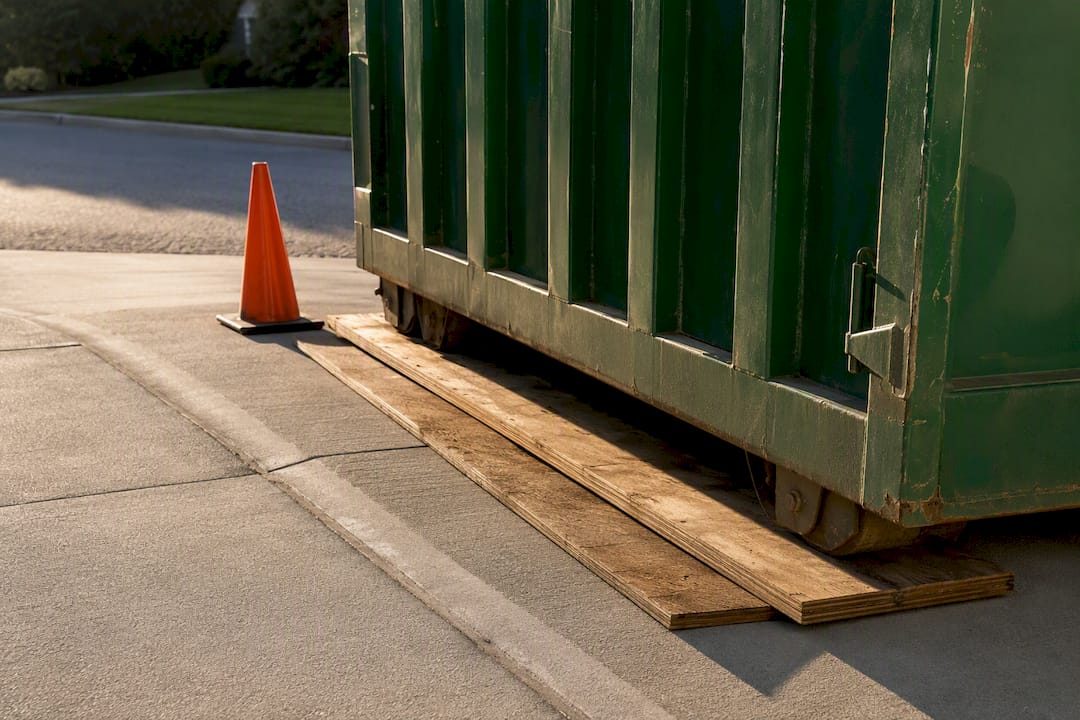
Before you book, check whether your city requires a permit for street placement and whether your HOA restricts how long a container can sit visible from the road. Ask the rental company about driveway protection boards, too. A loaded dumpster is heavy enough to crack older concrete or asphalt.
What Are the Pros and Cons of Dumpster Rental?
Dumpsters win on price when the volume is real. Instead of paying per load, you pay once for a container that can absorb days of ongoing debris.
Pros:
- Lower cost per cubic yard for large jobs like renovations.
- Fill it on your own schedule instead of racing a crew’s timer.
- Multiple sizes let you match capacity to the actual project.
Cons:
- You (or your contractor) do all the lifting.
- Placement can require a permit or damage protection for your driveway.
- Weight overage fees add up fast with heavy debris.
Statistic Callout: Standard 10 to 40 cubic yard dumpsters commonly run somewhere between roughly $250 and $750 for typical residential rentals, though size, rental length, and local market shift that range considerably, according to Dumpsters.com.
Junk Removal Cost Comparison: What’s the Real Break-Even Point?
Here’s where the decision usually gets made: not by preference, but by cubic yards. Multiple industry sources point to roughly 4 to 10 cubic yards, about half a garage’s worth of debris, as the pivot where dumpster rental starts beating junk removal on cost per cubic yard, per Zebra Dumpsters.
Below that threshold, junk removal tends to be cheaper once you factor in your own time. Above it, a dumpster usually wins, assuming you can actually fill it without paying weight overages.
| Project size | Junk removal estimate | Dumpster estimate |
|---|---|---|
| Single item (old couch) | $75–$200 | Not practical (minimum rental cost exceeds need) |
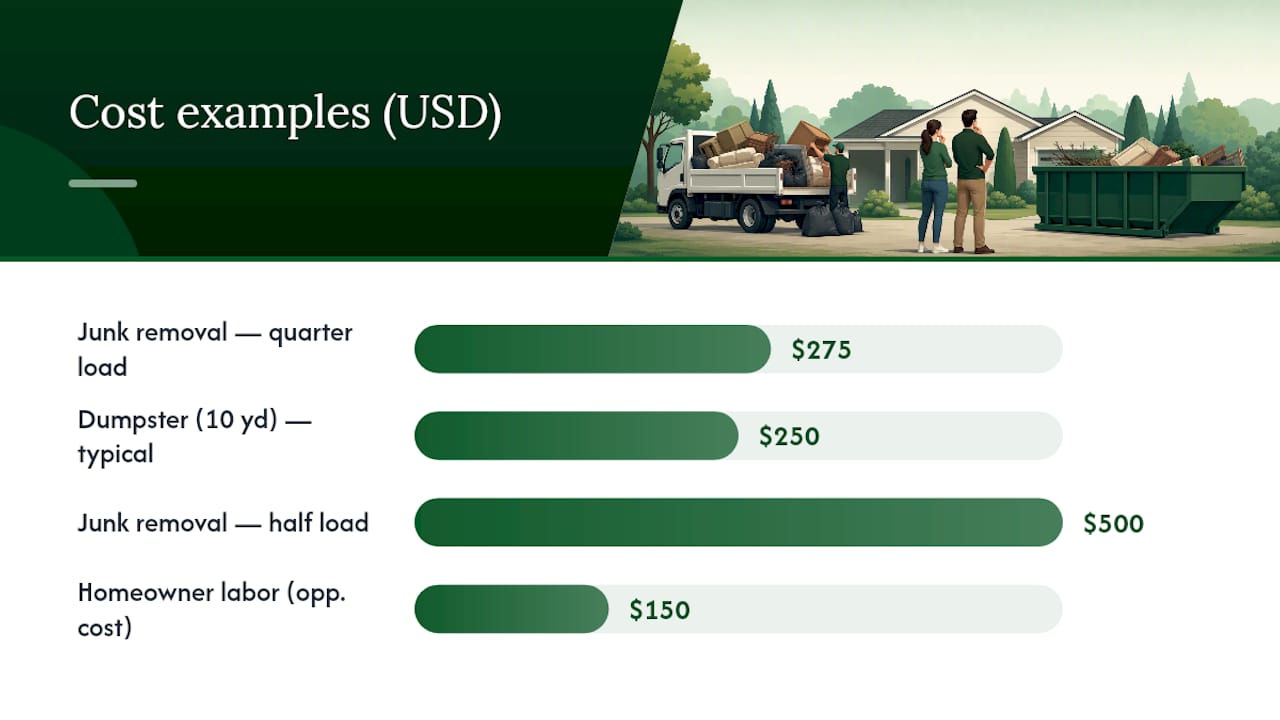
| Quarter-truck load | $200–$350 | 10-yard dumpster, often $250 |
| Half-truck load | $250–$750 | 20-yard dumpster, often $250–$750 |
| Full truck / renovation debris | $250–$750 | 30–40-yard dumpster, often $250–$750 |
Price bands come from 1-800-GOT-JUNK and Dumpsters.com; actual quotes vary by region and material weight.
The math changes once you value your own labor. If loading a 20-yard dumpster takes you and a friend six hours combined, and you’d normally earn $25 an hour at work, that’s $150 in opportunity cost before you even factor gas for dump runs or a truck rental. Add potential permit fees if your city requires one for street placement, and subtract whatever donation value you’d lose by tossing usable furniture instead of having a crew route it to a donation center.
When requesting quotes, ask both a junk removal company and a dumpster provider for the exact same scope: same debris type, same estimated volume. That’s the only way to compare apples to apples instead of guessing which quote actually covers your full project. Readers weighing costs against renovation timelines might find our guide to post-renovation debris hauling useful for mapping out a bigger project.
How Do You Choose Between Junk Removal and a Dumpster?
Score your project on three factors before you make a single call. This takes about two minutes and saves you from booking the wrong service.
- Volume: Under a quarter-truck load or under 4 cubic yards, lean junk removal. Above that, especially past 10 cubic yards, lean dumpster.
- Timeline: Need it gone today or tomorrow? Junk removal. Working over several days or weeks? Dumpster.
- Access: Stairs, elevators, narrow side yards, or no driveway space at all? Junk removal wins by default, since access constraints are one of the fastest ways to rule out a dumpster entirely.
Once you know which direction you’re leaning, ask the provider these questions before booking:
- How many days are included in the rental, and what’s the daily rate after that?
- What’s the weight allowance, and what’s the overage fee per ton?
- What items are prohibited?
- Do you sort for donation or recycling, or does everything go to the landfill?
- Are there extra fees for stairs, appliance disconnection, or difficult access?
- Are you insured, and can you provide documentation?
Pro Tip: A provider who won’t give you a written estimate or gets vague about where your debris actually ends up is a red flag. So is a company that can’t produce proof of insurance on request.
Property managers and investors juggling multiple units often find it’s worth comparing both models against actual project margins. Our breakdown of flip property junk removal costs walks through that math in more detail.
When Does a Hybrid Approach Make Sense?
Plenty of renovation projects don’t fit neatly into one category. A kitchen remodel might generate cabinet debris and drywall that belong in a dumpster, alongside an old refrigerator and a bulky sectional sofa that a junk removal crew can carry out in ten minutes.

Multiple industry guides recommend exactly this split: dumpster for construction debris, junk removal crew for heavy or awkward household items. Time the dumpster pickup around the crew’s visit so you’re not paying for two separate trips, and you preserve more donation potential for furniture that would otherwise get crushed under drywall scraps. Our debris removal guide covers scheduling logistics for combined projects like this.
What Do Homeowners Usually Get Wrong About This Decision?
Most people overestimate how much a dumpster will save them and underestimate their own labor cost. A homeowner staring at a garage full of boxes tends to assume the cheapest sticker price wins, without pricing in six hours of lifting, a sore back, and a trip to the landfill they hadn’t planned for.
What actually tips the decision, more often than volume, is access. A client in a two-story home with a narrow side yard once considered a dumpster for a basement cleanout, then realized nothing would fit through the gate. A junk removal crew carried everything out through the front door in under two hours, at a fraction of the hassle a dumpster would have created.
- Ohana routes usable furniture and appliances to local donation partners instead of the landfill whenever possible.
- Photo-based estimates mean you get real pricing before a truck ever shows up.
- Estate cleanouts and property transitions are handled with the same crew from quote to final haul.
— Olga
How Ohana Handles Full-Service Cleanouts
If your project points toward junk removal, Ohanapropertyexperts is the local alternative to guessing at a price and hoping a random truck-and-trailer outfit shows up on time. We handle estate cleanouts, full property cleanouts, debris hauling, and everything in between, with the same crew managing your job from first walk-through to final haul.

Getting started is simple: send us photos of what needs to go, and we’ll give you a fast, transparent estimate before we ever step foot on your property. That’s the same photo-based process we use for garage cleanouts, rental turnovers, and full estate transitions across Columbus, Seymour, North Vernon, Edinburgh, Franklin, Greenwood, Indianapolis, Lafayette, and the surrounding Central Indiana communities. Items in good condition get routed to donation partners whenever possible, so you’re not sending usable furniture straight to a landfill.
If you’re weighing a dumpster against a crew that handles the lifting, sorting, and hauling for you, start with a free estimate on our services page or call (812) 302-6833 to talk through your specific project.