
The Role of Debris Removal in Real Estate Value
Discover the role of debris removal in real estate value. Clean properties sell faster and for higher prices. Learn more to boost your sales!

The Role of Debris Removal in Real Estate Value
Debris removal is the process of clearing unwanted materials, trash, and abandoned items from a property to protect its value, speed up sales, and improve market appeal. The role of debris removal in real estate is not cosmetic. It directly shapes buyer perception, lender confidence, and the financial outcome of every transaction. Property owners, real estate professionals, and families managing estate transitions who treat debris removal as an afterthought routinely leave money on the table and extend their holding costs by weeks or months. Ohanapropertyexperts works with all of these groups across Central Indiana, and the pattern is consistent: clean properties close faster and at better prices.
How does debris removal influence buyer perception and property valuation?
Clean, clutter-free properties give buyers the mental space to visualize ownership. When a buyer walks into a home filled with old furniture, construction scraps, or accumulated junk, their brain shifts from “I could live here” to “how much will this cost me to fix?” That mental shift directly reduces offer prices. Decluttering boosts offers and shortens market times, particularly in competitive markets where buyers have multiple options.

The effect goes beyond individual buyers. Institutional investors view well-documented waste management systems as indicators of healthy asset management. During due diligence, they examine how a property handles waste as a proxy for overall operational discipline. A property with a clear, documented debris management history signals that the owner takes maintenance seriously. That perception protects net operating income and increases asset valuation in multifamily and investment contexts.
Debris removal also affects refinancing. Lenders conducting appraisals need to assess a property’s true condition. Clutter and debris obscure structural elements, make square footage feel smaller, and raise red flags about deferred maintenance. A clean property gives appraisers an accurate picture, which supports higher valuations and smoother loan approvals.
Pro Tip: Schedule professional debris removal before listing photos are taken. Buyers form their first impression online, and cluttered listing photos reduce click-through rates before a single showing is booked.
- Debris-free properties allow buyers to focus on features, not problems
- Clean curb appeal increases foot traffic from drive-by interest
- Documented waste management history strengthens investor due diligence packages
- Lender appraisals reflect higher values when structural elements are visible and accessible
What are the financial risks of neglecting debris removal?
Skipping debris removal does not save money. It defers costs while adding new ones. Secondary damage from moisture and pests can increase repair costs by thousands of dollars. Trash that sits in a vacant property traps moisture, which feeds mold growth. Mold remediation is expensive, time-consuming, and can kill a sale during inspection.
Pest infestations follow the same logic. Debris provides shelter and food sources for rodents and insects. Once an infestation takes hold, the property requires extermination, structural inspection, and often drywall or insulation replacement. Every week of delay compounds the cost.
Carrying costs are the silent killer in neglected properties. Mortgage payments, insurance, property taxes, and utilities continue regardless of whether the property is generating income. Fast cleanouts shorten vacancy periods and protect rental income by preventing escalating damage. For landlords managing eviction turnovers, a rapid cleanout can mean the difference between one month of vacancy and three.
- Moisture damage accumulates behind debris piles, leading to mold that requires professional remediation before any sale or rental can proceed.
- Pest infestations take root in cluttered spaces, triggering extermination costs and structural inspections that delay timelines.
- Extended holding periods inflate carrying costs through continued mortgage, tax, and insurance payments on a non-producing asset.
- Renovation delays occur when contractors cannot access work areas blocked by debris, pushing project completion dates and increasing labor costs.
- Underpriced cleanout budgets cause cost overruns. Failing to budget separately for initial trash-out and post-construction debris removal is one of the most common mistakes investors make on foreclosure flips.
The cleanout budget mistake deserves extra attention. Many investors budget for one cleanout at the start of a renovation. In practice, a foreclosure or estate property requires at least two distinct phases: an initial removal of contents to enable inspections, and a separate debris removal after construction work is complete. Treating these as one line item almost always results in cost overruns and project delays.
How is debris removal integrated into property turnover and renovation workflows?
Debris removal is not a one-time task. It is a structured operational phase that runs parallel to, and enables, every other step in a property turnover. Integrating debris removal as a structured project phase is the key to timely renovations. When work areas stay clear, contractors move faster, inspections happen on schedule, and the project stays on budget.
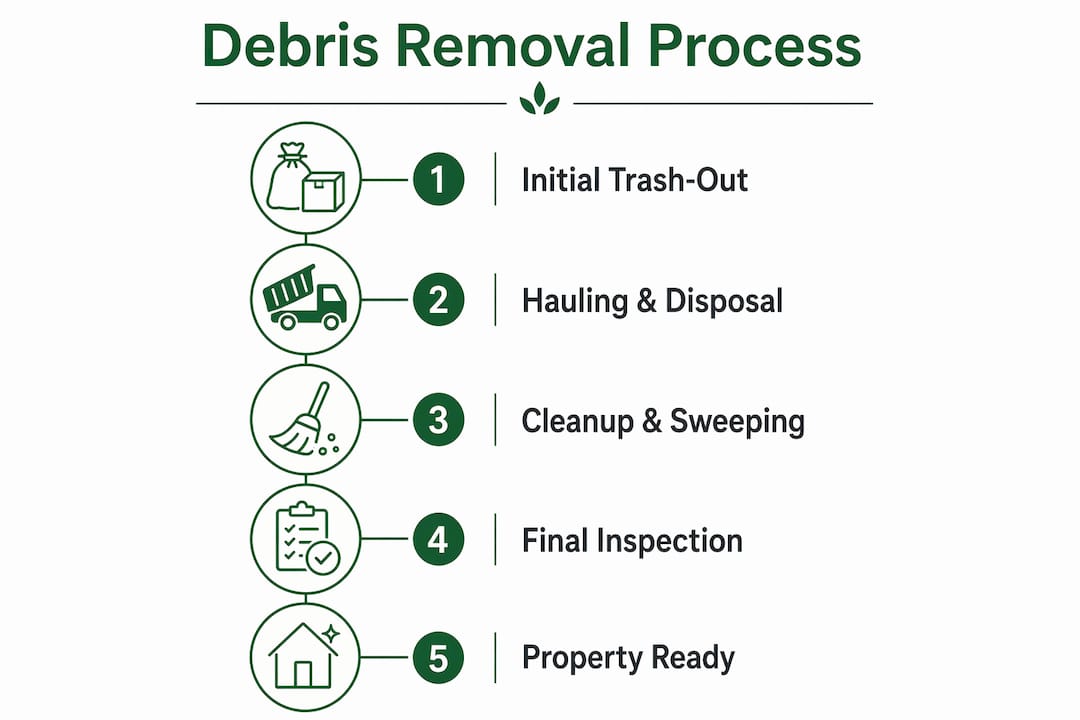
The multi-stage approach works like this. The first stage is the initial trash-out, which clears the property of all abandoned contents so that inspectors and contractors can assess the true condition of the structure. The second stage is post-construction debris removal, which clears drywall scraps, lumber offcuts, packaging materials, and other renovation waste before cleaning and staging begin. Skipping either stage creates bottlenecks that ripple through the entire project timeline.
Attempting minor cleanouts internally often costs more in the long run than professional removal. Property managers and investors who rely on maintenance staff or day laborers for debris removal frequently underestimate the volume, the disposal requirements, and the time involved. Professional removal services bring the right equipment, know local disposal regulations, and complete the work in a fraction of the time.
Pro Tip: Coordinate your debris removal appointment to happen the day before your contractor’s first scheduled visit. This single scheduling decision can save days of project time and prevent change-order fees.
- Initial trash-out clears the property for inspections and accurate contractor bids
- Post-construction removal prepares the space for cleaning, staging, and photography
- Professional services meet municipal disposal standards, avoiding fines and compliance issues
- Lender-required property preservation standards often mandate documented debris removal before loan approval on REO properties
For a detailed breakdown of managing post-renovation waste, the post-renovation debris guide from Ohanapropertyexperts covers costs, timelines, and what to expect at each stage.
What best practices should property owners and real estate professionals follow?
Effective debris management follows a predictable sequence. The properties that sell fastest and at the best prices are the ones where debris removal was planned from the start, not treated as a last-minute scramble before listing.
| Situation | Best practice | Why it matters |
|---|---|---|
| Pre-listing preparation | Schedule cleanout 2–3 weeks before listing photos | Allows time for any hidden repairs discovered during clearing |
| Estate transitions | Hire a professional service with donation-conscious recovery | Preserves sentimental items and reduces landfill waste |
| Rental turnover | Complete cleanout within 48–72 hours of vacancy | Shortens vacancy period and prevents secondary damage |
| Renovation projects | Budget for two separate cleanout phases | Prevents cost overruns from underestimated debris volume |
| Investor due diligence | Document all waste management steps with photos and receipts | Satisfies lender and institutional investor requirements |
Choosing a professional service matters for compliance as well as speed. Professional debris removal services follow disposal and recycling standards, sort items for donation, and meet regulatory requirements. That documentation is useful when selling to eco-conscious buyers or satisfying municipal requirements in Central Indiana communities.
Coordinating debris removal with staging and photography is the step most sellers miss. A property that is cleared but not yet staged still photographs better than one with debris present. Booking the cleanout, the stager, and the photographer in sequence, rather than simultaneously, produces the best listing presentation and the strongest first impression online. For sellers preparing to list, the pre-listing cleanout guide from Ohanapropertyexperts outlines exactly how to sequence these steps.
Key Takeaways
Debris removal is the single most overlooked factor in real estate preparation, yet it directly determines how fast a property sells, at what price, and how much it costs to hold.
| Point | Details |
|---|---|
| Buyer perception is immediate | Clean, debris-free properties generate stronger offers and shorter market times. |
| Neglect creates compounding costs | Moisture, pests, and extended vacancies multiply repair and carrying costs quickly. |
| Two-phase cleanout is standard | Budget separately for initial trash-out and post-construction debris removal to avoid overruns. |
| Documentation builds investor confidence | Recorded waste management history satisfies lender and institutional investor due diligence. |
| Professional removal pays for itself | Faster turnovers, fewer contractor delays, and compliance with disposal standards offset service costs. |
What I’ve learned from watching debris removal get underestimated
After working through hundreds of property transitions across Central Indiana, the pattern I see most often is not neglect. It is underestimation. Property owners and investors know debris removal matters. They just consistently underestimate how much debris is actually there, how long removal takes, and what happens when it is delayed.
The estate transition cases are the most instructive. A family inheriting a property often spends weeks sorting through belongings before calling a professional. By the time the cleanout happens, the listing is delayed by a month or more. That month of delay costs real money in carrying costs, and it often means missing a seasonal market window. The families who call Ohanapropertyexperts early, before they have sorted everything themselves, consistently get to market faster and with less stress.
The investment property cases reveal a different mistake. Investors who budget one cleanout for a foreclosure flip almost always hit a cost overrun. The initial trash-out reveals hidden damage that requires contractor work, and that contractor work generates its own debris. One cleanout budget becomes two cleanout needs. Planning for both phases from the start is not pessimism. It is accurate project management.
The most underrated benefit of professional debris removal is what it reveals. A fast, thorough cleanout exposes hidden maintenance problems early, before they become expensive surprises during inspection. That early visibility is worth more than the cost of the service itself.
— Olga
Property cleanout services from Ohanapropertyexperts
When a property needs to move from cluttered to market-ready, the sequence matters as much as the effort. Ohanapropertyexperts provides full property cleanouts, estate cleanouts, construction debris removal, and rental turnover services across Columbus, Seymour, Franklin, Greenwood, Indianapolis, and surrounding Central Indiana communities.
We work directly with homeowners, real estate agents, investors, landlords, and estate executors to clear properties fast and prepare them for sale, rent, or renovation. Our team handles disposal, recycling, and donation-conscious recovery, so you get a clean property and a documented process that satisfies lender and investor requirements. Explore the full range of cleanout and debris services or call us at (812) 302-6833 for a free estimate.
FAQ
What is the role of debris removal in real estate?
Debris removal clears unwanted materials from a property to protect its value, speed up sales, and reduce carrying costs. It directly influences buyer perception, appraisal outcomes, and renovation timelines.
How does debris affect home sale prices?
Debris and clutter reduce perceived value and generate lower offers by shifting buyer focus from the property’s potential to its problems. Clean properties consistently attract stronger bids and shorter market times.
When should debris removal happen before listing a property?
Schedule debris removal 2–3 weeks before listing photos to allow time for any hidden repairs discovered during the clearing process. Coordinating removal before staging and photography produces the strongest listing presentation.
What are the risks of skipping debris removal on a vacant property?
Debris in vacant properties traps moisture and attracts pests, leading to mold growth and infestations that can increase repair costs by thousands of dollars and delay sales or rentals significantly.
Do investors care about debris management during due diligence?
Institutional investors examine waste management systems as a signal of operational discipline and asset health. Documented debris removal history supports higher valuations and smoother due diligence reviews.