
Probate Ready Attic Cleanouts for Executors and Realtors in 48–72 Hrs
Attic cleanout guidance for executors and realtors: learn day-of expectations, cost and timeline ranges, hazardous-item rules, and how to secure...
Probate Ready Attic Cleanouts for Executors and Realtors in 48–72 Hrs
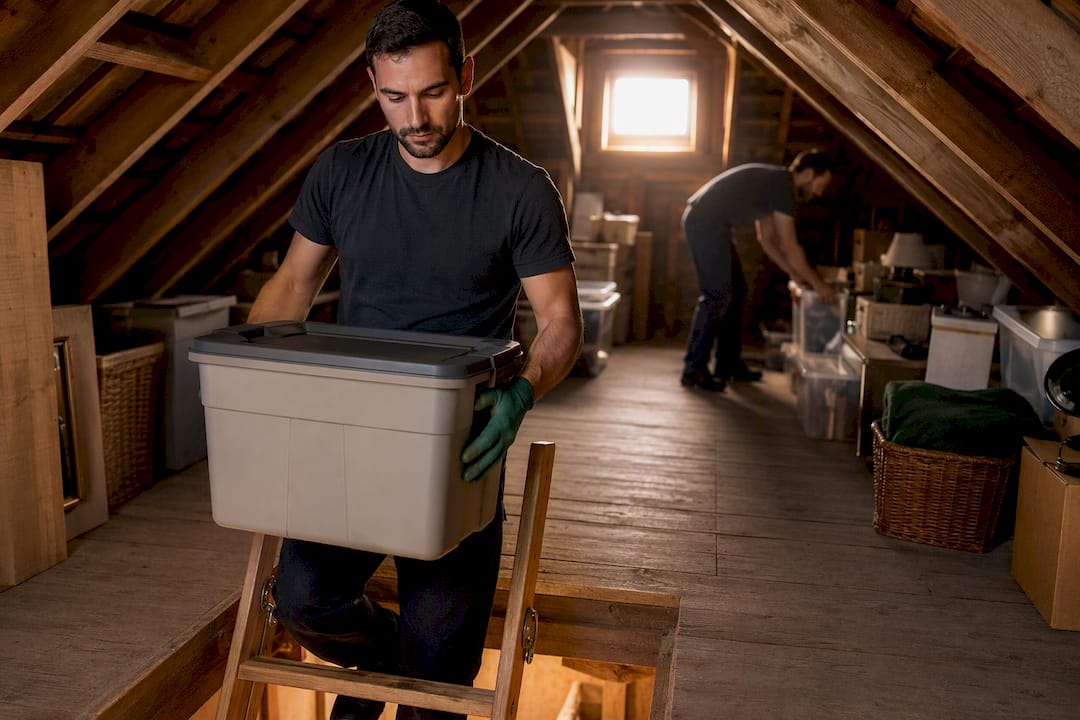
Hire a professional attic cleanout service whenever you’re managing an estate, prepping a listing, turning over a rental, or coordinating from out of state. Expect a walkthrough-based firm quote, full removal of stored items and debris, donation and disposal routing with receipts, and a broom-swept attic when the crew leaves. Companies offering property cleanout services often provide free estimates and estate-friendly documentation built for exactly this kind of transition.
TL;DR:
- Attic cleanouts involve large volumes, require careful sorting, and often take multiple hours or days, especially for estate- or hoarder-scale jobs.
- Property owners should prepare by removing valuables, labeling heirlooms, and ensuring clear access to avoid delays and extra fees.
- Hazardous items like chemicals, batteries, and refrigerants require special handling and are routed separately with proper disposal documentation.
- Reliable providers offer walkthrough-based quotes, thorough documentation, and clear contracts, which are essential for legal and estate purposes.
- Documentation such as donation receipts and disposal logs protects against legal claims and is often more critical than truck size or speed.
Table of Contents
- When Do You Need a Professional Attic Cleanout Instead of a Junk Pickup?
- What Happens on Cleanout Day?
- How Much Does an Attic Cleanout Cost and How Long Does It Take?
- What Should You Do Before the Crew Arrives?
- What Items Can’t Be Removed With Standard Cleanout Loads?
- Where Does Attic Junk Actually Go After It’s Removed?
- How Do You Choose a Trustworthy Attic Cleanout Company?
- Why the Documentation Matters More Than the Truck Size
- Ready for a Free Estimate on Your Attic Cleanout?
- Sources
When Do You Need a Professional Attic Cleanout Instead of a Junk Pickup?
A quick junk pickup works fine for a few bags of old clothes or a single broken lamp. A full attic cleanout is a different job, and it usually shows up during a bigger property transition.
You likely need the professional version if you’re facing any of these:
- Settling an estate as executor, with heirlooms, documents, and unknown volume mixed together
- Prepping a home for imminent sale or closing, where the attic needs to be listing-ready fast
- Managing landlord or property manager turnover between tenants
- Coordinating the job remotely from out of state
- Dealing with decades of accumulation or hoarder-level conditions
The difference comes down to capacity and documentation. A junk pickup grabs what’s visible. A professional cleanout starts with a walkthrough to scope the full job, brings multi-person crews for volume, and produces the kind of records executors and attorneys actually need. If you’re unsure which category your job falls into, the quick test is simple: if you can carry it out yourself in under an hour, it’s a pickup. If it requires sorting, hauling, and decisions about what stays, it’s a cleanout.
What Happens on Cleanout Day?
Cleanout day follows a predictable rhythm, whether you’re on site or managing things from three states away.
- Walkthrough and final scope confirmation. The crew reviews the attic, confirms what’s being removed, and locks in a firm quote. Clients coordinating remotely often send photos for a quote instead of meeting in person.
- Room-by-room removal and sorting. Items get pulled and sorted on the spot into donate, recycle, or dispose categories. Large appliances and furniture get handled with extra care for stairs, hatches, and tight attic access points.
- Safety checks along the way. Crews watch for weak flooring, exposed insulation, and anything that looks like it needs special handling before it gets touched.
- Broom-sweep and photo documentation. The final step is a clean sweep and a set of before-and-after photos, followed by a walkthrough to confirm everything matches the agreed scope.
Pro Tip: Ask your provider to text or email photos as the job progresses if you can’t be there in person. It’s the fastest way to catch a mistake before the truck pulls away.
How Much Does an Attic Cleanout Cost and How Long Does It Take?
Pricing comes down to volume, not square footage. Crews price by truck space and labor hours, so a stuffed attic with heavy furniture costs more than the same size attic with mostly boxes.
The main cost drivers include:
- Volume, measured in truck space or load size
- Labor hours, based on crew size and attic accessibility
- Access challenges, like narrow stairs, pull-down ladders, or no flooring
- Special-item handling for large appliances or awkward furniture
- Disposal fees tied to what can’t be donated or recycled
Sample ranges vary by market, but estate cleanout providers commonly quote under $1,000 for smaller jobs and $4,000 or more for full single-family homes, with hoarder-level estates running higher. An attic-only job usually sits well below the full-house range since it’s a fraction of the total volume.
Timeline follows the same logic. A single attic, even a heavily packed one, typically wraps in a few hours to a full day. Estate-scale cleanouts covering an entire house can stretch across multiple days. Pre-listing jobs tend to move fastest, since providers often coordinate turnaround within 48 to 72 hours to match a listing photographer’s schedule.
What Should You Do Before the Crew Arrives?
A little prep work before cleanout day keeps things moving and protects what matters most.
- Walk the attic yourself first and pull aside anything you’re keeping.
- Lock up cash, jewelry, or small valuables somewhere outside the attic entirely.
- Label heirlooms, photo albums, or documents clearly so the crew knows to set them apart.
- Confirm who the decision-maker is on site, or designate one person as the point of contact if you’re coordinating remotely.
- Take a few phone photos of the space if you’re requesting a remote photo-based quote.
- Flag anything that needs separate handling, like an old window AC unit with refrigerant or containers of unknown chemicals.
Clear access matters more than people expect. A blocked hallway or a locked attic hatch can add time to the job and, in some cases, add cost if the crew has to reschedule. If you’re not sure what counts as “keep” versus “clear it,” the house cleanout checklist covers the same decision points for a full property.
What Items Can’t Be Removed With Standard Cleanout Loads?
Not everything in an attic goes on the same truck. Hazardous and specialty items get pulled out and routed separately, and any reputable provider will flag them during the walkthrough rather than after the fact.
Items that typically require separate handling include:
- Liquid paint and paint thinners
- Propane tanks and other pressurized containers
- Motor oil and other automotive fluids
- Pesticides and lawn chemicals
- Materials suspected of containing asbestos
- Sealed batteries, including old car or marine batteries
- Appliances containing refrigerant
Professionals segregate these on-site and refer them to household hazardous waste programs or certified processors rather than tossing them in with general debris. Expect a possible extra fee for special pickup. Before you book, ask exactly how hazardous items get identified during the walkthrough, who arranges the special pickup, and what documentation you’ll receive confirming proper disposal. If old wiring or a questionable electrical panel turns up during the cleanout, it’s worth having it checked separately. A licensed electrical inspection can settle the question before you sign off on the property.
Where Does Attic Junk Actually Go After It’s Removed?
Most of what comes out of an attic doesn’t head straight to a landfill. Usable furniture, working electronics, and household goods typically get pulled for donation first.
- Donation-eligible items go to local 501©(3) charities, which issue receipts that the provider forwards to you.
- Appliances follow separate recycling streams, since refrigerant-containing units fall under EPA handling rules.
- Electronics route to e-waste processors, and scrap metal typically gets pulled for metal recycling.
- Everything that can’t be donated or recycled goes to standard disposal, with logs kept for the record.
Donation routing does add a step, sometimes a separate drop-off trip, but it keeps usable items out of the landfill and gives you paper trail that matters at tax time or during probate. For estate executors, this recordkeeping isn’t optional paperwork. Donation receipts, disposal logs, and photo documentation are often exactly what an attorney or accountant asks for when settling an estate.
How Do You Choose a Trustworthy Attic Cleanout Company?
The right provider makes the whole process predictable. The wrong one turns a straightforward job into a headache. Run through this checklist before you sign anything.
Essential checks:
- Proof of insurance or a certificate of insurance (COI) on request
- A written quote based on an actual walkthrough, not a guess over the phone
- Clear donation and disposal routing with receipts provided afterward
- References or examples of past jobs, especially estate or realtor work
- A stated practice of photo documentation before and after
Contract terms to require:
- A written scope of work and estimated timeline
- Clear payment terms, including deposit and final payment timing
- A plan for handling unexpected valuables found mid-job
- Invoicing detailed enough to support probate accounting if needed
Red flags to avoid:
- A quote given without ever seeing the space or photos
- Refusal to provide donation or disposal receipts
- No insurance, or reluctance to show proof of it
- Pressure to start the same day before terms are agreed
Pro Tip: If a company won’t put the scope and price in writing before the crew shows up, treat that as your answer. Estate and realtor jobs need paper trails, not handshake deals.
Why the Documentation Matters More Than the Truck Size
Most people shopping for an attic cleanout focus on price and speed. Those matter, but they’re not where the real risk sits. The bigger risk is hiring a crew that treats donation receipts and disposal logs as an afterthought, then leaving you to explain a six-figure estate to a probate attorney with nothing but a memory of “they took it all away.”
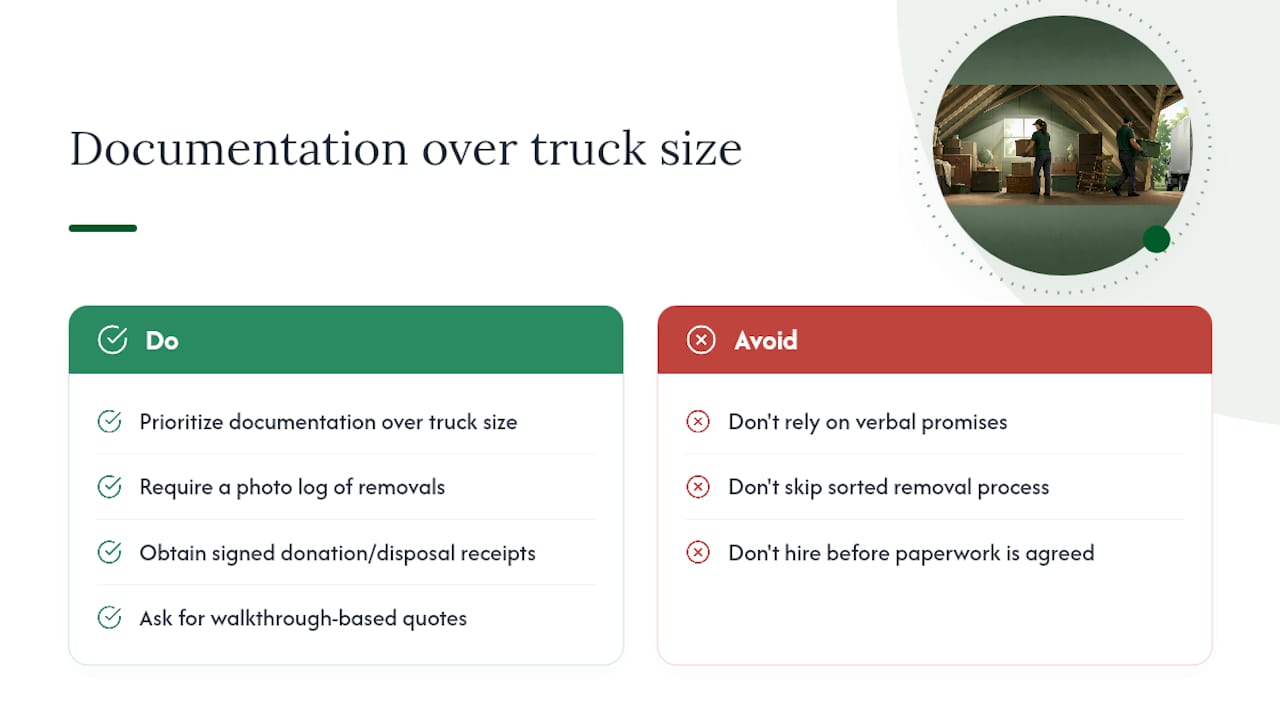
A broom-clean attic is the visible result. The documentation is the part that protects you legally and financially after the truck leaves. Executors get audited on estate accounting. Realtors get asked by sellers where the grandfather’s tools ended up. Landlords occasionally get tenants who claim something valuable was thrown out. In every one of those situations, a photo log and a signed receipt settle the question in seconds. A verbal promise doesn’t.
The industry’s own standard practice, walkthrough-based quotes, sorted removal, and paper trails, exists precisely because these jobs carry more weight than a typical junk haul. Treat documentation as the deciding factor when you compare providers, not an afterthought you ask about once the truck is already loaded.
— Olga
Ready for a Free Estimate on Your Attic Cleanout?
Ohana Property & Transition Services LLC works directly with the people managing these transitions: executors settling an estate, realtors racing a listing date, landlords turning over a unit, and families who just need the attic gone without the runaround of hunting for a dumpster or wrangling volunteers on a weekend. Instead of guessing at rental sizes or making four trips to the donation center yourself, one walkthrough gets you a firm number and a crew that handles the whole thing start to finish.
Requesting a free estimate is simple. Have your property address, a rough sense of what’s in the attic, and your ideal timeline ready, and send along photos if you’re coordinating from out of state. From there, the provider confirms scope during a walkthrough, locks in a firm quote, schedules the crew, and delivers documentation, including donation receipts, when the job wraps. The service typically covers Central Indiana communities and is performed by teams experienced in handling property transitions carefully. Visit the full property cleanouts page to request your estimate, or check the complete service list to see what fits your situation.
Sources
Pricing patterns, walkthrough practices, and documentation standards referenced here come from established estate cleanout providers, including Grizzly Junk Pros, Junk Removal Plus, and MG Hauling. For a broader look at planning a full-house cleanout, see Ohana’s estate cleanouts page and debris removal services.
- Estate Cleanouts in Connecticut | Grizzly Junk Pros
- What Happens During a Full Property Cleanout? | MG Hauling