
Construction Debris Removal Checklist for Flippers
Maximize profits with our essential construction debris removal checklist for flippers. Streamline waste disposal, reduce costs, and stay on schedule.
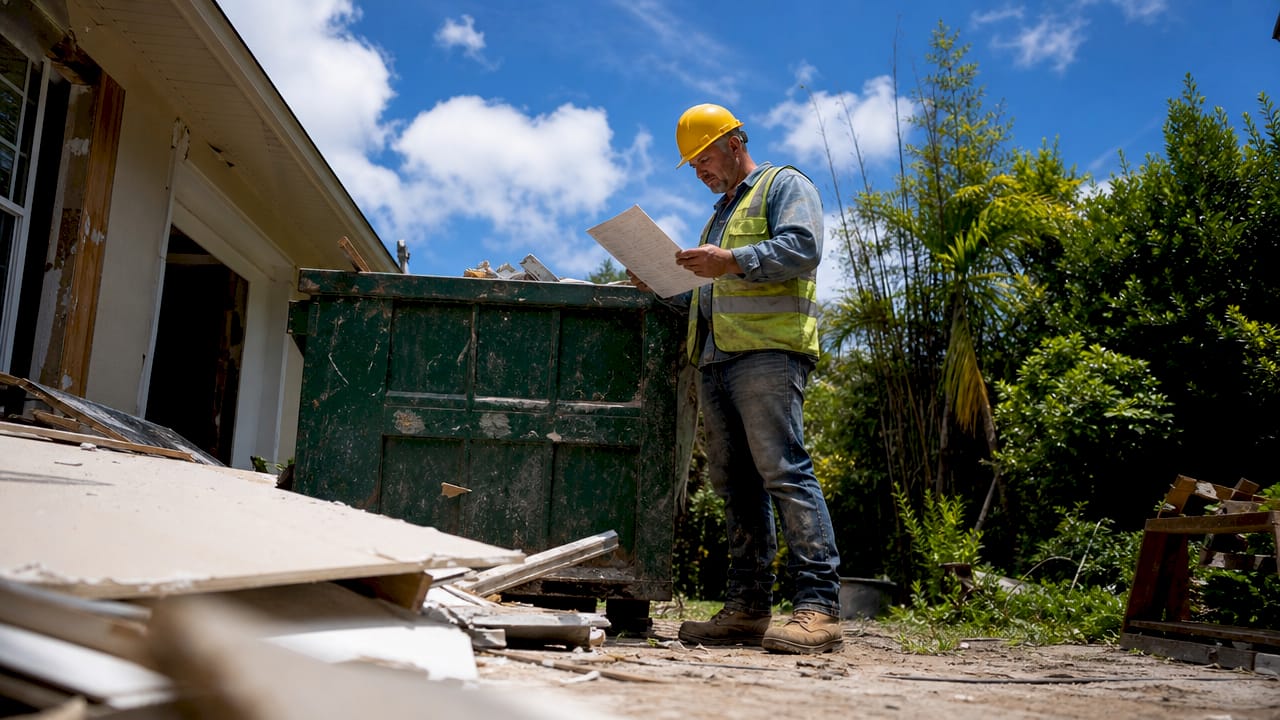
Construction Debris Removal Checklist for Flippers
A construction debris removal checklist is a structured sequence of steps that controls waste disposal from demo day through final cleanout on a house flip. Flippers who treat debris removal as a project phase rather than an afterthought protect their renovation timelines, reduce labor costs, and avoid the jobsite congestion that kills profit margins. This construction debris removal checklist for flippers covers every stage of the process, from booking roll-off dumpsters before the first wall comes down to separating personal property from construction waste to cut hauling fees. Whether you’re running a cosmetic flip in Columbus, Indiana or a full gut rehab in Indianapolis, the steps below apply directly to your project.
1. What goes on a construction debris removal checklist for flippers?
The industry term for this process is construction waste management, and a solid checklist for flippers covers seven core items. Miss any one of them and you risk delays, fines, or cost overruns.
- Book dumpsters before demo starts. Dumpster availability disappears fast in active markets. Reserve your container before your crew swings the first sledgehammer.
- Classify debris by type. Separate construction waste (drywall, lumber, concrete) from personal property (furniture, appliances) and hazardous materials (asbestos, lead paint). Mixed loads cost more to haul.
- Test for hazardous materials. Properties built before 1980 require asbestos testing before demolition to avoid fines and costly work stoppages. Schedule testing before your demo crew arrives.
- Establish a debris path. Map a single route from the interior work zone to the dumpster. A clear debris path prevents double handling and reduces labor costs directly.
- Schedule proactive pickups. Request a dumpster swap when the container hits 75% capacity, not when it overflows. Waiting until full stops your crew cold.
- Coordinate with contractors and haulers. Align dumpster placement and pickup windows with your GC’s schedule. Haulers who show up during active framing create dangerous congestion.
- Budget debris removal as its own line item. Flippers who fold debris costs into general labor budgets consistently underestimate total project spend. Give it a dedicated number.
Pro Tip: Keep a printed copy of this checklist at the jobsite and assign one person, either your GC or a site supervisor, to own debris removal decisions. Accountability prevents the “someone else will handle it” problem.
2. How flip type changes your debris removal strategy
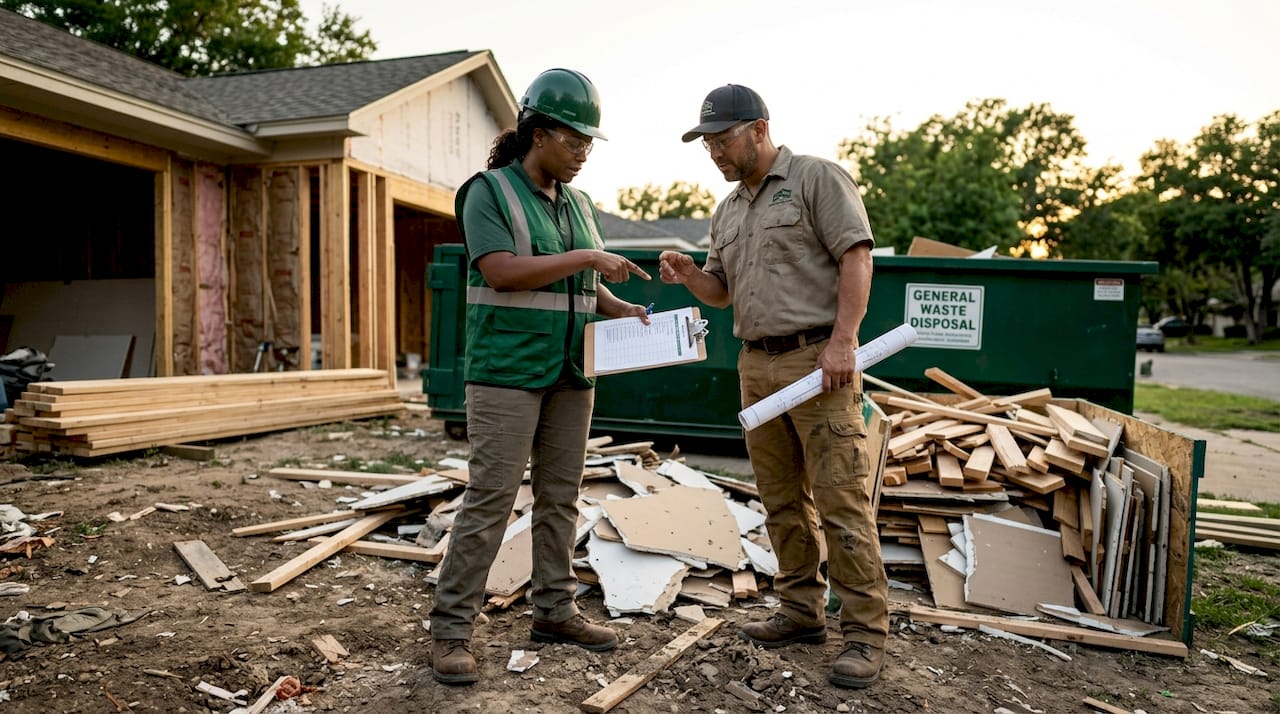
Treating debris removal as a project phase avoids jobsite congestion, reduces labor costs, and keeps renovation schedules on track. The right strategy depends entirely on your flip category.
| Flip Type | Dumpster Count | Key Debris Sources | Timing Strategy |
|---|---|---|---|
| Cosmetic flip | 1 rental | Flooring, fixtures, trim | Single swap at project end |
| Mid-level renovation | 2–3 rentals | Kitchens, baths, windows | Swap after demo, then at rough-in |
| Gut rehab | 3–5+ rentals | Structural, mechanical, full interior | Continuous removal by phase |
Flippers classify projects into three categories: cosmetic flips need one dumpster, mid-level renovations need two to three rentals, and gut rehabs require three to five or more. That number directly determines your hauling budget before you pull a single permit.
Timing matters as much as quantity. On a gut rehab, you need a dumpster during demo, a second during rough-in when old mechanical systems come out, and at least one more for the final cleanout. Trying to stretch one container across all three phases creates a congested jobsite and slows every trade behind you.
Pro Tip: On mid-level flips, schedule your second dumpster delivery the same day your demo crew finishes. That gap between demo and rough-in is when debris piles up fastest and crews start working around it.
3. What are the best methods for removing construction debris on a flip?
Flippers have three primary options for construction site waste disposal: roll-off dumpster rentals, labor-inclusive full-service hauling, and a hybrid of both. Each fits a different project profile.
Roll-off dumpster rentals give you maximum flexibility. Dumpster rentals typically cost between $250 and $680 for 14–28 yard containers over 3–7 day rental periods. That price range covers most cosmetic and mid-level flips without issue.
- Best for: projects where your crew handles all loading
- Watch for: driveway damage from heavy containers on older concrete
- Size guide: 14-yard for cosmetic flips, 20-yard for mid-level, 30-yard for gut rehabs
Labor-inclusive full-service hauling sends a crew to load and remove debris for you. Professional full-service debris removal starts at approximately $149 for single-day or smaller projects. This option works well when your tradespeople are billing at high hourly rates and you do not want them spending time loading dumpsters.
Live loading is a hybrid method where a hauling crew arrives with a truck, loads on the spot, and leaves the same day. Labor-inclusive removal services reduce jobsite disruptions and labor time for tradespeople. Live loading is ideal for mid-project cleanouts when a dumpster is not practical or when you need a fast turnaround between project phases.
For a deeper breakdown of post-renovation debris hauling, the Ohanapropertyexperts guide covers timing and method selection in detail.
4. How to optimize debris removal efficiency and control costs
Cost control on debris removal comes down to four habits. Flippers who follow them consistently spend less per project and finish faster.
- Apply the 75% rule. Schedule dumpster swaps before containers reach full capacity to keep workflow moving. A full dumpster with no swap scheduled stops your crew from generating debris, which means they stop working.
- Protect your debris path. Lay plywood runners from the work zone to the dumpster on hardwood or tile floors. One debris path means one trip per load, not two.
- Separate personal property from construction waste. Mixing personal property with construction debris generates higher mixed-load fees. Handle the personal property cleanout first, then start demo.
- Align swap timing with low-impact phases. Schedule dumpster pickups during rough-in inspections or permit hold days. Your crew is not generating debris during those windows, so the swap causes zero disruption.
- Coordinate directly with your hauler. Give your hauler a project calendar at the start of the flip. They can pre-schedule swaps and you avoid last-minute calls when a container fills up unexpectedly.
Pro Tip: On foreclosure flips, always complete the personal property cleanout as a separate phase before demo begins. Foreclosure properties often contain furniture, appliances, and personal items that inflate your debris load and your bill if you mix them in.
For a step-by-step breakdown of hauling debris after demo day, Ohanapropertyexperts has a clear guide built specifically for this phase.
Key takeaways
A successful debris removal plan for flippers starts before demo day, scales to flip type, and treats waste management as a dedicated project phase with its own budget and schedule.
| Point | Details |
|---|---|
| Classify debris early | Separate construction waste, personal property, and hazardous materials before demo to avoid mixed-load fees. |
| Match dumpster count to flip type | Cosmetic flips need one rental; gut rehabs need three to five or more, timed by project phase. |
| Use the 75% rule | Schedule dumpster swaps at 75% capacity to prevent work stoppages and keep crews productive. |
| Test older homes first | Properties built before 1980 require asbestos testing before demolition to avoid fines and delays. |
| Budget debris as its own line | Folding debris costs into general labor budgets consistently causes underestimates on total project spend. |
Why I treat debris removal as a project phase, not an afterthought
Most flippers I talk to treat debris removal the same way they treat cleaning supplies: something you figure out when you need it. That mindset costs real money.
The flips that run on time share one habit. The investor or GC planned debris removal the same week they planned demo. They knew how many dumpsters they needed, where the containers would sit, and who was responsible for calling the swap. That clarity alone eliminates a category of delay that shows up on nearly every disorganized flip.
The mistake I see most often is mixing personal property with construction debris on foreclosure and estate properties. You pay a premium for mixed loads, and the premium adds up fast across multiple containers. Handling the cleanout first as a separate phase, then starting demo, is one of the simplest cost controls available to any flipper. It requires no special tools and no extra budget. It just requires doing things in the right order.
The other underrated habit is the debris path. Crews naturally take the shortest route to the dumpster, which often means carrying debris through finished or partially finished areas. One piece of plywood laid down on day one protects your floors and creates a single efficient route. The labor savings over a two-week demo are real.
Debris removal is not glamorous. It does not show up in the after photos. But it determines whether your project runs on schedule or bleeds money in overtime and delay fees.
— Olga
Ohanapropertyexperts serves flippers across Central Indiana
Real estate investors in Columbus, Indianapolis, Greenwood, and surrounding Central Indiana communities rely on Ohanapropertyexperts for fast, reliable debris removal and full property cleanouts. We work directly with flippers and investors to fit debris hauling into your project schedule, not around it.
Our debris removal services cover construction waste hauling, labor-inclusive removal, and full property cleanouts without the dumpster rental hassle. For investors managing multiple flips, our full property cleanout services handle everything from personal property separation to final construction debris removal in one coordinated visit. Call us at (812) 302-6833 or request a free estimate at ohanapropertyexperts.com.
FAQ
What is a construction debris removal checklist for flippers?
A construction debris removal checklist is a structured list of waste management steps covering debris classification, dumpster booking, hazardous material testing, and pickup scheduling. It keeps flippers on schedule and controls hauling costs from demo through final cleanout.
How many dumpsters does a house flip typically need?
Cosmetic flips generally need one dumpster rental, mid-level renovations need two to three, and gut rehabs require three to five or more depending on debris volume and project phases.
When should I schedule a dumpster swap on a flip?
Schedule your swap when the container reaches 75% capacity. Waiting until a dumpster is completely full stops your crew from working and creates project delays.
Do I need asbestos testing before demolition?
Properties built before 1980 require asbestos testing before demolition to avoid regulatory fines and costly work stoppages. Schedule testing before your demo crew arrives on site.
Should I separate personal property from construction debris?
Mixing personal property with construction debris generates higher mixed-load fees. Complete the personal property cleanout as a separate phase before demo begins to reduce total hauling costs.