
What Is a Gut-Renovation Cleanout? A Homeowner's Guide
Discover how a gut-renovation cleanout transforms your space by stripping it down to the essentials, paving the way for your dream home.
What Is a Gut-Renovation Cleanout? A Homeowner’s Guide
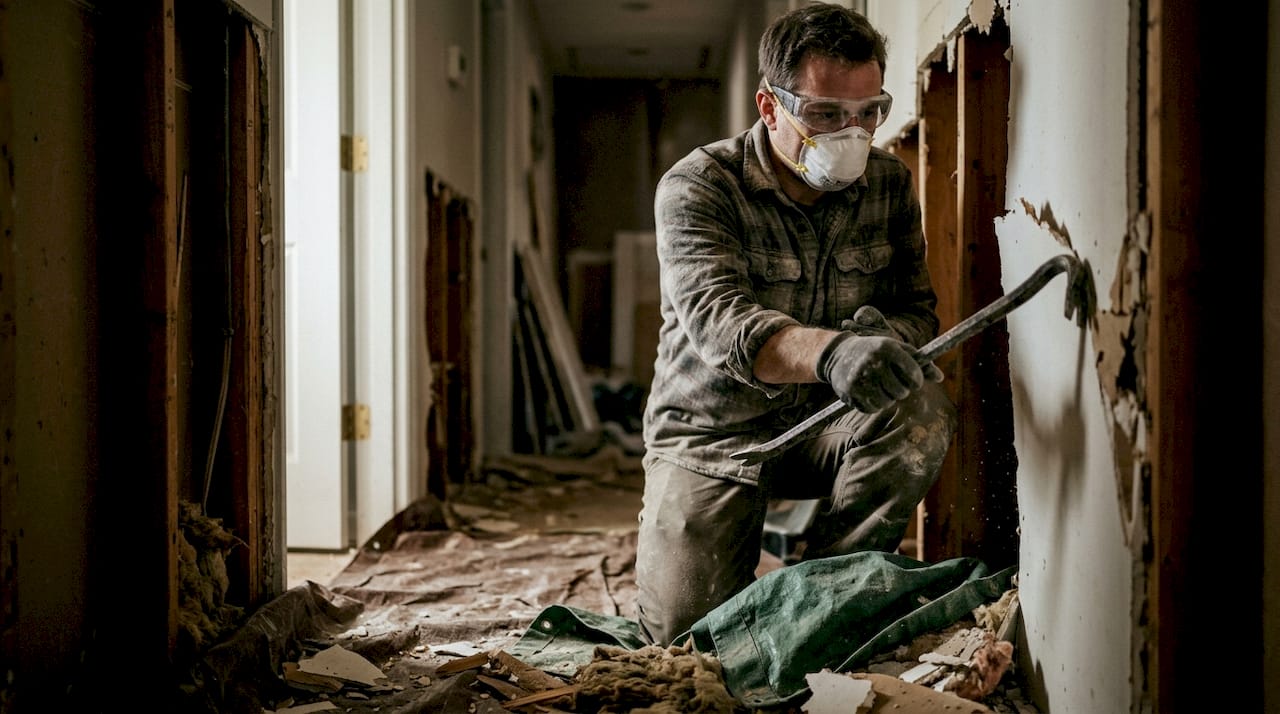
A gut-renovation cleanout is the interior demolition and debris-removal phase of a full gut renovation: crews strip finishes, fixtures, cabinetry, and nonstructural elements down to the bare structure so the property can be rebuilt from scratch. Think of it as clearing the slate before any new layout, system, or finish work begins. According to ESG Builders, a gut renovation removes drywall, flooring, cabinets, fixtures, and old plumbing to create a true blank starting point — not just a surface refresh.
Three things to know before you go further:
- Scope: Everything non-structural typically comes out — flooring, drywall, cabinetry, plumbing fixtures, trim, and ceiling tiles.
- Safety flag: Homes built before 1980 often contain asbestos or lead paint. Testing and licensed abatement may be required before any debris moves.
- Next action: Small, hazard-free interiors can be DIY-friendly; anything with regulated materials, structural uncertainty, or a tight timeline calls for a professional cleanout service like Ohana Property & Transition Services LLC.
Key Takeaways
A gut-renovation cleanout is the interior demolition and debris-removal phase that strips a property to its bare structure, and getting it right — safely, legally, and efficiently — determines how smoothly the entire rebuild goes.
| Point | Details |
|---|---|
| Definition and scope | A gut cleanout removes all nonstructural elements: flooring, drywall, cabinets, fixtures, and trim, down to the structural shell. |
| Hazard testing is non-negotiable | Homes built before 1980 likely contain asbestos or lead paint; test and abate before any debris moves. |
| Cost and contingency | Full gut projects range from roughly $50,000 to $250,000+; budget a 10–20% contingency for hidden conditions on the cleanout phase. |
| Hire pros for complex work | Hazardous materials, structural uncertainty, tight timelines, or insurance claims all call for licensed professionals, not DIY. |
| Ohanapropertyexperts for Central Indiana | Ohana Property & Transition Services LLC offers free photo-based estimates and full cleanout services across Central Indiana. |
Table of Contents
- What a gut-renovation cleanout actually removes
- Hazards and regulated materials you need to know about
- Who performs a gut-renovation cleanout?
- Realistic timeline and cost drivers for the cleanout phase
- When permits and code work apply to your cleanout
- Checklist to prepare your property before crews arrive
- How debris gets handled: disposal and recovery options
- What to expect from a professional cleanout service
- Red flags that tell you to hire a professional
- A perspective on what homeowners get wrong
- Ohana Property & Transition Services is ready to help
- Sources
What a gut-renovation cleanout actually removes
Interior demolition — sometimes called selective demolition or a gut-out — systematically removes nonstructural interior elements while leaving the building shell, structural walls, and foundation intact. Room by room, here is what typically goes:
- Kitchen: Cabinets, countertops, appliances, plumbing fixtures, flooring, drywall, and ceiling tiles
- Bathrooms: Vanities, toilets, tubs, shower surrounds, tile, drywall, and plumbing trim
- Bedrooms and living spaces: Flooring, baseboards, door casings, interior doors, and drywall
- Basements and attics: Finished ceiling and wall panels, insulation (if replacing), nonstructural partitions, and old mechanicals being replaced
What stays: load-bearing walls, the main structural frame, primary utility lines (until a licensed trade disconnects them), and the foundation. Removing any of those elements moves the project into structural demolition territory, which requires permits and licensed contractors.
Hazards and regulated materials you need to know about

Gut cleanouts in older homes regularly uncover materials that cannot go straight to the landfill. The EPA and OSHA both regulate how these materials must be handled, tested, and disposed of.
Common hazards encountered during a home renovation cleanout:
- Asbestos: Found in floor tiles, pipe insulation, joint compound, and ceiling tiles in homes built before 1980. Disturbing it without abatement is a federal violation.
- Lead paint: Present in most homes built before 1978. Sanding or demolishing painted surfaces creates hazardous dust.
- Mold: Hidden behind drywall and under flooring, especially in basements and bathrooms with past water intrusion.
- PCB-containing fixtures: Older fluorescent light ballasts may contain polychlorinated biphenyls and require regulated disposal.
When to call a licensed specialist: If your home was built before 1980, if you see suspect materials (fibrous insulation, crumbling floor tiles, discolored drywall), or if your permit application flags hazardous materials, stop and test before any debris moves. Sweeten recommends letting professionals handle complex demolition involving embedded systems or hazardous materials — the liability and health risk far outweigh any savings from doing it yourself.
Safety basics before crews start: disconnect or confirm disconnection of gas, electric, and water; wear N95 respirators, safety glasses, hard hats, and cut-resistant gloves during any DIY work; and never disturb suspect materials without a certified inspector’s clearance first.
Pro Tip: Ask any abatement contractor for their state license number and a copy of the lab report from bulk sampling before work begins. A reputable firm will provide both without hesitation.
Who performs a gut-renovation cleanout?
Three types of professionals handle this work, and the right choice depends on your project’s scope and complexity.
- DIY: Lower direct cost, but you absorb all labor time, disposal logistics, and liability. Suitable only for small, confirmed hazard-free interiors where you have the time and physical capacity. Disposal fees and dumpster rentals add up fast.
- Demolition contractor: Handles structural teardown, utility disconnection coordination, and rough-in sequencing. Best when walls are coming down or systems are being relocated. RemoveRight’s demolition sequence — utility disconnection, hazardous abatement, fixture removal, wall demo, flooring removal, debris sorting, broom-clean inspection — is the workflow licensed contractors follow.
- Professional cleanout service: Focused on interior debris removal, donation routing, and haul-away. A cleanout service like Ohana Property & Transition Services LLC works alongside or after a demolition contractor, clearing the debris load so the next trade can start on a clean site. Learn more about what cleanout companies do before you decide.
For most full gut renovations, both a demolition contractor and a cleanout service are involved. The contractor tears out; the cleanout crew hauls.
Realistic timeline and cost drivers for the cleanout phase
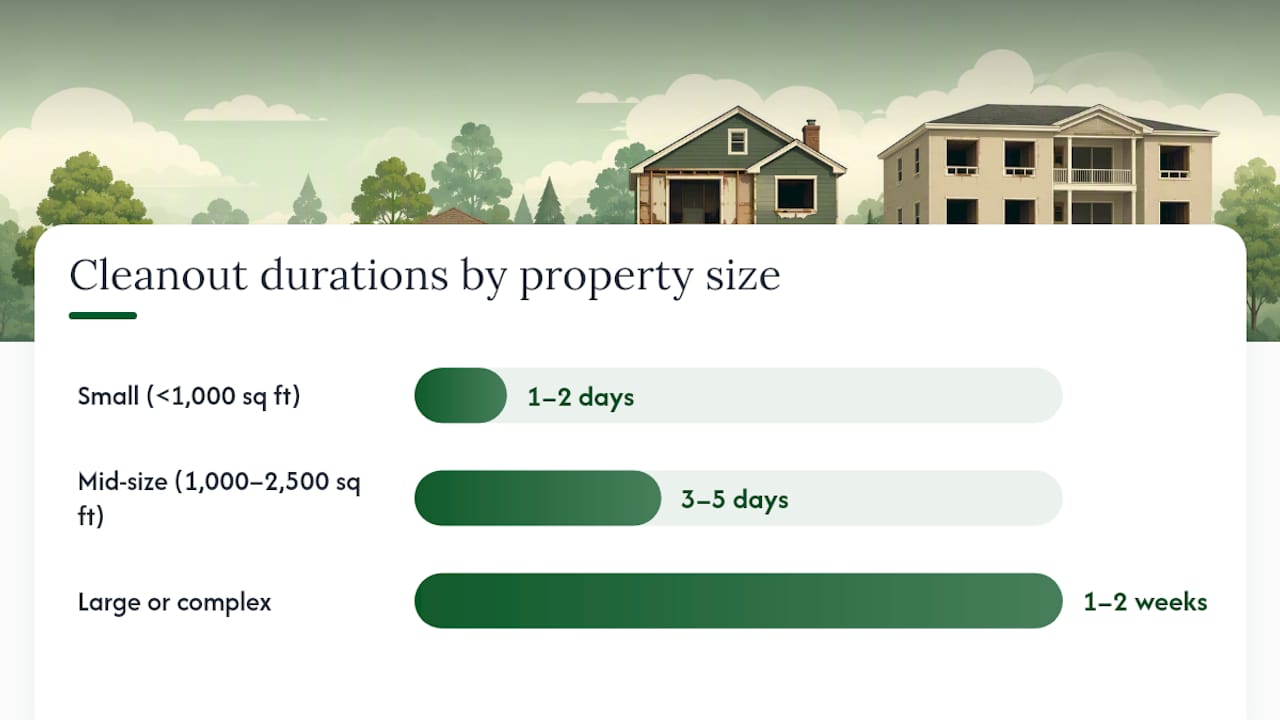
Timeline varies by property size and hazard status:
- Small property (under 1,000 sq ft), no hazards: 1–2 days for demo and debris removal, followed immediately by rough-in trades.
- Mid-size property (1,000–2,500 sq ft): 3–5 days for cleanout, plus additional time if abatement is required before demo can proceed.
- Large or complex property: One to two weeks, especially when multiple trades must sequence around each other.
Sweeten reports that complete gut-renovation projects can vary widely in cost depending on scope. The demolition and cleanout phase itself is primarily labor and disposal costs. Budget some contingency on top of your cleanout estimate to cover hidden conditions such as asbestos behind a wall, unexpected plumbing, or a heavier debris load than the initial walkthrough suggested.
Key cost drivers: labor hours, construction-and-demolition (C&D) tipping fees at the landfill or recycling facility, hazardous abatement (which is priced separately and can be significant), and specialty hauling for heavy items like concrete or appliances.
When permits and code work apply to your cleanout
Simple interior debris removal — pulling out cabinets, flooring, and drywall in a single-family home — often does not require a permit on its own. But the work that follows almost always does.
- Altering or removing load-bearing walls requires a structural permit.
- Relocating electrical, plumbing, or HVAC triggers trade permits and inspections.
- Hazardous abatement may require a separate notification or permit depending on your municipality.
- Condo and co-op owners typically need board approval before any interior demolition begins, regardless of permit status.
Pro Tip: Call your local building department before demo starts and ask one question: “Does my scope of work require a demolition permit?” Bring a one-page description of what you plan to remove. Most departments will tell you on the spot, and that conversation protects you from stop-work orders later.
Checklist to prepare your property before crews arrive
A little prep on your end saves time and money on the job.
- Remove all personal valuables, documents, and irreplaceable items from the property.
- Document every room with timestamped photos before any work begins.
- Confirm utility shutoffs with your contractor — know who is responsible for gas, electric, and water disconnection.
- Clear perishable food from the kitchen and any refrigerators being removed.
- Notify neighbors and, if applicable, your building management about the work schedule and truck access.
- Arrange parking and clear access for debris trucks — a blocked driveway adds hours to the job.
- Communicate donation, keep, and discard decisions in writing before crews start, especially for estate or tenant properties.
Pro Tip: Take your pre-demo photos in natural light and include a timestamp. If a dispute arises about pre-existing damage, those photos are your clearest evidence.
How debris gets handled: disposal and recovery options
Not everything from a gut cleanout goes to the landfill, and the best post-renovation debris hauling services sort on-site to maximize diversion.
- C&D recycling: Concrete, metal, clean wood, and drywall can often be diverted to construction-and-demolition recycling facilities rather than landfills.
- Donation routing: Cabinets, doors, fixtures, and appliances in working condition can go to Habitat for Humanity ReStores or similar organizations. Ask your cleanout provider whether they have active donation partnerships.
- Municipal landfill: Mixed debris that cannot be sorted goes to a licensed C&D landfill. Tipping fees vary by county.
- Regulated hazardous-waste channels: Asbestos, lead-containing materials, and PCB fixtures must go through licensed hazardous-waste disposal — never in a standard dumpster.
Ask your cleanout provider for disposal receipts and, where required, waste manifests. Some projects — insurance claims, permit closeouts, or green-building certifications — require documented proof of proper disposal.
What to expect from a professional cleanout service
A reputable cleanout provider should deliver more than just a truck and muscle. Before you sign anything, confirm they offer:
- An on-site or photo-based estimate with a written scope (what is removed, what stays, final condition)
- A clear timeline and sequencing plan that coordinates with your contractor
- A disposal plan specifying where debris goes and whether donation routing is available
- Proof of general liability insurance and workers’ compensation coverage
- A broom-clean final condition as a stated deliverable in the scope — DCon Renovations notes that punch-list cleaning is a standard closeout step experienced contractors schedule explicitly
On estimates: volume-based quotes (priced by truckload or cubic yard) work well for straightforward debris loads. Photo-based quotes are a practical modern alternative — you send photos of each room, and the provider scopes the job remotely before anyone drives out. Review cleanout service agreements carefully so scope, liability, and disposal responsibilities are clear in writing.
Red flags that tell you to hire a professional
Some situations make DIY the wrong call, and recognizing them early saves you from costly mistakes.
- Unknown or suspect piping and wiring (especially in pre-1980 homes)
- Any visible asbestos-like materials: fibrous insulation, crumbling floor tiles, or old ceiling texture
- Structural uncertainty — walls you are not sure are load-bearing
- A sale or closing date driving the timeline, where delays carry real financial consequences
- An insurance claim requiring documented, licensed work
- Limited physical capacity or no reliable crew to handle heavy debris safely
The liability math is straightforward: improper disposal of regulated materials carries federal and state penalties that dwarf any labor savings from going DIY. When in doubt, a professional cleanout service is the faster, safer, and often more cost-effective path once disposal fees and your own time are factored in.
A perspective on what homeowners get wrong
One of the most common mistakes we see in Central Indiana is homeowners treating the cleanout as an afterthought — something to squeeze in over a weekend before contractors arrive Monday morning. That approach creates rework, delays the rough-in trades, and sometimes disturbs materials that should have been tested first.
The cleanout phase sets the pace for everything that follows. Mammoth’s framing of a gut renovation as a total interior reset is exactly right: the quality of that reset determines how cleanly the rebuild goes. A rushed or incomplete cleanout means contractors are working around debris, discovering hidden hazards mid-project, and billing you for time they spend cleaning up rather than building.
The other thing worth saying plainly: donation routing matters. Cabinets, doors, and fixtures that get tossed into a dumpster could have gone to a family in need. We route reusable items to local donation partners whenever possible, and we think that approach reflects the kind of community-minded service Central Indiana deserves.
Ohana Property & Transition Services is ready to help
When you are ready to move from planning to action, Ohana Property & Transition Services LLC handles the full cleanout phase for homeowners, property managers, landlords, and estate executors across Central Indiana — Columbus, Seymour, Greenwood, Indianapolis, Franklin, and surrounding communities.
Our crews handle full property cleanouts, estate cleanouts, construction debris removal, appliance removal, and donation-conscious haul-away. We provide free photo-based estimates so you get a transparent scope before anyone sets foot on your property. Every job comes with insured crews, a written disposal plan, and a broom-clean final condition. Call us at (812) 302-6833 or visit Ohanapropertyexperts to request your free estimate today.
Sources
- Interior Demolition 101: What Gets Removed During a Gut Renovation | Remove Right
- What Is a Gut Renovation in NYC? - ESG Builders
- A Guide to Gut Renovations: Costs, Process, and Considerations
- Total Home Transformation - Mammoth | NYC Design-Build
- What to Expect During a Full Apartment Gut Renovation in NYC
Recommended
- What Happens During a Full Cleanout: A Homeowner’s Guide | Ohana Property Services
- Post-Renovation Debris Hauling: A Homeowner’s Guide | Ohana Property Services
- What Cleanout Companies Do Explained for Homeowners | Ohana Property Services
- Cleanout Service Agreements Explained for Property Owners | Ohana Property Services