
Assess Cleanout Scope Before Buying: Buyer's Checklist
Learn how to assess cleanout scope before buying with our comprehensive checklist. Document your findings to negotiate better deals!
Assess Cleanout Scope Before Buying: Buyer’s Checklist
The fastest way to assess cleanout scope before buying is a focused, on-site walkthrough using a room-by-room checklist, three categories of time-stamped photos (volume, access, hazards), and at least two written quotes from licensed cleanout pros. Do that before you finalize your offer, and you will have a documented cost estimate you can use to negotiate a credit, require seller remediation, or set a realistic contingency budget.
Start here at your next showing:
- Walk every room, the garage, basement or crawlspace, attic, and yard. Note pile sizes, furniture count, built-ins, and appliances.
- Photograph wide shots of each space, close-ups of any damage or hazardous materials, and every access route (doorways, stairwells, driveway).
- Mark access constraints: door widths under typical residential doorway size, stair count, parking distance from the entry.
- Schedule a photo-based quote or on-site estimate from at least two cleanout vendors before closing.
- Add a cleanout contingency line to your offer based on those written estimates.
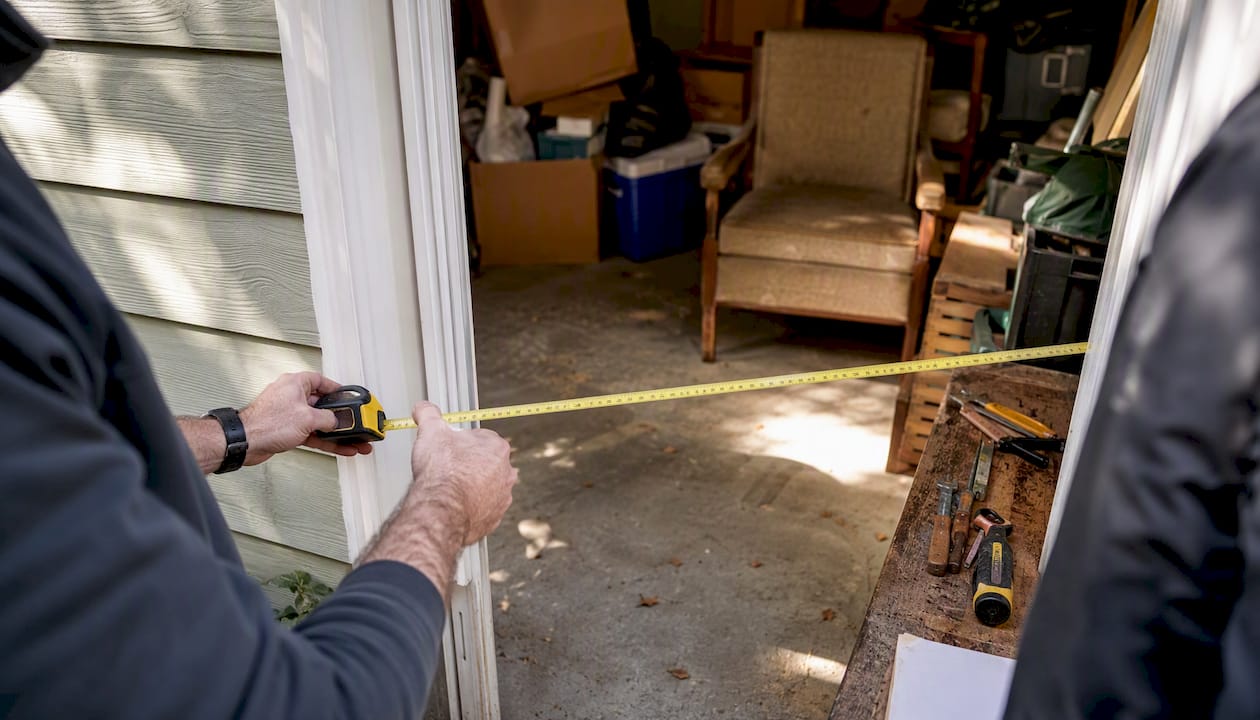
Pro Tip: Bring a tape measure to every showing. A 32-inch doorway or a narrow basement stairwell can double labor costs on a job that looked straightforward from the listing photos.
Table of Contents
- What should you check room by room during a showing?
- How do you estimate volume and labor before getting a quote?
- What do typical U.S. cleanout costs and timelines look like?
- How do you get reliable, comparable quotes from cleanout pros?
- What safety hazards should change your purchase decision?
- Printable quick-assessment template for property viewings
- What should you do after completing your assessment?
- Key Takeaways
- What most buyers miss about cleanout assessments
- Ohanapropertyexperts: free estimates and written scopes for Central Indiana buyers
- Useful sources
What should you check room by room during a showing?
A thorough pre-purchase cleanout check covers more than the living room. Work through each zone systematically and record what you find.
Main living areas and bedrooms:
- Count furniture pieces and large items (sofas, mattresses, dressers).
- Note built-in shelving, closet contents, and any boxes stacked floor to ceiling.
- Flag water stains, mold spots, or pest evidence on walls and baseboards.
Kitchen:
- Identify appliances left behind (refrigerators, ranges, dishwashers). Each adds weight and disposal complexity.
- Check under sinks for chemical storage or leaking pipes.
Garage:
- Estimate shelf and floor coverage. A two-car garage packed to the ceiling is roughly a full truckload on its own.
- Look for paint cans, propane tanks, automotive fluids, and old pesticides.
Basement and crawlspace:
- Note water intrusion, mold, and any stored hazardous materials.
- Locate the sewer cleanout access point. It is typically a capped vertical pipe, 3–4 inches in diameter, found in the basement, crawlspace, or yard. A missing or buried cap is a red flag requiring a licensed plumber’s inspection, per guidance from The Spruce.
Attic:
- Check for insulation debris, stored boxes, and any signs of animal intrusion.
Yard and outbuildings:
- Estimate debris piles, scrap metal, old equipment, and construction waste.
Access and logistics:
- Measure doorways and stairwells. Count stairs. Note elevator availability in multi-unit buildings. Measure parking distance from the main entry.
Pro Tip: During your final walk-through, physically open every storage door, basement hatch, and outbuilding. Locked or stuck access points are often hiding the most labor-intensive items on the property.
How do you estimate volume and labor before getting a quote?
Converting what you see into truckload fractions and crew-hours gives you a working budget number before any vendor sets foot on the property.
A standard junk removal truck holds a moderate volume of debris, varying by service provider. Use these rough fractions as a starting point:
| Property Type | Est. Truckloads | Est. Crew-Hours | Notes |
|---|---|---|---|
| Single room or garage | A small fraction of a truckload | A few hours | Easy access, no stairs |
| 2–3 bedroom home (light) | Up to about one truckload | Several hours | Standard access |
| Full house, multi-room | Multiple truckloads | Several crew-hours | Mixed access |
| Hoarded or estate property | Several truckloads | Many crew-hours | Specialist handling likely |
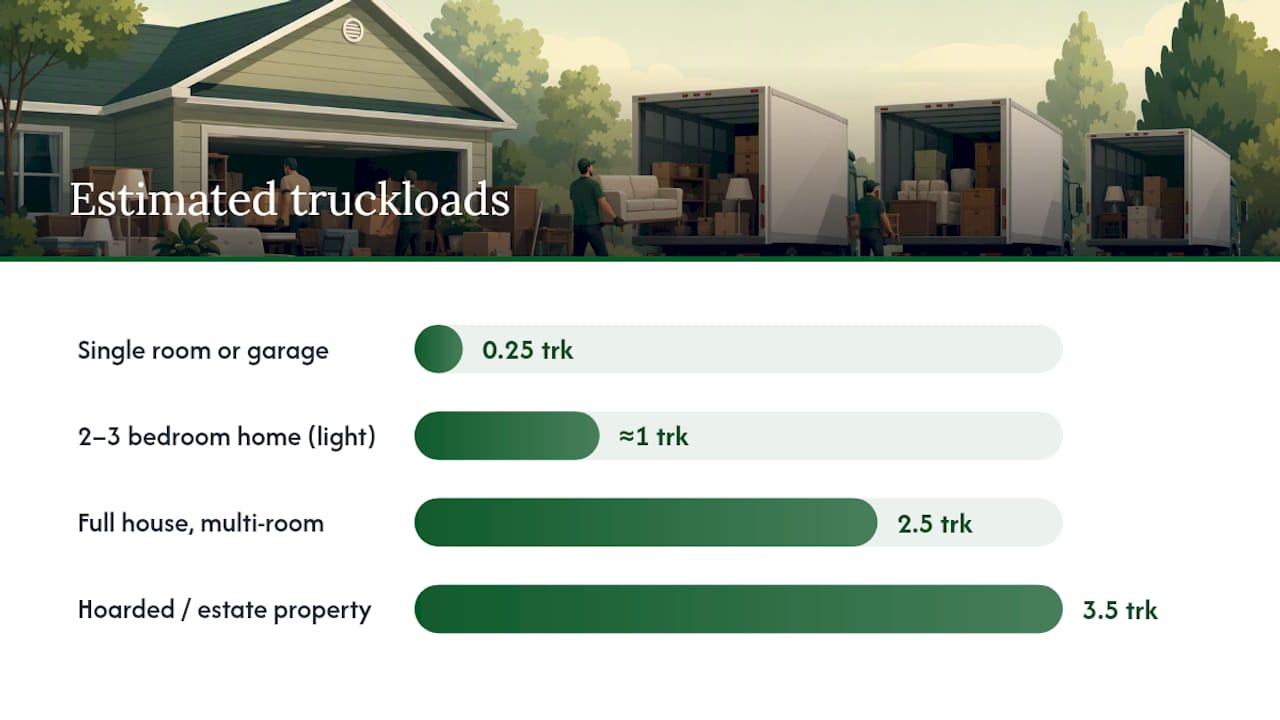
Access constraints increase labor; stairs, long carries, and tight doorways add additional time and complexity.
Items that increase volume but not labor: boxes, loose clothing, paper, lightweight furniture. Items that increase labor but not volume: pianos, gun safes, cast-iron tubs, refrigerators, and anything requiring disassembly.
What do typical U.S. cleanout costs and timelines look like?
Cost ranges vary by job size, access difficulty, and disposal requirements. These brackets reflect general U.S. market rates and are meant as planning benchmarks, not binding quotes.
| Job Size | Est. Truckloads | Crew Size | Ballpark Cost | Timeline |
|---|---|---|---|---|
| Small (1 room / garage) | — | 1–2 | $150 | Half day |
| Medium (multi-room / attached garage) | — | 2 | $400 | 1 day |
| Large (full house, standard) | 1.5 | 2–3 | $900 | 1–2 days |
| Hoarding / estate level | 3+ | 3–4+ | $2,000 | 2–5 days |
Hazardous materials, specialty disposal, and difficult access all push costs toward the top of each range or beyond it. According to guidance from Modern Aging Directory, estate cleanout providers often require on-site walkthroughs for hoarding or hazardous situations because remote estimates cannot capture the true scope.
Pro Tip: Budget a 20% contingency for low-risk properties, 35% for medium-risk (some hazardous items, difficult access), and 50% or more for high-risk properties (hoarding, biohazard evidence, or suspected asbestos).
How do you get reliable, comparable quotes from cleanout pros?
A photo-based quote works well for straightforward jobs. For anything medium-sized or larger, an on-site walkthrough produces a more accurate number and fewer surprises at billing.
Photo-quote checklist (minimum set to send a vendor):
- Wide shot of every room, garage, basement, attic, and yard
- Close-ups of any hazardous materials, mold, or structural damage
- Measurements or photos of doorways, stairwells, and parking distance
- Written note on access constraints and any items requiring special handling
Questions to ask every vendor:
- What is included in the base price (labor, disposal fees, fuel surcharge)?
- Do you handle hazardous materials, and what is the additional cost?
- Are you licensed and insured? Can you provide proof?
- What triggers an overage charge, and how is it calculated?
- What is your timeline from booking to completion?
- Do you provide a written scope and disposal receipts?
A written scope should specify truckload equivalency, estimated crew-hours, disposal method for each item category, and payment terms. Per Ohanapropertyexperts, buyers should always request proof of insurance, a written scope, and disposal documentation before signing anything. These are the trust signals that separate reliable vendors from those who will surprise you with add-on charges after the job.
For cleanout service agreements, insist on a written contract that includes cancellation terms and a clear overage policy.
What safety hazards should change your purchase decision?
Some conditions move a cleanout from a budget line item to a deal-altering risk. Know the red flags before you make an offer.
Red-flag checklist:
- Missing or damaged sewer cleanout access: a buried or missing cap on the main sewer line is a plumbing red flag. A licensed plumber can run a camera inspection to assess the main line when access points are missing.
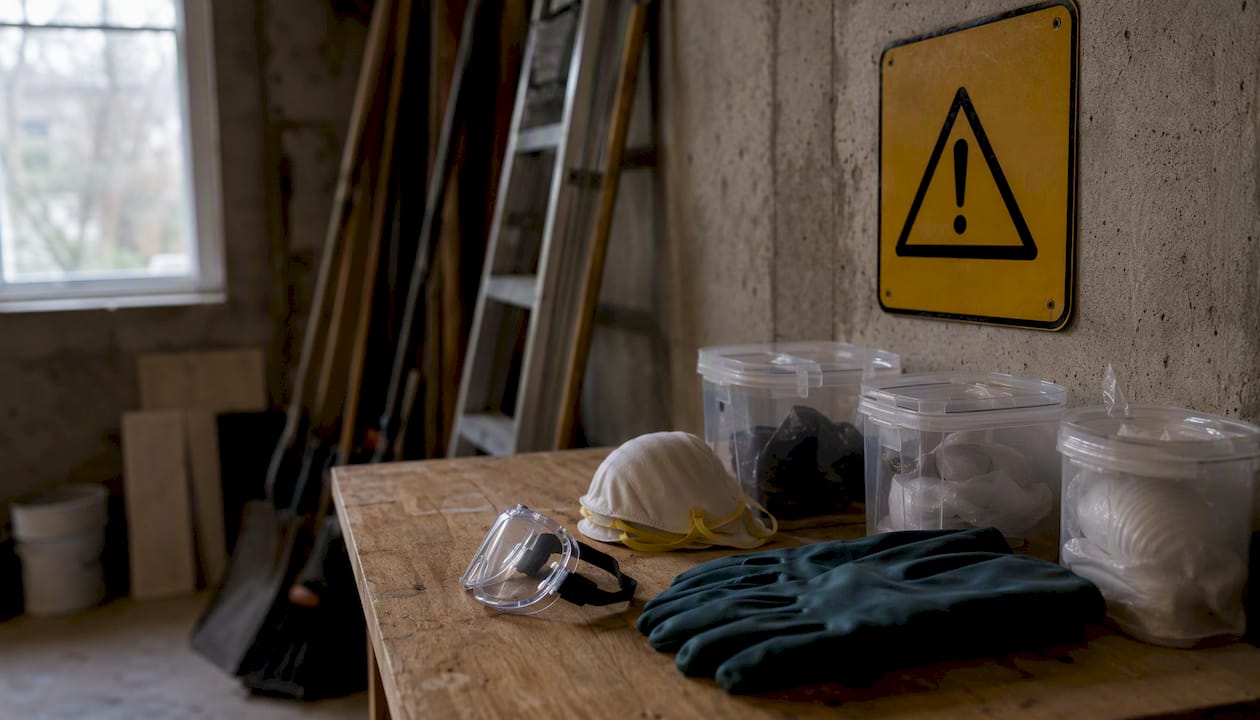
During a showing: do not touch suspicious materials. Photograph and note the location. Exit immediately if you smell sewage, chemicals, or ammonia. Add an inspection contingency to your offer for any of these conditions.
Pro Tip: If you see any biohazard or asbestos indicators, require a seller disclosure and a specialist inspection before removing your inspection contingency. Standard cleanout vendors cannot legally handle these materials.
Printable quick-assessment template for property viewings
Use this template at every showing. Fill it in on your phone or print it before you go.
Property address: _____________________________ Date: _____________
Access constraints: Door widths _____ Stair count _____ Parking distance _____
Sewer cleanout cap present? Yes / No / Unknown
Photo labels: Wide-room shots ✓ / Hazard close-ups ✓ / Access routes ✓
Vendor quote 1: $_______ Vendor quote 2: $_______
Total estimated cleanout cost: $_______ Contingency (20–50%): $_______
Negotiation packet: Photos + this template + written vendor quote = your documentation for a seller credit request or contingency clause.
Template prepared by Olga, Ohana Property & Transition Services LLC. Add your local vendor contact notes below.
Local vendor contact: _____________________________
What should you do after completing your assessment?
Your filled template and two written quotes are now a negotiation tool. Here is how to use them.
- Low severity (under $500 estimated): Proceed with a standard contingency. Note the cleanout cost in your closing budget.
- Medium severity ($500–$2,000): Request a seller credit equal to the lower of your two quotes. Attach the written estimates to your offer as documentation.
- High severity ($2,000+ or red-flag conditions): Require seller remediation before closing, add a specific cleanout contingency clause, or renegotiate the purchase price. For biohazard or asbestos, require specialist inspection and remediation as a closing condition.
Documentation reminders:
- Keep all photos dated and labeled.
- Retain both written vendor quotes.
- Reference the cleanout scope explicitly in any contingency clause (“Buyer’s obligation contingent on seller completing full property cleanout per attached scope, or buyer receiving a $X credit at closing”).
- For flip property cleanouts, factor cleanout cost into your rehab budget from day one.
Key Takeaways
A thorough pre-purchase cleanout evaluation, covering every zone from attic to yard, combined with two written vendor quotes, gives you the documentation to negotiate confidently or walk away cleanly.
| Point | Details |
|---|---|
| Start with a room-by-room checklist | Cover every zone: rooms, garage, basement, attic, yard, and built-ins before making an offer. |
| Use truckload fractions to estimate cost | A single room runs roughly — truck; a hoarded full house runs 2+ trucks and 8–16+ crew-hours. |
| Get two written quotes before closing | Photo-based quotes work for small jobs; on-site walkthroughs are more reliable for medium and large scopes. |
| Red flags change the math entirely | Biohazard, mold, asbestos suspicion, or a missing sewer cleanout cap require specialist help and contingency clauses. |
| Ohanapropertyexperts offers free estimates | Request a photo-based or on-site quote from Ohanapropertyexperts to get a written scope and disposal plan for your negotiation packet. |
What most buyers miss about cleanout assessments
The conventional wisdom says “get a quote before you close.” That is correct but incomplete. The part buyers consistently underestimate is access. A property with a modest amount of furniture but a narrow stairwell, a basement accessible only through a 28-inch door, and street parking 150 feet from the front entry can cost more to clean out than a property with twice the volume and a wide-open garage. Volume is visible. Access is not, until you measure it.
The second thing buyers miss is the sewer cleanout distinction. When people talk about “cleanout scope,” they usually mean junk removal. But a missing or buried sewer cleanout cap is a separate, potentially expensive plumbing problem that shows up in the same inspection window. Confusing the two, or skipping the check entirely, can leave you responsible for a main-line repair after closing.
The buyers and investors who handle this well treat the assessment template as a negotiation document from the moment they fill it out. Two written quotes plus dated photos plus a filled template equals a seller credit request that is very hard to argue with.
Ohanapropertyexperts: free estimates and written scopes for Central Indiana buyers
When you are ready to turn your assessment into a real number, Ohanapropertyexperts gives buyers and investors something most vendors do not: a photo-based quote you can request before you even make an offer, backed by a written scope and disposal plan you can attach directly to your negotiation packet.
Ohanapropertyexperts handles full property cleanouts, estate cleanouts, debris removal, and appliance removal across Columbus, Indianapolis, Greenwood, Franklin, Seymour, and surrounding Central Indiana communities. Every estimate is free, every job comes with proof of insurance, and the team routes usable items to local donation partners to reduce your net disposal cost. For real estate investors and agents, recurring and bulk pricing is available.
To request a photo quote, send wide-room shots, access photos, and your completed assessment template to the team. For larger or higher-risk properties, schedule an on-site walkthrough. Call (812) 302-6833 or visit ohanapropertyexperts.com/services to get started.
Useful sources
- How to Locate Your Sewer or Plumbing Cleanout
- What is a Sewer Cleanout & Why Do You Need One: A Guide
- Main Sewer Line Cleanout: Where Is It & How To Use It
- Estate Cleanout Services: Costs, Process & How to Find One
- Ohana Property Services | Junk Removal & Cleanouts in Central Indiana
Recommended
- Property Cleanout Benefits Home Sales: Seller’s Guide | Ohana Property Services
- How to Recommend Cleanout Services to Clients | Ohana Property Services
- What Happens During a Full Cleanout: A Homeowner’s Guide | Ohana Property Services
- Cleanout Service Agreements Explained for Property Owners | Ohana Property Services