
Per Yard vs Per Ton: U.S. Homeowners' Construction Debris Removal Cost
Compare per yard, per ton, and truckload pricing and see typical U.S. homeowner costs ($300–$800). Find estimating examples, saving tactics, and photo...
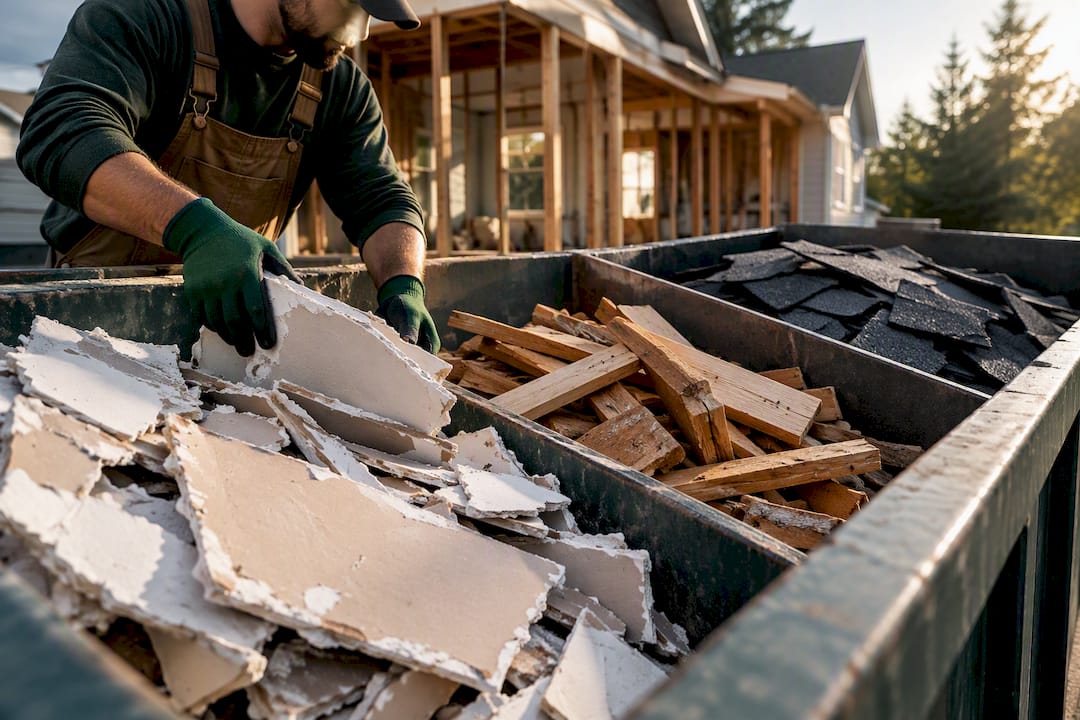
Per Yard vs Per Ton: U.S. Homeowners’ Construction Debris Removal Cost
A standard residential construction debris haul runs $300 to $800 in most U.S. markets, with the national midpoint sitting around $450. Pricing shifts based on whether the hauler charges by cubic yard, by ton, or a flat truckload rate, and hazardous materials or heavy items like concrete can push a job well past $800.
TL;DR:
- Construction debris removal costs range from $300 to $1,000 for full jobs, with smaller projects costing $100 to $300 and large ones exceeding $1,000.
- Pricing methods include per cubic yard, per ton, or flat truckload rates, with heavy materials like concrete significantly increasing costs.
- Separating heavy from light materials and collecting multiple quotes can notably reduce disposal expenses.
- Hazardous materials such as asbestos or lead can add $150 to $300 or require specialized removal, potentially increasing overall costs.
- For quick or small projects, DIY landfill disposal is cheapest, while dumpster rental suits longer timelines, and full-service haulers are best for urgent, heavy debris.
Table of Contents
- What Are the National Averages and Truckload Benchmarks?
- How Is Construction Debris Removal Priced?
- Dumpster Rental vs Full-Service Haul-Away vs DIY Landfill
- What Do Common Renovation Projects Actually Cost?
- Do Hazardous Materials Add Extra Fees?
- How Can You Lower Your Construction Debris Removal Cost?
- Who Pays for Debris Removal, and What Should a Contract Cover?
- On-the-Ground Lessons From Ohana Property & Transition Services
- How Ohana Makes Getting an Estimate Simple
- Sources
- FAQ
What Are the National Averages and Truckload Benchmarks?
Full-service construction debris removal typically lands between $300 and $1,000, with most homeowners paying around $450 for a standard job. Small loads, like a single-room demo, often fall between $100 and $300. Large teardowns or whole-structure debris pushes past $1,000 once weight and volume climb.
Most haulers price by truck fraction rather than quoting a flat number for every job. A quarter-load handles small cleanup jobs. A half-load fits a bathroom gut or a modest deck teardown. Three-quarter and full loads suit kitchen remodels, roofing tear-offs, or multi-room projects.
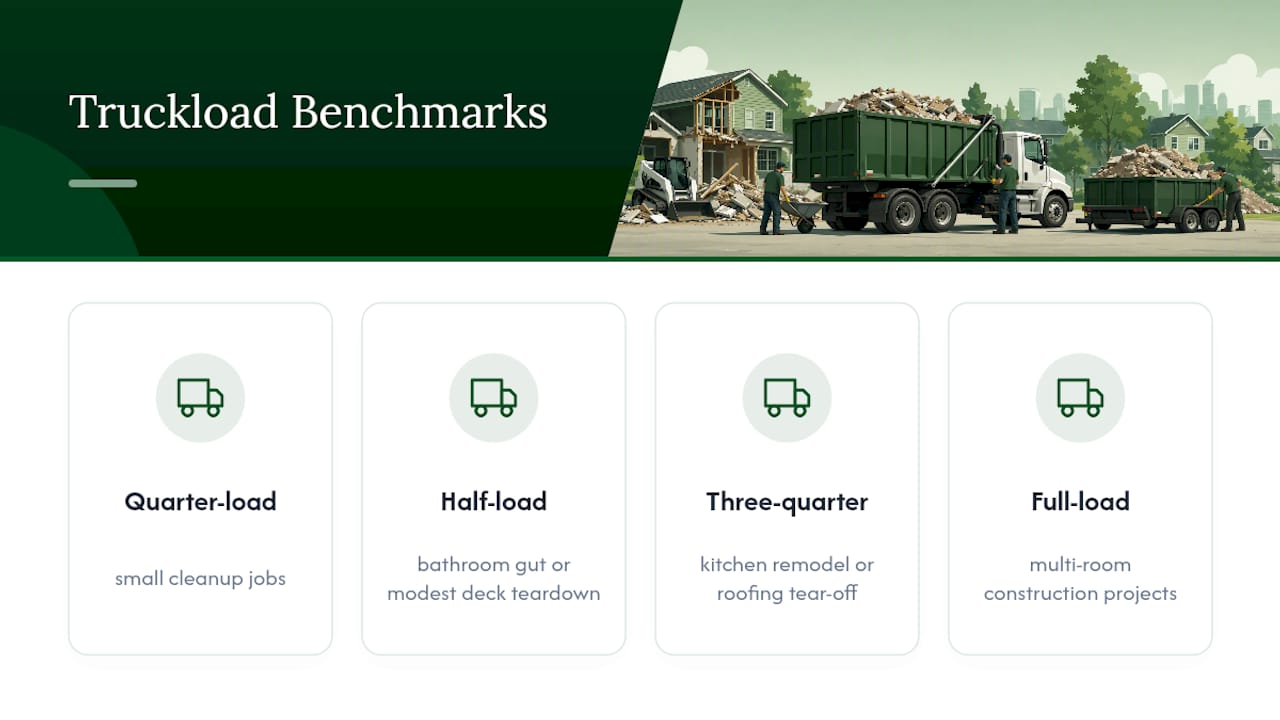
A 10-cubic-yard mixed load of drywall, wood scraps, and shingles typically falls in the three-quarter to full-load range, so budget accordingly before any hazardous-material surcharges apply.
How Is Construction Debris Removal Priced?
Haulers calculate your bill using one of three logics, sometimes blending two of them on the same invoice.
- Per cubic yard. Mixed construction and demolition debris commonly runs $50 to $80 per cubic yard nationally, and coastal or dense urban markets often trend higher. This method works best for bulky, lightweight loads like drywall, insulation, or packaging.
- Per ton. Landfills and transfer stations charge tipping fees of roughly $50 to $150 per ton, with concrete and brick often landing at $90 to $150 per ton. Weight matters more than volume here, and it’s why a single cubic yard of concrete, which can weigh 1.5 to 2 tons, costs far more to haul than a cubic yard of foam insulation.
- Flat truckload or hourly labor. Some jobs get quoted as a flat price per truck size, with labor typically adding $100 to $300 to the total. Stairs, long carry distances, or multi-story access commonly tack on another $50 to $150 per crew.
Here’s the math in practice: a 10-cubic-yard load of mixed drywall and wood, billed by volume at $65 per cubic yard, lands around $650. That same 10 cubic yards, if it’s mostly broken concrete weighing close to 15 tons, billed at $100 per ton, jumps to $1,500. Volume and weight rarely tell the same story, which is exactly why haulers ask what’s actually in your pile before quoting a price.
Dumpster Rental vs Full-Service Haul-Away vs DIY Landfill
Choosing a removal method matters as much as choosing a hauler. Each option fits a different project timeline and budget.
- Roll-off dumpster rental runs $250 to $450 weekly for a 10-yard bin, up to $550 to $750 for a 40-yard bin, with a set tonnage allowance included. Go over that allowance and overage fees per ton apply, sometimes eating any savings you expected.
- Full-service haul-away costs roughly 20% to 40% more per cubic yard than a dumpster rental, since a crew handles loading, sorting, and disposal for you.
- DIY landfill runs avoid labor charges but require personal time and truck rental, plus per-ton tipping fees and possibly permits.
For multi-day projects, a dumpster almost always beats a full-service haul on cost per yard, since you’re trading your own labor for lower per-yard rates. Same-day cleanups or urgent jobs favor full-service crews, and small loads with no timeline pressure fit DIY landfill runs best. Reviewing a comparison of junk removal versus dumpster rental helps homeowners with 4 to 10 cubic yards pick the right fit before committing.
What Do Common Renovation Projects Actually Cost?
Project type drives both volume and material weight, and weight is usually the bigger cost lever. A bathroom gut generates a small, mixed load. A roofing tear-off produces heavy, dense debris that costs more per yard than its volume suggests.
| Project | Typical Volume | Expected Price Band |
|---|---|---|
| Bathroom remodel | 1–3 cubic yards | $150–$300 |
| Kitchen remodel | 4–7 cubic yards | $350–$650 |
| Roofing tear-off (avg. home) | 3–5 cubic yards | $400–$750 |
| Deck removal | 3–6 cubic yards | $300–$600 |
| Whole-home remodel | 15+ cubic yards | $1,000–$3,000+ |
Light-material jobs like drywall or cabinetry demo sit at the low end of each band.
Do Hazardous Materials Add Extra Fees?
Regulated materials trigger surcharges most standard quotes don’t include upfront.
- Household hazardous waste (leftover paints, solvents, adhesives) commonly adds $150 to $300 in disposal fees for typical residential quantities.
- Asbestos, common in homes built before the 1980s, requires licensed abatement rather than standard hauling, and costs vary widely depending on scope.
- Lead-containing debris, a concern in homes built before 1978, carries its own disposal and reporting requirements that a general hauler may not handle.
Tell your hauler about any suspected hazardous material before the crew arrives and review practical guidance on estimating project scope and debris volume before selecting a removal method in how to makeover my house. Quotes built on incomplete information almost always get revised upward once the truck is already on-site.
How Can You Lower Your Construction Debris Removal Cost?
Cutting your bill mostly comes down to separating materials and shopping quotes properly.
- Separate heavy from light materials. Clean concrete, brick, and metal often qualify for lower clean-fill or recycling rates instead of standard landfill tipping fees.
- Match the method to your timeline. Dumpster rental wins for multi-day projects; full-service haul-away wins when you need the pile gone today.
- Collect two to three written estimates. Ask each hauler what tonnage is included and what the overage rate is if you go over.
- Salvage or donate reusable materials. Cabinets, doors, and fixtures in decent shape often qualify for donation pickup instead of disposal fees.
Pro Tip: Take timestamped photos of your debris pile before calling for quotes. Haulers who offer photo-based estimating can often give you a firmer number over the phone, which saves you from a surprise revision once the crew shows up.
Who Pays for Debris Removal, and What Should a Contract Cover?
Contractor agreements usually assign debris removal to the contractor for full remodels, but homeowners often cover it separately for DIY or partial-scope projects. A solid estimate should specify the load basis (yard or ton), tipping-fee responsibility, access or labor surcharges, hazardous-material handling, and any permit or curb-placement costs. A verbal-only quote with no written breakdown of these items is a red flag worth walking away from.
On-the-Ground Lessons From Ohana Property & Transition Services
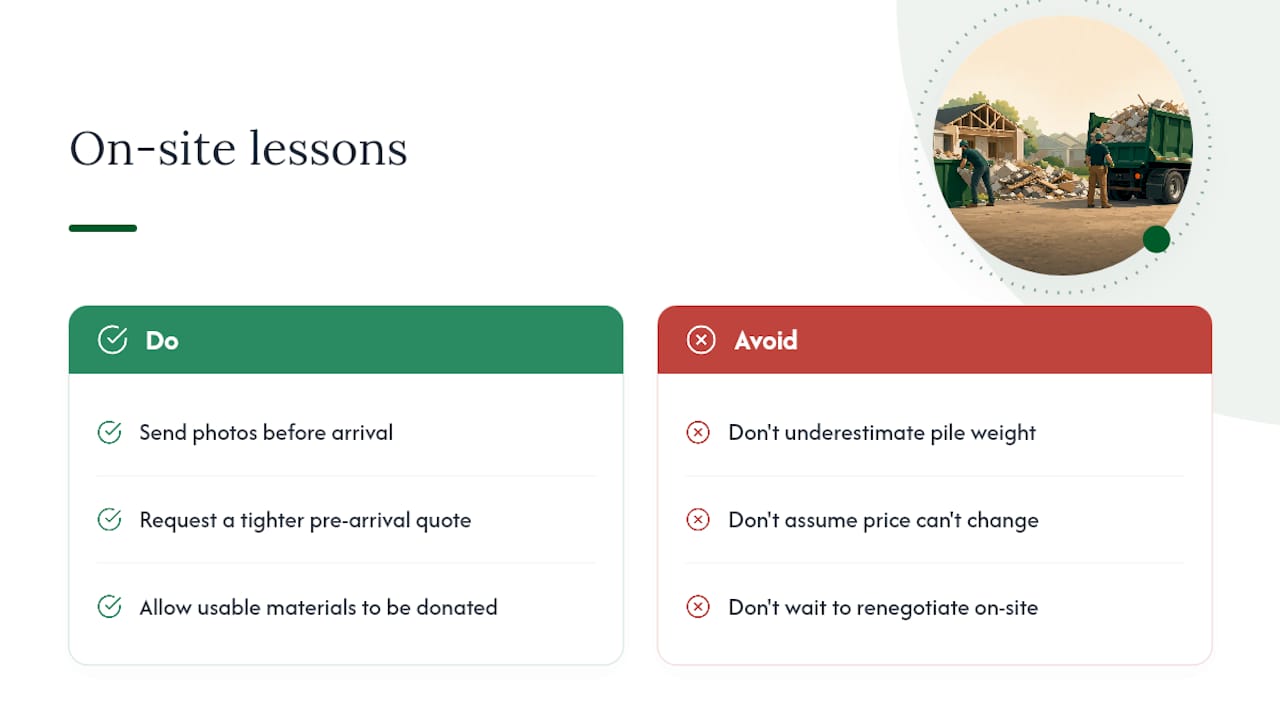
Working debris jobs across Columbus and the surrounding Central Indiana communities, we’ve seen the same pattern repeat: homeowners underestimate how much a “small” pile weighs once shingles or tile enter the mix. Photos sent before we arrive let us quote tighter numbers and avoid the awkward on-site renegotiation nobody wants.
Our debris removal and property cleanout jobs also route usable materials to donation partners when possible, which trims disposal volume and, in turn, your final invoice.
— Olga
How Ohana Makes Getting an Estimate Simple
Ohana Property & Transition Services handles debris removal, junk removal, and full property cleanouts across Columbus, Seymour, North Vernon, Edinburgh, Franklin, Greenwood, Indianapolis, Lafayette, and the surrounding Central Indiana area, with photo-based quotes that give you a real number before a truck ever shows up.

Instead of guessing between a dumpster rental you have to schedule yourself and a national chain quoting by the mile, Ohana gives you a local crew that shows up fast, typically within 24 to 48 hours of your call, with pricing built around what’s actually in your pile. Send a few clear photos of your debris, whether it’s post-renovation drywall, roofing scraps, or a mixed teardown pile, along with rough dimensions, and you’ll get a debris removal quote in the $200 to $700 range for most standard jobs, no guesswork required. Larger jobs bundled with a broader property cleanout or smaller loads that fit junk removal pricing both get the same photo-first approach. Call (812) 302-6833 or request your free estimate online to get a number today.
Sources
The pricing benchmarks in this article draw from Angi’s construction debris removal cost data, UseCalcPro’s C&D removal cost calculator for per-yard and per-ton benchmarks, and BLS occupational wage statistics for labor-cost context. Local transfer station tipping-fee schedules were also referenced for regional weight-based pricing.
- How Much Does It Cost to Remove Construction Debris? 2026 Data | Angi
- Construction Debris Removal Cost Calculator — 2026 C&D Estimator | UseCalcPro
FAQ
How Much Should You Charge for Construction Debris Removal?
Most haulers price by cubic yard, around $50 to $80 per cubic yard, or by ton for heavy materials at $50 to $150 per ton. A typical full-service job for a homeowner totals $300 to $800, with Ohana’s debris removal service in Central Indiana priced between $200 and $700 depending on volume.
How Much Is a Cubic Yard of Construction Debris?
A cubic yard of mixed construction debris typically costs $50 to $80 to remove, though this varies by material weight. Heavy materials like concrete can weigh 1.5 to 2 tons per cubic yard, pushing per-yard cost closer to per-ton tipping-fee rates instead.
How Do You Calculate Demolition Debris Volume?
Measure the length, width, and height of the debris pile in feet, multiply them together, then convert to cubic yards. For irregular piles, most contractors round up and estimate by truck fraction, comparing your pile against quarter, half, three-quarter, or full-truck benchmarks.
How Do You Get Rid of Construction Debris?
Options include renting a roll-off dumpster, hiring a full-service haul-away crew, or hauling it yourself to a landfill or transfer station. A full-service option like Ohana’s debris removal works best for homeowners who want the job handled without renting equipment or making multiple trips.
What Is the Cheapest Way to Remove Construction Debris?
DIY landfill runs are usually the cheapest option if you already have a truck and time to spare, since you avoid labor and rental markups. For most homeowners without a truck, a shared or smaller dumpster rental tends to beat full-service pricing on multi-day projects, based on the per-yard cost advantage of self-managed disposal.