
Budget $300–$10,000+ for Foreclosure Cleanouts in the U.S.
Learn why foreclosure cleanout quotes range $300–$10,000+, how EPA/OSHA and state rules affect price, and how to get a local photo estimate.
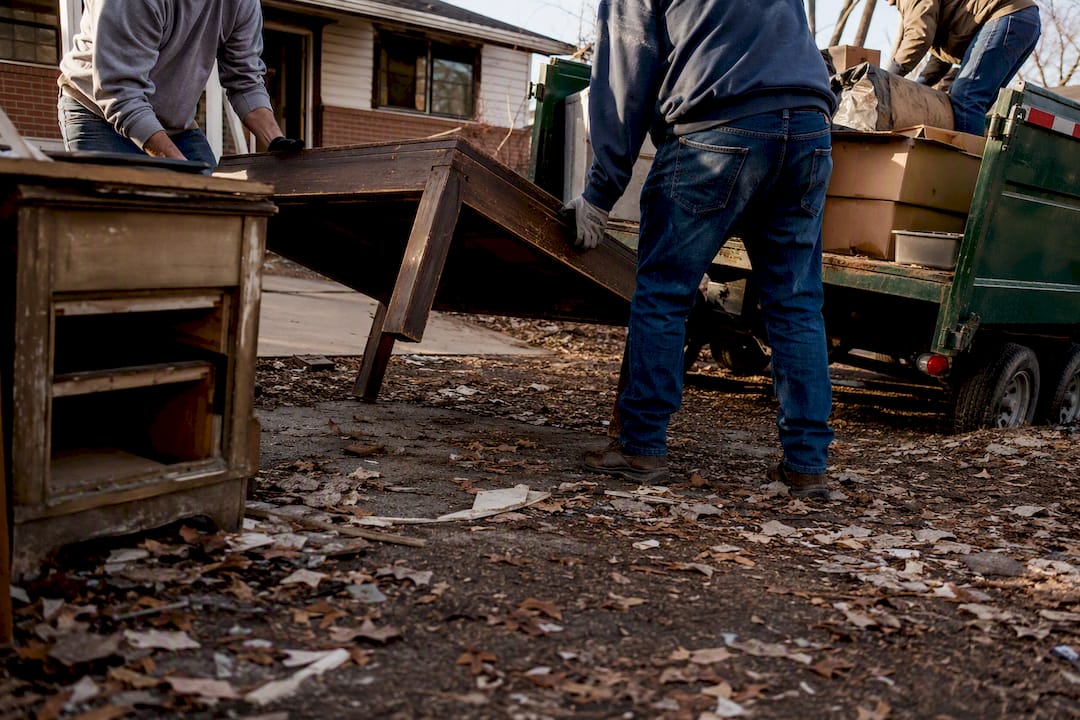
Budget $300–$10,000+ for Foreclosure Cleanouts in the U.S.
Most foreclosure cleanouts run $300 to $800 for a small, lightly furnished property, $800 to $1,800 for a standard single-family home, and $2,000 to $10,000 or more for hoarding-level or heavily damaged jobs. Final price depends on volume, access, hazardous materials, and local disposal fees. A professional crew typically covers labor, hauling, and disposal in one quote, which is why it usually beats piecing the job together yourself.
TL;DR:
- The typical foreclosure cleanout cost ranges from $300 to $800 for small properties, $800 to $1,800 for single-family homes, and over $5,000 for hoarding or heavily damaged listings.
- Pricing varies based on volume, access difficulty, hazardous materials, and local disposal fees, with full-service crews bundling labor, hauling, and disposal in one quote.
- Volume, access challenges, and special items like appliances or chemicals significantly influence the final cost, and delays often increase expenses.
- Legally, vendors must follow property preservation rules, document conditions, and hold removed property for specified periods, especially in states with strict regulations.
- Hiring a professional makes sense for hazards or documentation needs, but verify insurance, disposal practices, and request detailed, written estimates before proceeding.
Table of Contents
- Foreclosure Cleanout Cost Ranges by Property Size
- What Drives the Price of a Foreclosure Property Cleanup
- What a Professional Cleanout Service Actually Covers
- How to Lower Your Foreclosure Cleanout Cost
- Legal Rules and Property Preservation Practices to Know
- Timeline and Who Typically Pays for the Cleanout
- Should You Hire a Pro, DIY, or Use Curb Pickup?
- How Ohana Property & Transition Services Approaches Cleanout Pricing
- Get a Free Estimate for Your Foreclosure Cleanout
- Why the “Average Cost” Number You’re Searching for Doesn’t Exist
- Sources
Foreclosure Cleanout Cost Ranges by Property Size
Pricing depends heavily on which model a vendor uses, and the three most common are per-job, per-item, and per-cubic-yard.
Per-job pricing is the most common approach for full-house cleanouts. A vendor walks the property (often through photos you send) and quotes a flat rate for the whole job. Independent pricing surveys show light jobs starting around $300 to $800, while typical crew-based full-house trash-outs commonly land between $400 and $2,500 for many properties. Larger or hoarding-level jobs can climb into the several-thousand-dollar range once volume and disposal fees stack up.
Per-item curb pickup works when a property has a light pile of discrete items rather than whole-house debris. Individual pickups can start under $100 per item, which makes this route viable for a single couch or appliance but impractical once you’re dealing with multiple rooms of debris.
Per-cubic-yard and dumpster pricing gives you a rate tied to volume rather than a flat job quote. Breaking a quote into labor hours, cubic yards, disposal fees, and equipment rental lets you compare bids on an apples-to-apples basis instead of guessing at what’s included.
Three quick scenarios: a two-bedroom condo with light furniture and no hazards typically lands near the low end of the standard range. A three-bedroom house with a garage full of tools, old appliances, and yard debris pushes toward the middle to upper end. A hoarding situation with structural damage, pest issues, or contaminated materials pushes past $5,000 once specialized disposal enters the picture.
What Drives the Price of a Foreclosure Property Cleanup
Volume is the first number every vendor calculates, usually measured in cubic yards or truckloads, and it directly sets the labor hours a crew needs to bill.

Access matters almost as much as volume. A ground-floor property with a driveway costs less to clear than a third-floor walkup with no elevator, because every extra flight of stairs adds carry time and crew fatigue.
Pro Tip: Ask vendors whether their quote already accounts for stairs, long carries, or restricted parking. A number that looks low on paper often grows once a crew sees the actual layout.
Several other factors change the total:
- Special-item fees for appliances, electronics, mattresses, tires, and batteries, which often carry separate disposal charges
- Local transfer-station and permit fees, which vary by county and can shift a quote by hundreds of dollars
- Rush timelines tied to an auction date or closing deadline
- Lender-required documentation, such as before-and-after photos, which adds administrative time to the job
OSHA’s job-site housekeeping standard also shapes staffing and equipment decisions, since crews handling debris-heavy sites need to manage walkways, sharp materials, and stacked debris safely, and that safety overhead shows up in labor pricing.
What a Professional Cleanout Service Actually Covers
A standard full-service foreclosure cleanout bundles several tasks into one price, which is the main reason it tends to cost less overall than assembling separate vendors yourself.
- Crew labor to sort, lift, and load everything in the property
- Hauling to transfer stations, recycling centers, or donation partners
- Disposal fees already factored into the quoted price
- A basic sweep of cleared rooms once items are removed
- Donation and recycling routing for usable furniture, appliances, and materials
Common add-ons that fall outside the base quote include appliance disposal fees tied to EPA refrigerant-handling rules, electronics recycling charges for e-waste, hazardous-material handling, locksmith or boarding services, and mold or pest remediation. Compare that against a per-item service or a plain dumpster rental, neither of which includes labor, sorting, or donation routing. You’re paying for convenience and speed, not just hauling.
How to Lower Your Foreclosure Cleanout Cost
You don’t need to sacrifice compliance to trim the bill, and a few habits consistently save money.
- Route usable furniture and appliances to donation partners, which cuts landfill volume and sometimes qualifies for free pickup
- Pre-sort hazardous items like paint, batteries, and chemicals before the crew arrives, since mixed loads often trigger surprise fees
- Compare a dumpster rental against crew time. A dumpster works when you have labor available; a crew wins when you don’t
- Request an itemized quote and require photo documentation for any lender-paid job
Pro Tip: Before discarding anything that might belong to a former occupant, check your state’s abandoned-property hold period. Some states require vendors to inventory and retain removed items for a set window before disposal.
For a deeper breakdown of budgeting by property type, see what cleanout costs investors should expect on a per-property basis.
Legal Rules and Property Preservation Practices to Know
Loan servicers hire property-preservation vendors to secure vacant homes, change locks, board windows, and clear debris. Their work usually follows Fannie Mae’s preservation guidelines, which define allowable costs and the documentation vendors must submit before getting paid.
That framework exists partly because property-preservation vendors have been documented entering and clearing homes that weren’t actually vacant. Some states also require vendors to inventory and hold removed property for a set period, often in the 15 to 30 day range, before disposal is legally permitted.
Skipping the hold-period check can create real legal exposure even when a property looks abandoned. Verify local statutes before anything leaves the curb.
- Document property condition and all servicer communications before work begins
- Confirm appliance disposal follows EPA refrigerant-handling steps
- Seek legal counsel if you suspect wrongful removal occurred
Timeline and Who Typically Pays for the Cleanout
Turnaround depends almost entirely on volume and hazard level.
| Job Type | Typical Timeline | Who Usually Pays |
|---|---|---|
| Light/curb-level job | Same day | Homeowner or seller |
| Standard single-family cleanout | 1 to 3 days | Servicer via preservation budget, or new owner |
| Heavy or hoarding-level job | Multiple days | Investor, lender, or split at closing |
Payment responsibility shifts depending on where the property sits in the foreclosure timeline. A homeowner clearing out before a sale pays directly. A servicer paying through a preservation budget follows the allowed-cost matrices Fannie Mae publishes. An investor buying at auction often inherits the cleanout cost as part of the purchase math. Rush timelines tied to an auction date routinely add cost, so agreeing on deadlines in writing protects everyone from disputed invoices later.
Should You Hire a Pro, DIY, or Use Curb Pickup?
Hiring a professional crew makes sense when hazards, heavy furniture, or lender documentation requirements are part of the job.
- Check for insurance before signing anything, since an uninsured crew shifts liability onto you
- Ask how they handle hazardous items, including batteries, chemicals, and old appliances
- Request proof of disposal or recycling, not just a verbal promise
- Get a written, itemized quote with a clear timeline
Pro Tip: A vague disposal plan or an unexplained lump-sum line item is a red flag. Ask the vendor to break out labor, hauling, and disposal separately.
For a side-by-side look at DIY versus hiring out, this checklist walks through the decision point by point.
How Ohana Property & Transition Services Approaches Cleanout Pricing
We’re a family-owned crew serving Columbus, Seymour, North Vernon, Edinburgh, Franklin, Greenwood, Indianapolis, Lafayette, and the surrounding Central Indiana area, and foreclosure cleanouts are a regular part of our work. We scope most jobs from photos you send us, which lets us give you a fast, realistic range before we ever step on site. For larger or heavier properties, we follow up with an in-person walkthrough to confirm the estimate.
Central Indiana properties bring their own quirks: older basements, detached garages, and rural lots with extra hauling distance to the nearest transfer station. We factor those into every quote instead of surprising you afterward.
Get a Free Estimate for Your Foreclosure Cleanout
Ohanapropertyexperts is the alternative to guessing at a flat-rate national average. Send us photos of the property and we’ll give you a real number grounded in Central Indiana disposal fees and local access conditions, not a generic online calculator.
Requesting a quote is simple: send photos or a short video walkthrough, tell us the property size and any known hazards (old appliances, chemicals, mattresses), and mention if you’re working against a lender or auction deadline. Our itemized quote breaks out labor, hauling, and disposal separately, and we route usable furniture and household goods through donation partners whenever possible instead of defaulting straight to landfill.
If you manage multiple properties, our services for real estate investors and agents page covers what to expect across a portfolio. For a single property, start with our full property cleanout page and request your free estimate today. We serve Columbus, Indiana and the surrounding Central Indiana communities, and we’ll walk you through the scope before a single item leaves the house.
Why the “Average Cost” Number You’re Searching for Doesn’t Exist
Every foreclosure cleanout article, including this one, hands you a range instead of a single number, and that’s not evasiveness. It’s the honest answer.
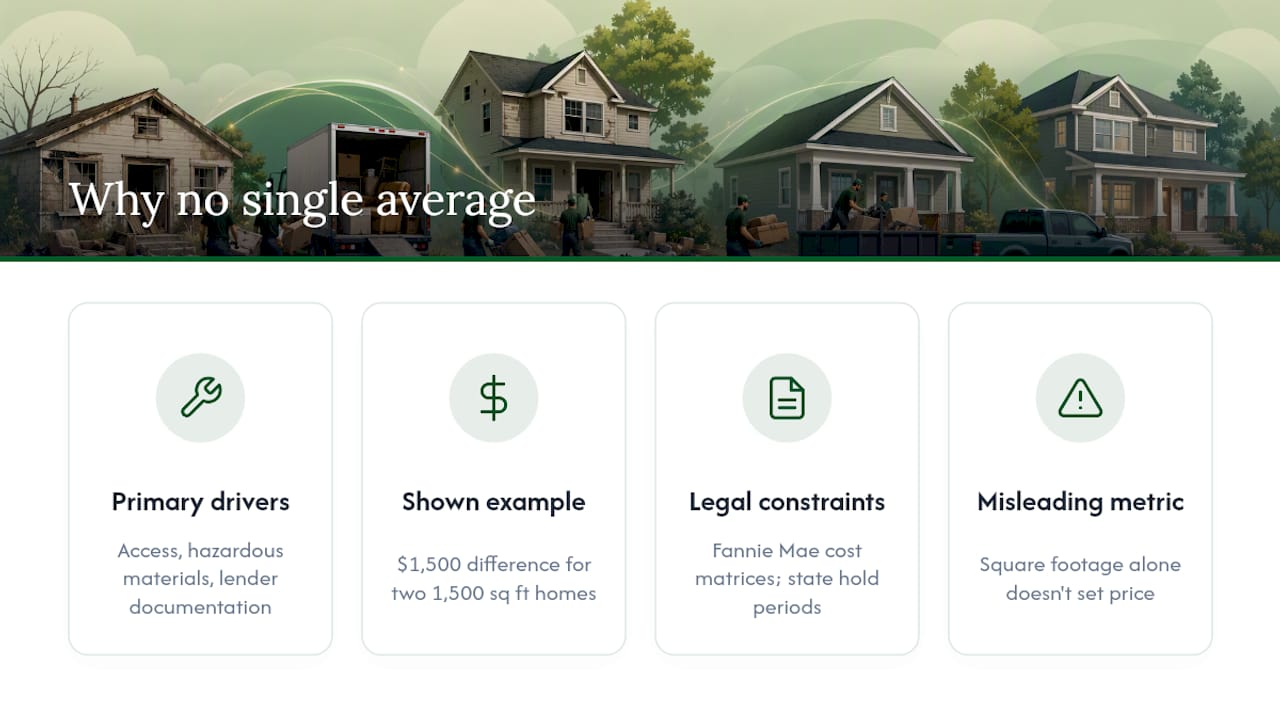
The conventional wisdom treats cleanout pricing like a menu item: tell me the square footage, get a price. Real jobs don’t work that way. Two 1,500 square foot houses in the same county can differ by $1,500 in cost, and the difference usually isn’t volume. It’s access, hazardous materials, and how much documentation a lender demands. I’ve seen the pricing conversation get reduced to “dumpster versus crew” when the more useful question is almost always “what’s actually in the house, and who needs proof of what happened to it.”
The legal layer gets skipped even more often than the pricing nuance. Property-preservation vendors operate under real constraints, from Fannie Mae’s cost matrices to state-level hold periods on personal property, and treating a vacant-looking house as fair game before confirming its legal status is how well-meaning cleanouts turn into liability. Budget for the cleanout, but budget the same attention for the paperwork trail behind it.
— Olga
Sources
- EPA — Appliance disposal (Section 608)
- OSHA — Housekeeping standard (1926.25)
- Nolo — Deceptive foreclosure practices
- Fannie Mae — Pre-foreclosure property preservation