
Role of Hauling in Property Upkeep: What Owners Need to Know
Discover the crucial role of hauling in property upkeep. Learn how it boosts safety, cuts costs, and speeds up turnovers for owners.
Role of Hauling in Property Upkeep: What Owners Need to Know
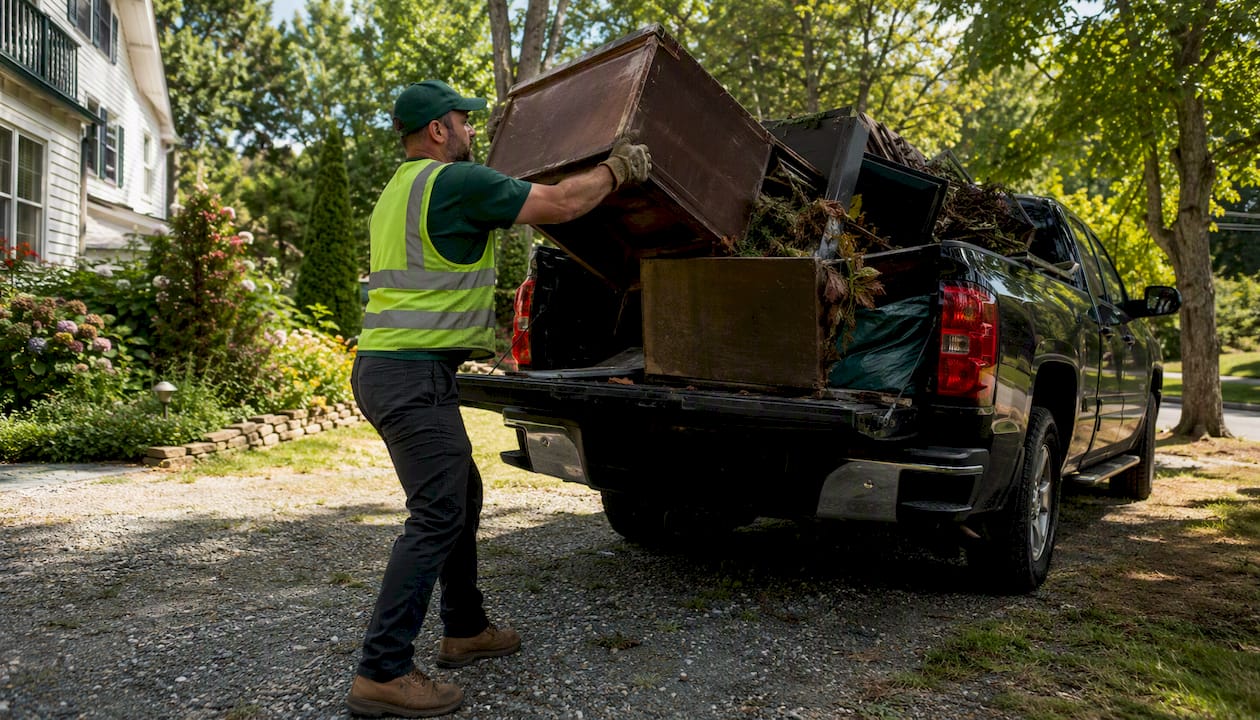
Professional hauling clears the debris that blocks repairs, shortens vacancy windows, and protects asset value — making it one of the most underrated tools in a property manager’s maintenance plan. The role of hauling in property upkeep goes well beyond a one-time cleanup. It is an operational function that keeps properties safe, inspectable, and ready to generate income. Preventive maintenance programs, including scheduled hauling, reduce repair costs by roughly 30%. Scheduled hauling enables this discipline by keeping properties accessible and ready for repairs. When debris is cleared on a predictable schedule, inspectors can reach HVAC units, electricians can access panels, and plumbers can find shut-offs without delay.
The four outcomes property owners and managers care about most:
- Faster turnovers: Cleared units move from vacant to rent-ready in fewer days, reducing lost net operating income.
- Better damage detection: Removing accumulated items exposes water stains, pest evidence, and structural issues that debris was hiding.
- Fewer safety liabilities: Eliminating trip hazards, fire-risk clutter, and blocked egress paths reduces exposure to tenant injury claims.
- Improved curb appeal: Clean exteriors and common areas support leasing velocity and tenant retention.
Ohana Property & Transition Services LLC and industry bodies like the International Facility Management Association both treat hauling as a scheduled maintenance function, not an afterthought.
Table of Contents
- What do hauling services actually handle for properties?
- How does hauling support maintenance outcomes and protect property value?
- What operational advantages does scheduled hauling give property teams?
- What does a property cleanout process look like, step by step?
- What best practices should owners and managers follow with hauling services?
- How should you handle regulated disposal and environmentally responsible hauling?
- What drives hauling cost, and how should you budget for it?
- How do you choose a hauling partner and set up recurring service?
- What common hauling challenges should you plan for?
- How Ohanapropertyexperts integrates hauling into property upkeep
- Key Takeaways
- Why hauling deserves a permanent place in your maintenance plan
- Ready to put hauling to work for your properties?
- Useful sources and further reading
What do hauling services actually handle for properties?
Hauling covers a wider range of job types than most owners realize. Understanding the scope helps you match the right service model to each situation rather than calling in a general crew for a job that needs a specialist approach.
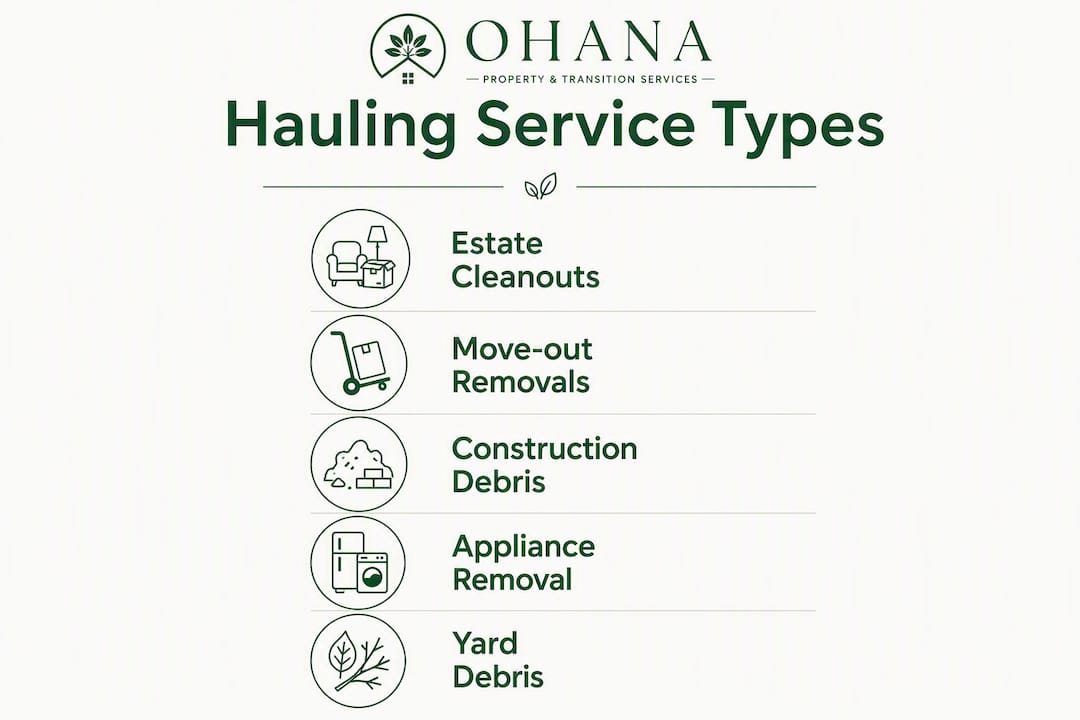
Estate and full-property cleanouts involve clearing an entire home or unit of furniture, personal belongings, appliances, and accumulated items. These are common after a tenant vacates, following an estate settlement, or before a rehab project. Hauling services simplify these cleanouts, save time, and prepare spaces for renovation or resale.
Move-out and eviction cleanouts focus on removing items left behind by departing tenants. Speed matters here because every day the unit sits idle costs rent.
Construction and renovation debris removal handles drywall scraps, lumber, flooring, concrete, and packaging materials generated during rehab work. This debris cannot go in a standard dumpster in most jurisdictions without a permit.
Appliance and furniture removal covers single-item pickups: refrigerators, washers, dryers, sofas, mattresses. Many of these require special handling or recycling routing.
Yard and storm debris includes branches, brush, soil, and storm-damaged materials that accumulate seasonally.
| Job Type | Typical Items | Service Model |
|---|---|---|
| Estate / full-property cleanout | Furniture, appliances, clothing, boxes, miscellaneous | One-off crew dispatch |
| Move-out / eviction cleanout | Tenant-left items, trash, small appliances | One-off, often same-day |
| Construction debris removal | Drywall, lumber, tile, concrete, packaging | One-off or recurring during rehab |
| Appliance / furniture removal | Refrigerators, washers, sofas, mattresses | Per-item or bundled |
| Yard and storm debris | Branches, brush, soil, storm materials | Seasonal or recurring |
Items typically excluded from standard hauls include hazardous chemicals, asbestos-containing materials, regulated refrigerants, and certain electronics. A reputable hauler will screen for these before loading and direct them to the appropriate disposal pathway.
How does hauling support maintenance outcomes and protect property value?
Debris is not just an eyesore. Hidden accumulations of old appliances and furniture block access to critical systems — HVAC units, electrical panels, plumbing shut-offs — and stall repairs until a hauling crew clears the way. That delay compounds: a blocked panel means an electrician cannot complete the inspection, which means the unit cannot be certified, which means the lease cannot start.
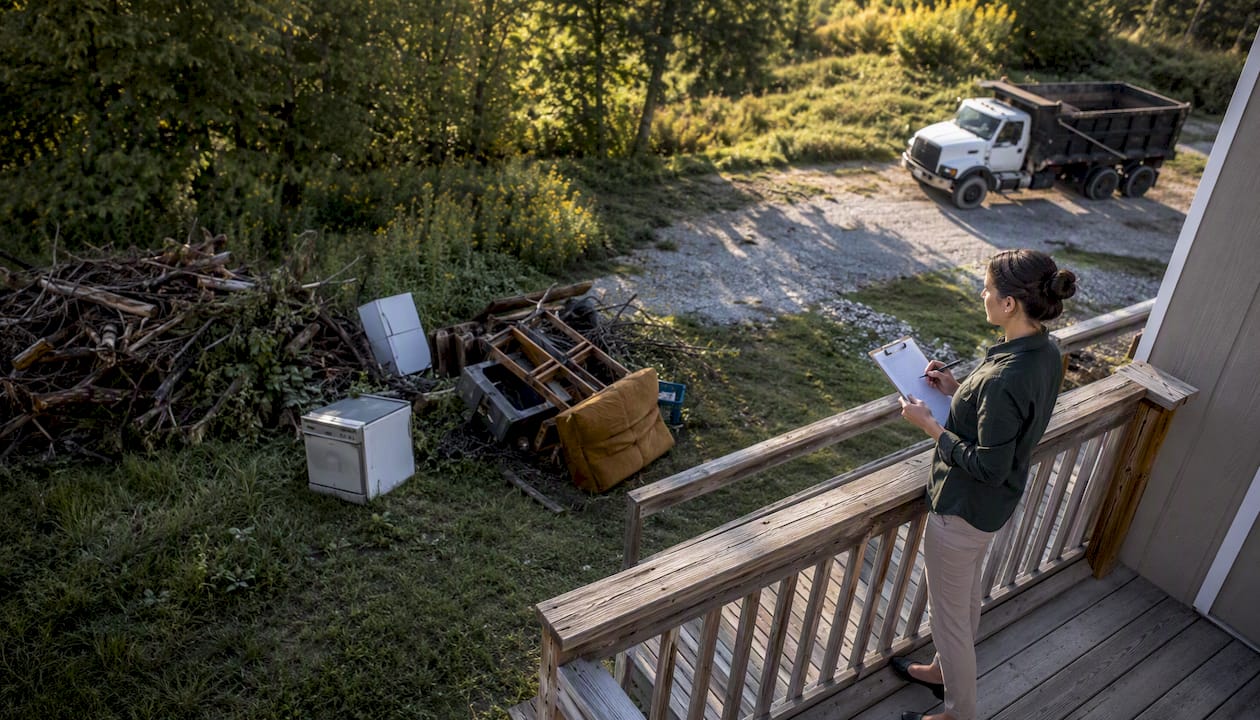
The financial case is straightforward. Each day of vacancy is a direct hit to net operating income, and fast hauling is one of the few line items that directly compresses that window. Beyond vacancy, poor maintenance can void insurance claims when neglect is found to have worsened damage. A documented hauling and cleanout record is evidence of diligence.
Safety and liability are equally concrete:
- Accumulated clutter raises fire risk, especially in garages, basements, and storage areas where combustibles collect near heat sources.
- Debris on stairs, walkways, and common areas creates trip-and-fall exposure.
- Piled materials give rodents and insects harborage, which accelerates pest infestations that are far more expensive to remediate than to prevent.
- Blocked egress paths violate fire codes in most U.S. jurisdictions and can trigger fines or failed inspections.
Routine clearing and upkeep help avoid costly emergencies and support tenant health and safety. The role of debris removal in real estate value extends beyond aesthetics: it is a risk-management function that keeps insurance, inspections, and tenant relationships on solid ground.
What operational advantages does scheduled hauling give property teams?
Timely hauling shortens the time-to-ready for vacant units and reduces combined labor costs across trades. When a plumber, electrician, and HVAC technician all arrive at a cleared unit, they work without interruption. When they arrive at a unit full of the previous tenant’s belongings, you pay for their time while they wait.

Property management experts advise shifting from reactive to predictive maintenance and including hauling in operational workflows. That shift is practical: schedule the hauling crew before the inspection crew, not after. The inspection finds what needs fixing; the hauling crew should have already removed what was blocking the view.
Seasonal transitions create predictable surge demand. Spring yard-waste accumulation, post-storm debris, and fall leaf and brush removal are all foreseeable. Booking hauling in advance during these windows prevents the backlog that pushes turnovers into the following month.
For rehab projects, staging matters. A hauling crew that clears the unit before contractors arrive eliminates the “who moves this?” negotiation that adds hours to every trade visit. Hauling services prepare spaces for renovation and reuse, which keeps contractor schedules tight and project costs predictable.
Pro Tip: Schedule your hauling appointment 24–48 hours before any inspection or contractor visit. This single habit eliminates the most common cause of rescheduled vendor appointments and keeps your maintenance calendar on track.
What does a property cleanout process look like, step by step?
A well-run hauling job follows a predictable sequence. Property teams that understand this flow can coordinate cleanouts without surprises.
- Assessment and scope: Walk the property with the hauler or submit photos. Identify volume, access constraints (narrow stairs, locked gates, elevator-only buildings), and any items that need special handling. Flag potential hazardous materials at this stage.
- Estimate and scheduling: Receive a written quote based on truck space, item count, or flat-rate cleanout pricing. Photo-based quotes work well for remote landlords. Confirm the service window, crew size, and whether a deposit is required.
- On-site sorting: The crew separates items into four streams: keep (owner-retained), donate (reusable goods routed to local partners), recycle (metals, electronics, applicable materials), and landfill (non-recoverable waste). Strategic staging for donation before the haul reduces landfill volume and disposal fees.
- Removal and load-out: Heavy items come out first. The crew stages donation items separately for pickup or drop-off. The truck is loaded, and the space is swept clean.
- Documentation: The hauler provides before-and-after photos, a disposal receipt, and a donation confirmation if applicable. These go directly into the property’s maintenance records.
- Post-job review: Confirm the invoice matches the estimate, file the receipts, and note any damage or issues uncovered during the cleanout for follow-up repair scheduling.
This sequence is repeatable across property types. For full property cleanouts, the same six steps apply whether the job is a single-bedroom apartment or a five-bedroom estate.
What best practices should owners and managers follow with hauling services?
Build hauling into your lease and property policies from the start. Specify tenant responsibilities for bulk-item disposal and communicate the process for scheduling pickups. This prevents the end-of-tenancy standoff where a departing tenant leaves a sofa in the living room and expects you to handle it for free.
For long-term vacant units, schedule a cleanout at least quarterly. Vacancy does not mean nothing accumulates. Pests, moisture, and unauthorized access all leave evidence that a periodic cleanout will surface before it becomes a costly repair.
Documentation is non-negotiable. Require before-and-after photos from every hauling job and keep disposal receipts on file. If a tenant later disputes a damage charge, those photos are your evidence. If a regulatory agency questions your disposal practices, the receipts are your defense.
Coordinate hauling with your preventive maintenance calendar. A gutter cleaning, roof check, and HVAC service visit are all more productive when the surrounding areas are clear. Common-area debris removal scheduled alongside landscaping and exterior maintenance creates a single mobilization that covers multiple upkeep goals.
Pro Tip: Bundle appliance removal, furniture removal, and general debris into one job whenever possible. A single truck roll costs less per item than three separate pickups, and it keeps your maintenance calendar cleaner.
How should you handle regulated disposal and environmentally responsible hauling?
Not everything in a property cleanout can go to a standard transfer station. Regulated items require separate handling, and the property owner bears responsibility for ensuring they are disposed of lawfully.
Commonly regulated items include:
- Refrigerants: Refrigerators, air conditioners, and dehumidifiers contain refrigerants regulated under the Clean Air Act. These must be recovered by a certified technician before the appliance is scrapped.
- Electronics (e-waste): Televisions, computers, and monitors contain lead and mercury. Many U.S. states restrict landfill disposal of electronics.
- Batteries: Lithium-ion and lead-acid batteries require recycling, not landfill disposal.
- Asbestos-containing materials: Older floor tiles, insulation, and roofing materials may contain asbestos. Removal requires licensed abatement contractors.
- Certain chemicals: Paints, solvents, pesticides, and pool chemicals are classified as household hazardous waste in most jurisdictions.
A reputable hauler screens for these items before loading and will not accept them in a standard haul. Ask for their hazardous-item policy in writing before booking.
Professional hauling providers commonly sort usable items for donation or recycling rather than sending everything to landfill. Donation routing for reusable goods lowers your disposal volume, reduces fees, and supports community partners who can put those items to use.
| Item | Typical Disposal Pathway |
|---|---|
| Working furniture / appliances | Donation partner or resale |
| Non-working appliances with refrigerant | Certified refrigerant recovery, then scrap |
| Electronics (TVs, computers) | E-waste recycler |
| Batteries | Battery recycling drop-off or program |
| Asbestos materials | Licensed abatement contractor |
| Household hazardous waste | Local HHW facility or collection event |
| Clean wood / metal debris | Recycling or transfer station |
| General non-recoverable waste | Transfer station / landfill |
What drives hauling cost, and how should you budget for it?
Hauling pricing varies by job, but the major drivers are consistent across providers.
Volume and truck space is the primary factor for most cleanouts. Providers typically price by the fraction of a truck load (quarter, half, three-quarter, full). A one-bedroom apartment cleanout with moderate furnishings usually fills a half to three-quarter load.
Item weight and handling difficulty adds cost for heavy items like concrete, tile, or cast-iron fixtures. Stairs, narrow doorways, and elevator-only access all increase crew time and therefore price.
Hazardous-item surcharges apply when regulated materials require separate handling or certified disposal.
Disposal fees vary by material type and local transfer station rates. Ask for these as a line item in the estimate so you can compare bids accurately.
Common pricing models:
| Pricing Model | Best For | Typical Use Case |
|---|---|---|
| Per-load (truck volume) | Full cleanouts, estate jobs | One-bedroom to whole-house cleanouts |
| Per-item | Single appliances or furniture pieces | Refrigerator, washer, sofa removal |
| Hourly crew rate | Large, complex jobs with uncertain scope | Hoarding cleanouts, multi-unit portfolios |
| Flat-rate cleanout | Defined-scope jobs | Move-out cleanouts with known inventory |
For construction debris removal, costs depend heavily on material weight and whether the debris is mixed or sorted. Sorted loads (clean wood, clean concrete) often cost less to dispose of than mixed debris.
Always request a written estimate with disposal fees itemized. Verbal quotes that balloon at the end of a job are a red flag. Budget a 10–15% contingency for jobs where hidden items or access complications are possible.
How do you choose a hauling partner and set up recurring service?
The right hauling partner functions as an extension of your maintenance team. The wrong one creates liability, disposal violations, and scheduling headaches.
Selection checklist:
- Proof of general liability insurance and workers’ compensation coverage
- Clear service area that covers your properties
- Written quotes with itemized disposal fees
- Documented donation and recycling policies
- Photo-based quoting capability for remote landlords
- References from other property managers or landlords
Questions to ask before booking:
- What is your typical turnaround from booking to job completion?
- Do you provide disposal receipts and donation confirmations?
- How do you handle items that turn out to be hazardous on-site?
- Are your crew members covered by workers’ comp if injured on my property?
- What is your policy on items left by tenants that may be disputed?
Recurring service makes sense when your portfolio has consistent turnover, seasonal debris cycles, or ongoing landscaping and yard-waste needs. Hauling scheduled as part of predictive maintenance keeps properties lean and reduces vacancy days. A standing relationship with a hauler also means priority scheduling during high-demand periods like spring and post-storm windows.
Red flags to watch for: vague answers about where debris goes, no insurance documentation on request, refusal to provide a written quote, or demands for large cash deposits before any work is done.
What common hauling challenges should you plan for?
Even well-organized cleanouts hit complications. Knowing what to expect lets you plan around them rather than scramble on job day.
Hidden hazardous materials are the most common surprise. A basement that looks like general clutter may contain old paint cans, propane tanks, or asbestos floor tiles. Mitigate this by doing a walkthrough before booking and flagging anything that looks like it predates 1980 or carries a warning label.
Tenant-held items and disputed belongings slow cleanouts when it is unclear what the tenant has abandoned versus what they intend to retrieve. Follow your state’s abandoned-property statute before disposing of anything. Indiana, for example, has specific notice requirements before a landlord may dispose of a tenant’s personal property.
Hoarding scenarios require more crew time, more truck loads, and often a staged approach over multiple days. Budget accordingly and build in extra time for sorting.
Access constraints — locked gates, narrow driveways, HOA restrictions on truck hours — are best resolved before the crew arrives. Confirm access details when scheduling and get any required HOA or municipal permits in advance.
Pro Tip: Keep a contingency line in your cleanout budget equal to one additional truck load. If the job runs over scope, you can authorize the extra load on the spot without a separate approval cycle that delays the crew.
How Ohanapropertyexperts integrates hauling into property upkeep
Ohana Property & Transition Services LLC is a family-owned hauling and cleanout company serving Columbus, Seymour, North Vernon, Edinburgh, Franklin, Greenwood, Indianapolis, Lafayette, and surrounding Central Indiana communities. The team handles estate cleanouts, full property cleanouts, rental property cleanouts, foreclosure cleanouts, move-out cleanouts, appliance removal, furniture removal, construction debris removal, and yard waste hauling.
What sets a boots-on-the-ground local provider apart is the workflow. Ohanapropertyexperts sorts items on-site for donation, recycling, and landfill before loading. Every job is documented with before-and-after photos, and disposal receipts are provided as standard. For landlords and property managers who manage remotely, photo-based quotes mean you can get an accurate estimate without traveling to the property.
Specific services relevant to property teams include:
- Estate and full-property cleanouts for pre-sale or pre-lease preparation
- Rental property and move-out cleanouts between tenancies
- Appliance and furniture removal with donation routing for reusable items
- Construction and renovation debris removal
- Foreclosure cleanouts for investors and real estate agents
- Free estimates with photo-based quoting for remote property owners
Ohanapropertyexperts provides free estimates and serves Central Indiana. Reach the team at (812) 302-6833 or visit ohanapropertyexperts.com.
Key Takeaways
Scheduled hauling is a maintenance function, not a cleanup chore: it clears access, surfaces hidden damage, reduces vacancy days, and protects property value when built into a predictable upkeep workflow.
| Point | Details |
|---|---|
| Schedule hauling before inspections | Book the hauling crew 24–48 hours ahead of any inspection or contractor visit to eliminate access delays. |
| Require documentation every time | Collect before-and-after photos and disposal receipts for every job to protect against disputes and regulatory questions. |
| Budget for disposal line items | Request itemized estimates with disposal fees separated; add a 10–15% contingency for jobs with uncertain scope. |
| Route donations to reduce costs | Pre-sorting reusable items for donation lowers landfill volume and disposal fees while supporting community partners. |
| Ohanapropertyexperts for Central Indiana | Free estimates, photo-based quotes, donation routing, and documented cleanouts for landlords, managers, and investors across Central Indiana. |
Why hauling deserves a permanent place in your maintenance plan
Most property owners treat hauling as a reactive expense: something you call for after a tenant leaves a mess or a storm drops branches across the yard. That framing costs money. The owners and managers who get the most value from hauling are the ones who schedule it the same way they schedule HVAC service or gutter cleaning.
The evidence is consistent. Preventive maintenance that includes scheduled debris removal reduces repair costs by roughly 30%, surfaces hidden damage early, keeps trades working efficiently, and compresses vacancy windows. Each of those outcomes delivers a return that exceeds the cost of the haul. A refrigerator blocking an electrical panel is not just an inconvenience; it is a delayed inspection, a delayed lease start, and a day of lost rent.
There is also a liability dimension that gets underestimated. Clutter in a rental property is not the tenant’s problem after they leave; it is yours. Documented cleanouts with photo evidence and disposal receipts are the difference between a defensible maintenance record and an exposure you cannot explain to an insurer or a judge.
The practical shift is simple: move hauling from your reactive call list to your scheduled maintenance calendar. Tie it to turnovers, seasonal transitions, and annual inspections. Brief your hauler on your documentation requirements before the first job. And choose a provider who treats disposal receipts and donation confirmations as standard deliverables, not optional extras.
Ready to put hauling to work for your properties?
When a unit sits vacant, every day without a cleared, inspectable space is a day of lost rent. Ohanapropertyexperts gives landlords, property managers, and real estate investors in Central Indiana a faster path from vacant to rent-ready: free estimates, photo-based quotes you can request without leaving your office, donation-conscious sorting that keeps reusable items out of the landfill, and documented jobs with before-and-after photos and disposal receipts.
Getting started takes two steps. Send photos of the space for a no-obligation estimate, then pick a service window that fits your maintenance schedule. Whether you need a one-time move-out cleanout or recurring support across a portfolio, the team is ready to move fast.
Explore Ohanapropertyexperts’s full services or go straight to full property cleanouts to request your free estimate. Call (812) 302-6833 to speak with the team directly.
Useful sources and further reading
- How Proper Property Maintenance Helps Increase Property Value — TX Sparks Property Management; covers preventive maintenance ROI and the 30% repair-cost reduction figure.
- How junk hauling supports property maintenance — Practical explainer on how debris blocks system access and why photo documentation matters.
- How property managers can streamline turnovers with fast hauling — Industry reporting on vacancy-day costs and the financial case for fast cleanouts.
- Clearing the way: how strategic hauling supports property improvements — Covers donation staging, landfill diversion, and audit-trail documentation.
- What Should You Know About Hauling Services? — Overview of donation routing and recycling practices in professional hauling.
- Why property maintenance is important for long-term value — Explains how neglect affects insurance outcomes and long-term asset value.
- Start the new year right with expert home care tips for better health — AP News piece on routine maintenance, occupant health, and cost-spreading across the year.
- Ohana Property & Transition Services LLC — Full-service property cleanout and hauling provider serving Central Indiana; free estimates available.
Recommended
- Post-Renovation Debris Hauling: A Homeowner’s Guide | Ohana Property Services
- The Role of Cleanout in Property Maintenance | Ohana Property Services
- Why Hire Junk Removal Professionals for Your Property | Ohana Property Services
- The Role of Debris Removal in Real Estate Value | Ohana Property Services