
FEMA & EPA Storm Debris Cleanup for Homeowners & Property Managers
Agency backed, action-first checklist for homeowners and property managers: inspect hazards, photograph damage for insurance, separate debris by type, and...
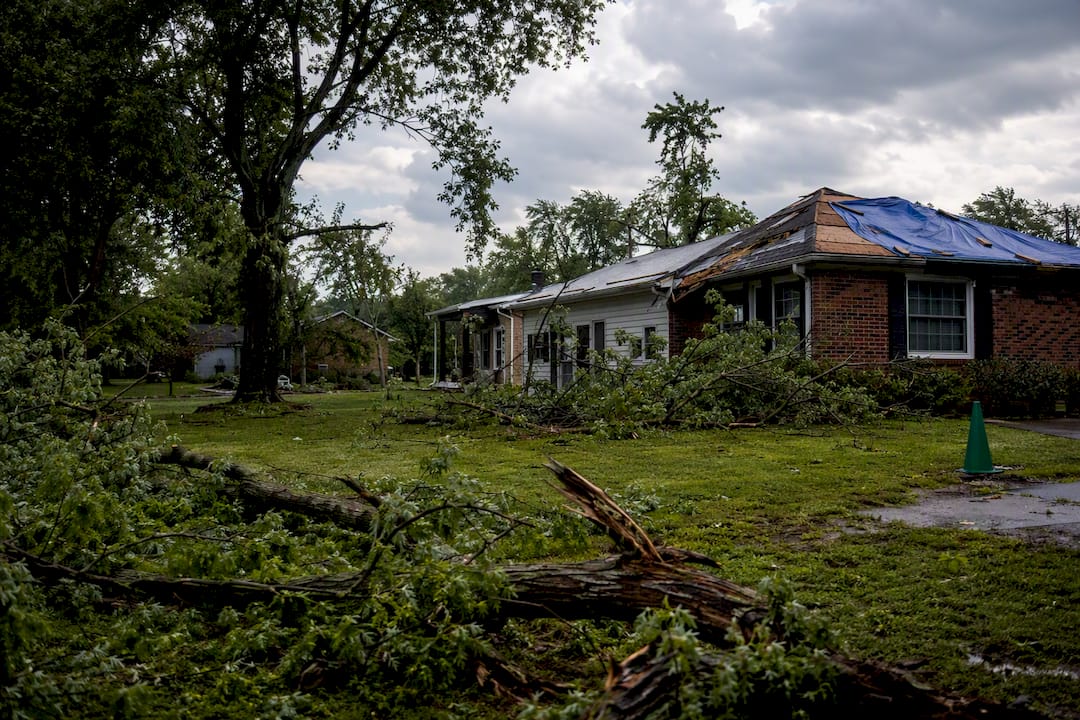
FEMA & EPA Storm Debris Cleanup for Homeowners & Property Managers
Confirm the property is safe before you touch anything, photograph every bit of damage for insurance, and separate debris into vegetative, construction, hazardous, appliance, and electronics piles before you haul or call for pickup. Skip that order and you risk injury, a denied claim, or a rejected curbside load. Call a licensed pro immediately for downed lines, gas odors, or structural collapse.
TL;DR:
- Storm debris must be sorted into categories such as vegetative, construction, hazardous waste, appliances, and electronics before pickup to avoid rejection and safety risks.
- Photograph and document all damage, hazards, and supplies before cleanup begins to ensure faster insurance processing and compliance with FEMA and EPA guidelines.
- Never assume downed power lines are de-energized, avoid standing water near utility lines, and call professionals immediately for gas odors, structural collapse, or live wires.
- Use appropriate tools like tarps, gloves, and saws for DIY cleanup, but escalate to professional services for large, risky, or structural damage jobs to save time and ensure safety.
- Always follow local pickup schedules, keep debris away from emergency access points, and adhere to disposal rules for hazardous and electronic waste to prevent delays and fines.
Table of Contents
- Storm Debris Cleanup Steps: Safety Assessment Before You Touch Anything
- How Do You Document Storm Damage for Insurance?
- Sort and Separate Debris: Categories, Staging, and Why It Matters
- Where Does Storm Debris Actually Go? Disposal Pathways Explained
- Small-Debris Tactics and Essential Tools for DIY Cleanup
- When to Call Professionals for Storm Cleanup
- Temporary Repairs and Preventing Secondary Damage
- Common Mistakes We See After Every Storm
- Get Professional Storm Debris Removal in Central Indiana
- Where to Find Official Storm Debris Guidance
- Sources
- FAQ
Storm Debris Cleanup Steps: Safety Assessment Before You Touch Anything
Walk the property from a distance before you walk it up close. Look for downed or sagging power lines, leaning utility poles, a gas smell or hissing sound, cracked foundations, and standing water that could be hiding either. None of these are DIY problems. FEMA’s own guidance is blunt on this point: homeowners should avoid handling hazards like downed lines or contaminated debris and instead contact utilities and professional crews.
Never assume a fallen line is de-energized, and never step into standing water near one. Utilities routinely find “dead” lines that are still live, and wet ground conducts electricity far enough to reach you from several feet away.
Before anyone, including kids or pets, sets foot in the yard:
- Scan overhead for hanging limbs and loose roofing before walking underneath.
- Call your utility company for any downed line, even one that looks harmless.
- Call 911 for gas odors, hissing sounds, or visible structural collapse.
- Keep people and pets out of the area until it’s declared clear.
- Watch for displaced snakes, insects, or other animals hiding in debris piles.
Gear up before you start: work gloves, closed-toe boots, eye protection, long pants, and a hard hat if anything overhead could still fall.
Pro Tip: If you smell gas or hear hissing near a damaged line or meter, leave the area on foot immediately and call from a safe distance. Don’t flip switches or use a phone inside the structure.
How Do You Document Storm Damage for Insurance?
Photograph everything before you move a single branch. Wide shots establish context; close-ups catch the detail an adjuster needs. FEMA recommends photographing damage, building an inventory, and keeping receipts before any cleanup begins, since that record often determines how fast a claim or public-assistance request moves.
A simple workflow keeps you from missing anything:
- Walk the property perimeter first and note hazards you spot along the way.
- Photograph wide-angle views of each damaged area, then close-ups, labeled by location and date.
- List damaged items with approximate values, and save receipts for any emergency purchases like tarps or a generator.
- Leave damaged items in place until your insurer confirms you can move or dispose of them.
- Contact your insurer and local emergency manager to learn whether a municipal or FEMA debris program applies to your area.
Only after that record exists should you start the small, safe tasks: stacking loose branches, bagging leaves, clearing a path to the door (see post-construction solar site cleanup for practical safety and cleanup practices).
Sort and Separate Debris: Categories, Staging, and Why It Matters
Mixed debris piles get rejected. Municipal crews and transfer stations handle each material stream differently, and the EPA’s guidance on managing disaster debris is explicit that vegetative waste, construction and demolition material, household hazardous waste, white goods, and electronics all require separate handling.
Stage piles by category from the start:
- Vegetative debris: branches, leaves, downed limbs, brush.
- Construction and demolition debris: shingles, siding, lumber, drywall.
- Household hazardous waste: paint cans, oil, propane tanks, cleaning chemicals.
- White goods: refrigerators, washers, dryers, water heaters.
- Electronics: TVs, computers, small appliances with circuit boards.
Keep piles away from hydrants, curbs, and driveways so crews and emergency vehicles have clear access. Mark any pile that got wet or contaminated by floodwater. Mixing streams isn’t just a paperwork problem. It creates safety risks for crews handling the load and often forces otherwise recyclable material into a landfill instead, which is why separating wet or contaminated items from clean yard waste matters as much for the environment as for your pickup schedule.
Where Does Storm Debris Actually Go? Disposal Pathways Explained
Check your city or county’s bulk pickup schedule before you drag anything to the curb. Timing, stacking height, and placement distance from the road all vary by municipality, and getting them wrong is the fastest way to get your pile skipped on collection day.
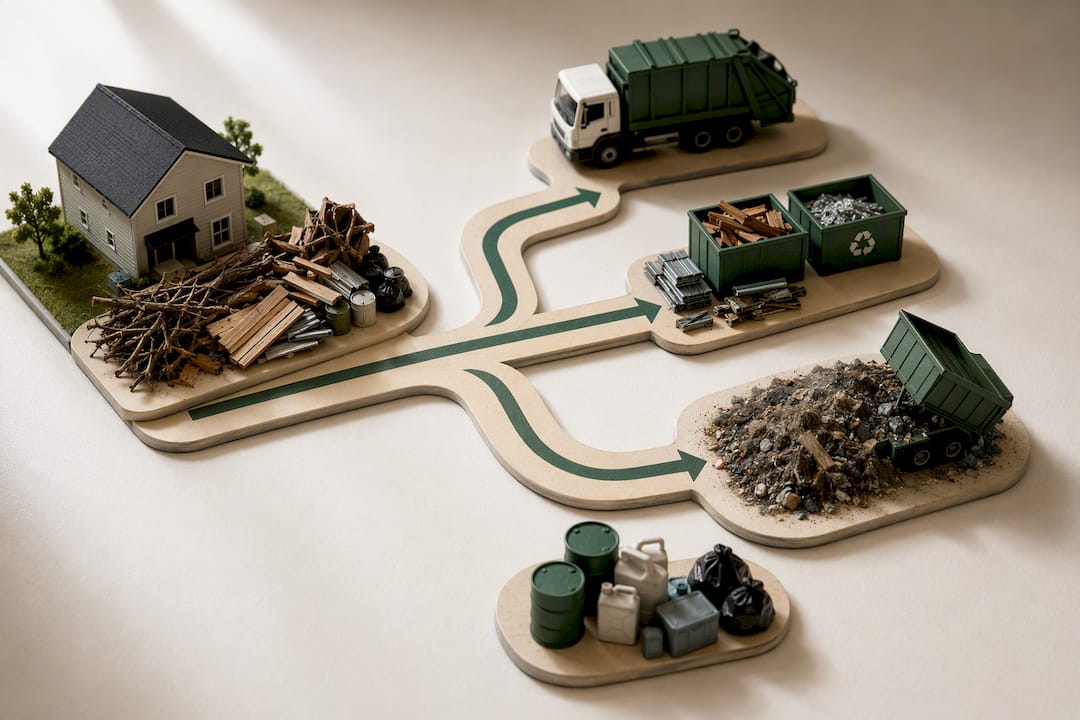
For larger jobs, a dumpster rental or a hauling crew is usually faster and cheaper than dozens of truck trips, especially in the days after a major storm when landfill lines run long. Our practical guide to debris removal options breaks down when each route makes sense.
A few placement rules apply everywhere:
- Never stack debris on the road surface, over storm drains, or in front of hydrants.
- Take household hazardous waste and refrigerant-containing appliances to a designated drop-off site rather than the curb.
- Check the EPA’s debris recovery mapping tool to find regional recovery resources after a large-scale event.
- Confirm electronics disposal rules locally; many areas ban them from regular pickup entirely.
Improper placement doesn’t just look messy. It’s the single most common reason a pile gets left behind.
Small-Debris Tactics and Essential Tools for DIY Cleanup
A handful of tools handles most manageable jobs: tarps, heavy gloves, eye protection, loppers, a pruning saw, a wheelbarrow, and a wet/dry vacuum for any water that got inside. A cordless chainsaw works for experienced users only; storm-snapped limbs hold tension that can kick back unpredictably.
- Drag branches onto a tarp and pull the whole load at once instead of carrying armfuls.
- Sort as you go, building separate piles by material rather than one big heap you’ll re-sort later.
- Bend at the knees, not the back, and never lift alone if a piece feels too heavy.
- Isolate anything wet or floodwater-contaminated in its own pile rather than mixing it with clean yard waste.
For volume, our junk removal versus dumpster rental breakdown helps you decide fast: a driveway-sized bin usually beats five separate truck runs.
When to Call Professionals for Storm Cleanup
Some jobs aren’t DIY territory, period. Call a licensed pro for any tree resting on a structure, a hanging limb still under tension, a roof section carrying weight, or anything within reach of a power line.
Large-volume jobs often make the professional route the cheaper option too. Attempting to self-haul very large loads frequently costs more in truck rentals, dump fees, and lost time than hiring a crew or renting a properly sized dumpster, especially when post-storm demand spikes across a region. Our guide to hauling debris after major demolition work applies the same math to storm loads.
Before hiring anyone:
- Ask for proof of insurance and a local business address, not just a phone number.
- Check for recent local references, especially after a widely reported storm.
- Be wary of unmarked trucks and door-to-door solicitations. Storm chasers target hard-hit neighborhoods.
- Ask your insurer whether removal costs for covered structures are included in your claim.
Pro Tip: Get quotes from at least two local companies before hiring after a major storm. Prices spike fast when demand outpaces supply, and a rushed decision often costs more than a same-week comparison.
Temporary Repairs and Preventing Secondary Damage
Tarping a roof or boarding a broken window buys time until a contractor can assess the structure properly. Do it as soon as it’s safe, and photograph every step with a timestamp before and after.
Water sitting inside for more than a day or two invites mold. Pull out soaked padding or insulation, then run fans and a dehumidifier continuously until the area reads dry.
- Save every receipt for tarps, plywood, fans, or emergency labor.
- Photograph temporary repairs before and after completion.
- Stop and wait for a structural inspection if you notice cracking, sagging, or shifting.
- Don’t attempt roof work yourself on a steep pitch or near power lines.
Common Mistakes We See After Every Storm
The mistake we see most: homeowners start hauling before checking for hazards or taking a single photo. Cleanup crews we talk to consistently underestimate volume, too. A yard that looks like an afternoon job often runs a full weekend once branches, shingles, and soaked debris pile up.
Same-day full cleanup may be feasible for a single downed tree, but widespread yard and structural damage across a property usually takes longer. When a professional service handles a storm cleanout, usable items are often routed to local donation partners and hazard clearing and speed are usually prioritized, because a stalled cleanup can cost more than a fast, well-sorted one.
— Olga
Get Professional Storm Debris Removal in Central Indiana
A professional property and debris removal service can be an alternative to a multi-day DIY haul for storm cleanup: one licensed crew, a photo-based estimate, and debris gone in a fraction of the time it takes to run truck trips yourself. They handle vegetative debris, construction material, appliances, and general junk removal, and may route usable items to local donation partners instead of a landfill whenever possible.

Our debris removal service covers everything from a single downed tree to a full yard buried in construction debris after roof or siding damage. For storm damage that’s left a property needing a deeper reset, our full property cleanout services cover interior and exterior debris together.
Request a free estimate by sending photos of the damage through our services page or calling (812) 302-6833. We’ll give you a scope and timeline before a single truck shows up.
Where to Find Official Storm Debris Guidance
For federal-level guidance, review FEMA’s homeowner debris removal tips and the EPA’s homeland security debris planning resources. Contact your local emergency management office directly for your municipality’s specific collection rules and schedules.
Sources
FAQ
What Are the FEMA Guidelines for Debris Removal?
FEMA advises homeowners to photograph damage, build an inventory, and keep receipts before starting cleanup, and to contact local emergency managers about public assistance or municipal collection programs.
How Long Does Storm Cleanup Usually Take?
A single downed tree can often be cleared in a day, but widespread yard and structural damage across a property typically takes several days to a full week, especially once sorting and hauling volume are factored in.
What Should I Do After a Windstorm Damages My Trees?
Stay back from any tree resting on a structure or power line and call a licensed tree service; only handle branches on the ground yourself once the area is confirmed hazard free.
What Are the Main Safety Precautions for Debris Removal?
Scan for downed lines, gas odors, and structural collapse before entering the area, wear gloves and eye protection, and never wade through standing water near damaged utility lines, since it can be electrically charged.
Can I Put All My Storm Debris at the Curb Together?
No. Municipal and transfer facilities require vegetative, construction, hazardous, and appliance debris to be staged separately, and mixed piles are often skipped or rejected on collection day.